
Raisin (Vitis vinifera, dried)
OriginGrapes, preserved by the sun
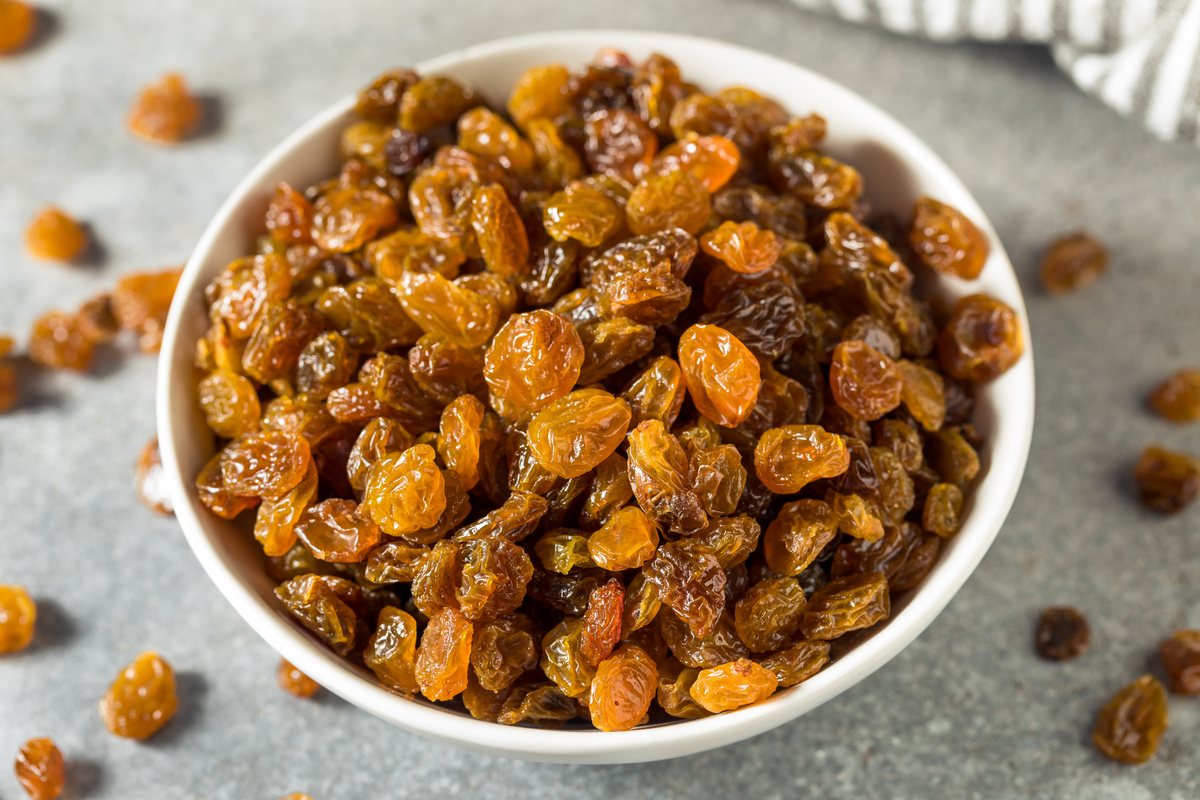
The word "raisin" comes from Old French. roisin from Latin racemus - the „Grape“.
Even in ancient times, grapes were dried in the sun around the Mediterranean and in Western Asia to preserve the harvest over the winter. In the Middle Ages, they were a valuable commodity for festive pastries.
Today, three groups are distinguished in the trade: raisins In a narrower sense, they are dark, mostly sun-dried berries of various varieties. Sultanas They come from light, seedless varieties such as "Sultana" or "Thompson Seedless", are golden yellow to light brown and are often treated with sulfur dioxide or a drying accelerator. currants These are the small, almost black, tart-fruity berries of the "Black Currant" variety. Approximately four kilograms of fresh grapes are needed to produce one kilogram of raisins.
To useWhat raisins can do for you
100g of raisins provide around 300 kcal, about 60g Sugar (primarily glucose and fructose), 3.5 to 4.5 g Dietary fiber and approximately 750 mg potassium. A handful (30 g) provides just under 100 kcal, about 18 g of sugar and a good 200 mg of potassium.
Vitamin C is lost during drying, but many other things remain. Polyphenols such as phenolic acids and flavonols. In a randomized study of people with mildly elevated blood pressure, blood pressure and fasting blood sugar levels decreased more with three servings of raisins daily than with processed snacks. The study was small and industry-funded—an indication, not proof.
Realistically speaking, raisins are a Sweetener with nutrientsBetter than sweets, but not for large quantities. For diabetics, they count fully towards their carbohydrate intake.
IngredientsThat's what's in raisins
Raisins consist of approximately 15 percent water and well over three-quarters carbohydrates, almost all glucose and fructose. They also contain dietary fiber (pectin, cellulose), organic acids such as tartaric acid, potassium, iron, magnesium, copper, boron, vitamin B6 and vitamin K, as well as polyphenols such as caffeic and coumaric acid, quercetin and kaempferol.
Sulfured sultanas remain pale because sulfur dioxide inhibits browning. A natural risk is the mold toxin. Ochratoxin A, which can form during damp or slow drying; the EU strictly limits it.
Enhanced combinationsWhat makes raisins stronger
Raisins unfold their full potential best as a sweetness in the background - with protein, fat and acid at their side.
Trail mix: Fat and protein slow down the rise in blood sugar.
Sweeten the muesli without sugar.
For porridge, rice and pastries.
Oriental salads and braised dishes.
Turn sweetness into a meal.
A classic in North African cuisine.
What contradicts itselfIt's best to avoid these combinations.
Even small amounts can damage the kidneys.
Concentrated sugar, approximately 300 kcal per 100 g.
Look out for „sulfur dioxide“ or E 220 to E 228.
They stick to the teeth for a long time.
Store in a cool, dry place.
Choking hazard, better to soak or chop.
In the kitchenWhere they belong
- Muesli and porridgeInstead of sugar.
- trail mixWith nuts and seeds.
- raisin bunsWith yeast dough.
- Christmas stollenRaisins soaked in rum.
- Carrot saladWith lemon and walnuts.
- Couscous and pilafWith cinnamon and almonds.
- KaiserschmarrnWith raisins and applesauce.
- red cabbageA few raisins for sweetness.
- ChutneyWith apple, ginger and vinegar.
- SauerbratenFinish the sauce with raisins.
As a home remedySoaked raisins in the morning
Soaked raisins
- In the evening, briefly rinse a small handful (about 20 to 30 g) of unsulphured raisins in hot water.
- Place in a glass and pour over approximately 150 ml of water.
- Cover and let soak overnight in the refrigerator.
- In the morning, chew the soft raisins well and drink the slightly sweet soaking water with them or add it to your muesli.
As a gentle, sweet start to the day and a little help with sluggish digestion - the fiber in the raisins swells up a bit, and the liquid comes along with it.
A small handful per day is sufficient. Factor in the sugar content if you have diabetes.
Ayurveda & TCMWhat the old systems say
Ayurveda
In Ayurveda, grapes, especially dried raisins, are considered particularly beneficial (DrakshaIt is considered one of the best fruits: sweet, cooling, and nourishing. It is said to calm Pitta and Vata and is the basis of the medicinal drink Drakshasava. For Kapha, it is considered too heavy in larger quantities.
Traditional Chinese Medicine
In Traditional Chinese Medicine (TCM), grapes are described as sweet-sour and neutral. They are said to strengthen Qi and blood, replenish fluids, and strengthen tendons and bones.
Warning noticesWhen you should be careful
Please note
- Dogs: Grapes and raisins can cause acute kidney failure in dogs – a safe amount is unknown. Go to the vet immediately.
- Sulfites: Light-colored sultanas are often sulfured. Those with asthma or sulfite sensitivity may experience shortness of breath or skin irritation – choose unsulfured sultanas.
- Sugar: Approximately 60g of sugar per 100g - eat in moderation if you have diabetes, are overweight, and for the sake of your teeth.
- Toddlers: Whole raisins can be swallowed; for small children, offer them soaked and chopped.
- Mold: Discard musty-smelling, stuck-together or discolored raisins - mold toxins such as ochratoxin A are invisible and heat-stable.
This page provides information and does not replace medical advice. If symptoms persist, please consult a doctor.
Related to the topicRead on and cook along!
Shop links lead to our product pages; it is indicated there if a partner is involved.
SourcesWhat is this based on?
- USDA FoodData Central: Raisins, seedless.
- Commission Regulation (EU) 2023/915 on maximum levels of certain contaminants in foodstuffs (ochratoxin A in dried grapes: currants, raisins, sultanas).
- EFSA Panel on Contaminants in the Food Chain. Risk assessment of ochratoxin A in food. EFSA Journal 2020; 18(5): 6113.
- EFSA Panel on Food Additives and Nutrient Sources added to Food. Scientific Opinion on the re-evaluation of sulfur dioxide (E 220), sodium sulfite (E 221), sodium bisulfite (E 222), sodium metabisulfite (E 223), potassium metabisulfite (E 224), calcium sulfite (E 226), calcium bisulfite (E 227) and potassium bisulfite (E 228) as food additives. EFSA Journal 2016; 14(4): 4438.
- Anderson JW et al. Raisins compared with other snack effects on glycemia and blood pressure: a randomized, controlled trial. Postgraduate Medicine 2014; 126(1): 37–43.
- Wegenast CA et al. Acute kidney injury in dogs following ingestion of cream of tartar and tamarinds and the connection to tartaric acid as the proposed toxic principle in grapes and raisins. Journal of Veterinary Emergency and Critical Care 2022; 32(6): 812–816.


