
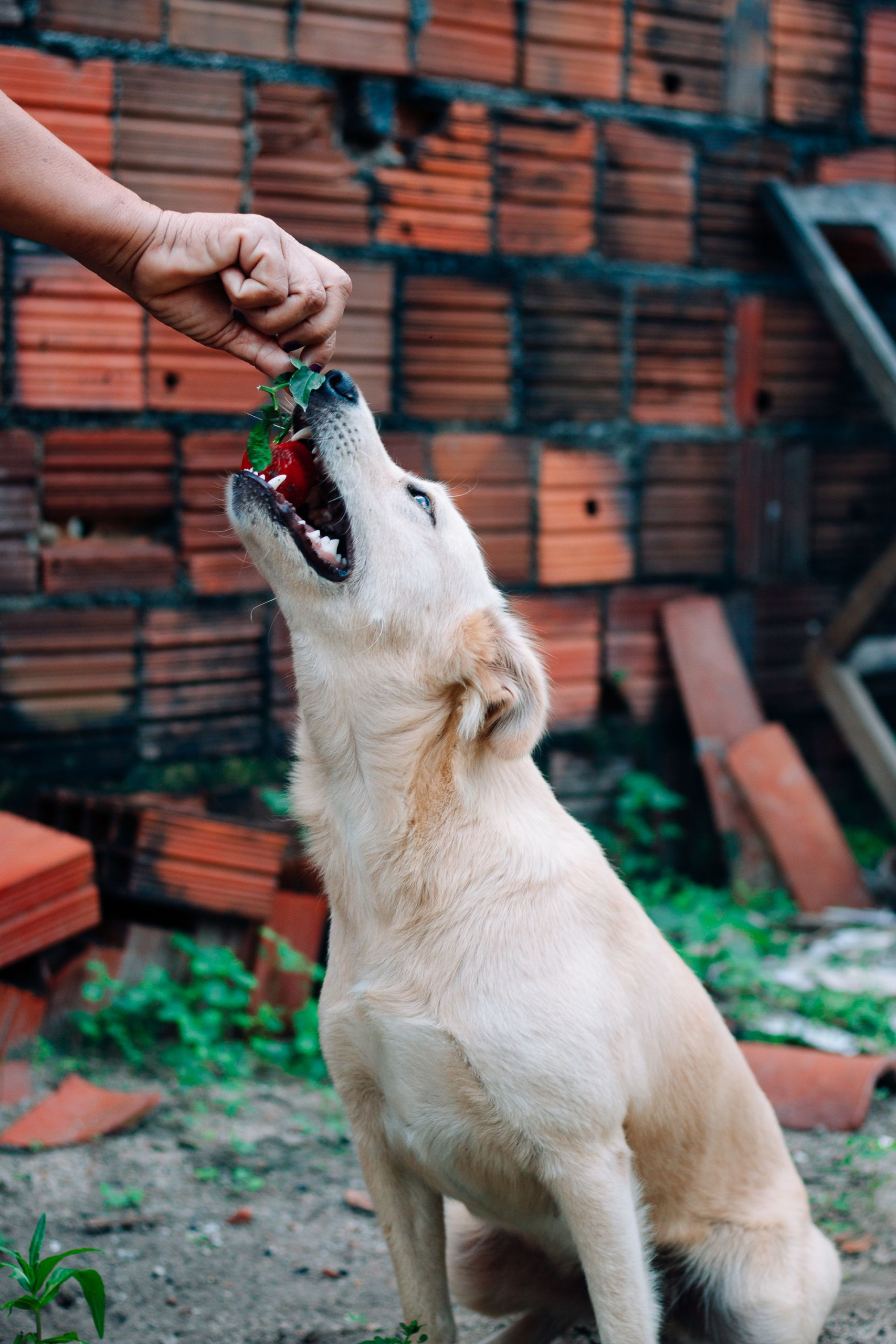
Animal health · Herbs & nutrients
Supportive herbs for the dog
Some medicinal plants used in human medicine can also be used for dogs – in different forms and quantities. What works for you doesn't necessarily work for him. And almost none of it applies to cats.
Before you add anything extra to their food
Consult your veterinarian – especially if your dog is on long-term medication, has kidney or liver disease, is pregnant, or is a young animal. A dog can't tell you it's unwell, and many interactions only show up in blood tests. This page does not replace a diagnosis.
Of the five listed here, only one has truly good studies on dogs: green-lipped mussel. Omega-3 follows closely behind. Turmeric, ginger, and milk thistle are plausible and traditional, but the evidence is weak. And the most effective thing costs nothing: a dog of the right weight.
The principleWhy nothing can be transferred one-to-one
A dog is not a small person, and a cat is not a small dog.
Three things are different, and all three are the reason for the caution on this page. First, the quantity: A Beagle weighs one-fifth of you, a Chihuahua one-thirtieth. Therefore, every measurement must be considered per kilogram, never as "a teaspoon.".
Secondly, there's the breakdown process in the liver. Cats largely lack an enzyme pathway that humans and dogs use to neutralize many plant substances – glucuronidation. This is why paracetamol is fatal to cats and why essential oils have no place around them, not even in a diffuser. Dogs are more robust in this respect, but not immune.
Thirdly, the diet. Dogs are omnivores with a preference for meat and can digest plant-based foods well – for example, they produce taurine themselves. Therefore, supplementing a dog's diet with plant-based ingredients is a matter of practicality, whereas for cats it is often a question of safety.
In detailThe five that are on this page
Sorted by availability, not popularity. The colored label tells you how thoroughly each item has been researched.
Green-lipped mussel
Perna canaliculusWell-filled
The most thoroughly researched natural remedy on this site. In several placebo-controlled studies on dogs with osteoarthritis, mobility and pain levels improved measurably – moderately, not dramatically, but reproducibly. The effect is attributed to the omega-3 fatty acids and glycosaminoglycans it contains.
Things to know: It takes time. The studies ran for six to twelve weeks; nothing can be assessed before then. And it's a supplement to pain therapy, not a replacement – a dog with arthritic pain needs both.
Not at Known shellfish allergy. And if your dog is on blood thinners, talk to the vet beforehand.
Omega-3 from fish or algae oil
EPA / DHAWell-filled
For joints, skin, and coat, this supplement has the broadest data available. Controlled studies have shown improved resilience in dogs with osteoarthritis; the effect is weaker, but present, in cases of itchy, inflamed skin.
Dosage is based on body weight and EPA content, not oil quantity – this is where products on the shelf diverge. Introduce the supplement slowly, otherwise you'll get loose stools. And store it in a cool, dark place: rancid oil is worse than no oil at all.
Milk thistle
SilymarinSolid tradition
Silymarin is well-established in veterinary medicine, including in the emergency treatment of death cap mushroom poisoning in dogs – though in that case, it is administered intravenously and in a hospital setting. For routine liver support, there are review articles and considerable experience, but few large controlled studies.
It is not a preventative measure for healthy dogs. It only makes sense if a veterinarian has observed elevated liver values – and then only as part of a treatment plan, not as a standalone measure.
turmeric
Curcuma longaThinly covered
In veterinary medicine reviews, curcumin is attributed with anti-inflammatory and antioxidant effects, especially for joint problems. However, robust studies in dogs are scarce, and the same problem exists as in humans: curcumin is poorly absorbed. Very little of it is absorbed without fat.
Be careful Biliary tract diseases, bleeding tendencies, treatment with blood thinners, and a predisposition to oxalate kidney stones. In these cases, only after consulting a veterinarian.
Ginger
Zingiber officinaleThinly covered
Gingerols have a mild anti-inflammatory effect; traditionally, ginger is used for travel sickness and minor digestive problems. While research on its use in dogs is limited, its application in small amounts is considered safe.
Practically speaking, this means: a pinch of freshly grated ginger mixed into the food, nothing more. Most dogs don't particularly like it anyway – there's no reason to force it.
PracticeQuantities, getting started, and how you know it's too much.
The following points are guidelines based on veterinary literature, not prescriptions. The exact dosage should be determined by your veterinarian, as they are familiar with your pet's weight, age, pre-existing conditions, and current medications.
| Rule | Why |
|---|---|
| Always per kilogram | There's a factor of thirty between a Chihuahua and a Saint Bernard. Spoon measurements are meaningless for dogs. |
| Start with a quarter | For one week, eat a quarter of the target amount, then increase it. This way you can spot intolerances before they become unpleasant. |
| Always to the food | Fat-soluble substances like curcumin need fat, and the stomach tolerates it better. |
| Only one thing is new | If you start three things at once, you won't know which one it was if you get diarrhea. |
| Six to twelve weeks | The joint studies ran for that long. No judgment can be made before then. |
| Discontinue immediately if | Vomiting, diarrhea lasting more than a day, fatigue, loss of appetite, dark urine. Then call. |
ImportantWhat absolutely does not belong in the bowl
This list is short, but it's the most important one on the page – it covers things you'd find in any kitchen. You can find all the details on the [link/page]. List of poisons and taboos.
Related to the topicTwo ways - and one of them costs nothing
Two ways - and one of them costs nothing
Here's what you can buy from this article, if you wish. In this order.
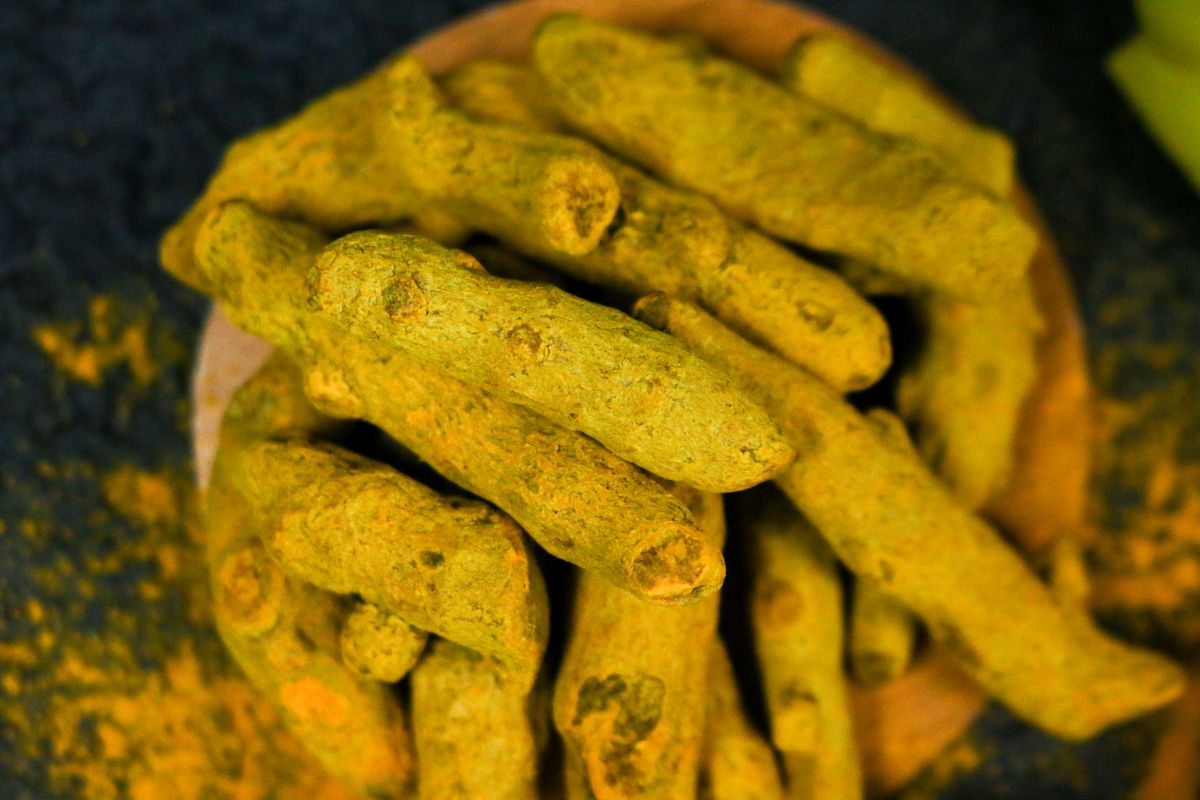
From the kitchen
What you already have on hand - in tiny amounts, stirred into the food.

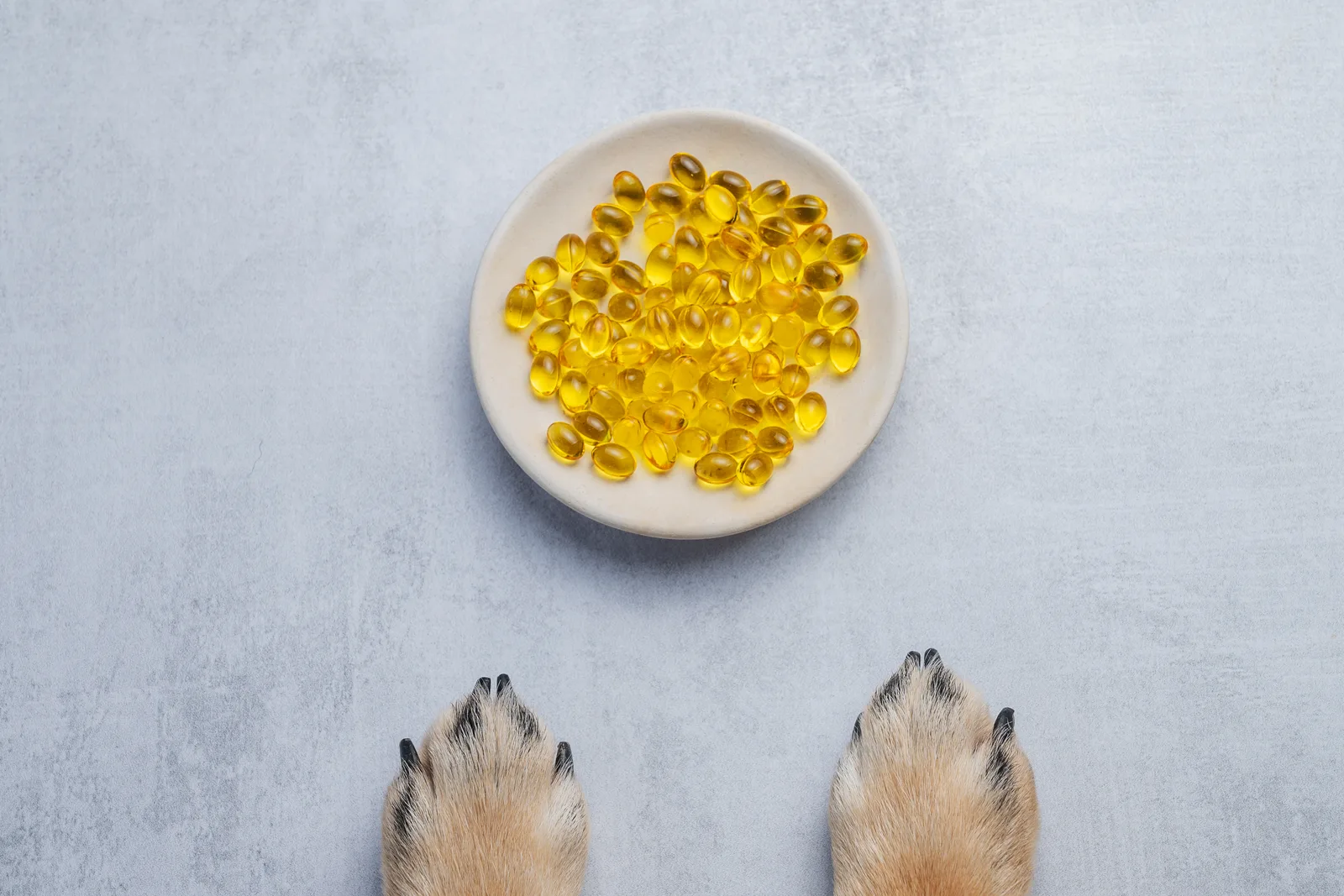
As a supplement
Only if there is a reason - and after consultation with the practice.
III · The path that costs nothing
If your dog is overweight, weight loss is the most effective measure for its joints – more effective than everything in columns I and II combined. In controlled studies, lameness in overweight dogs improved significantly simply through weight reduction, sometimes after just a few percent. Additionally: several short walks instead of one long one, and for dogs with arthritis, steady walking is preferable to throwing a ball.
Advertising: The product links lead to partner shops. We receive a commission on any purchases made through these links, but the price remains the same for you. Images are for illustrative purposes only – packaging may vary. Supplementary feed is not a substitute for veterinary treatment.
SourcesWhat this page is based on
- Bierer TL, Bui LM: Improvement of arthritic signs in dogs fed green-lipped mussel (Perna canaliculus). Journal of Nutrition 2002.
- Roush JK et al.: Multicenter veterinary practice assessment of the effects of omega-3 fatty acids on osteoarthritis in dogs. JAVMA 2010.
- Marshall WG et al.: The effect of weight loss on lameness in obese dogs with osteoarthritis. Veterinary Research Communications 2010.
- VCA Animal Hospitals: Milk Thistle (Silymarin) - Overview of its use in dogs and cats.
- Vandeweerd JM et al.: Nutraceuticals for canine osteoarthritis - a systematic review. Journal of Veterinary Internal Medicine 2012.
- ASPCA Animal Poison Control: List of foods and plants toxic to dogs and cats.


