
Cranberry (Vaccinium macrocarpon)
OriginThe berry from the moor
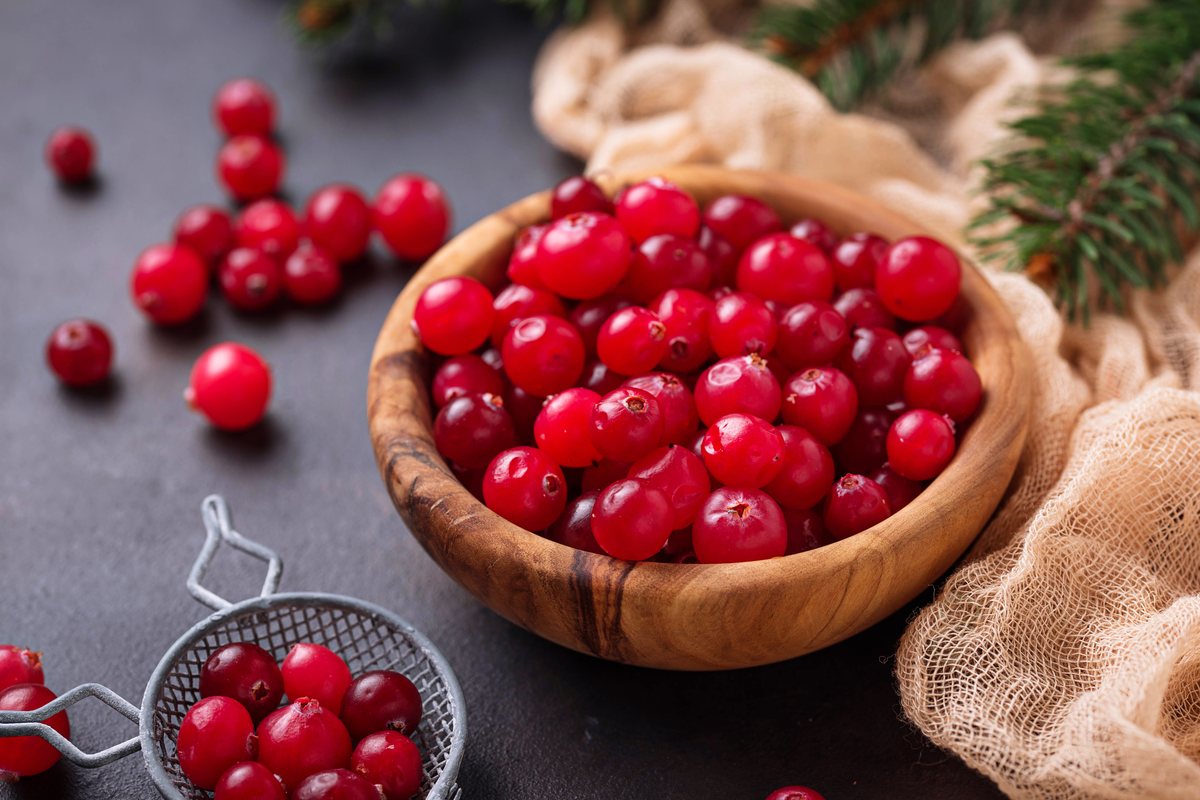
The name comes from "crane berry": The flower reminded the settlers of the head and beak of a crane.
Cranberries grow as low, creeping dwarf shrubs in the acidic bogs of North America. Indigenous peoples used the berries long before the Europeans, for example in pemmican, a dried meat product. Settlers adopted them, and to this day, cranberry sauce is a traditional accompaniment to turkey at Thanksgiving in the USA.
The berries are cultivated in shallow basins. For harvesting, the fields are flooded, the berries are shaken from the bushes – they float thanks to small air pockets inside and are then skimmed off. The common cranberry, native to Europe (Vaccinium oxycoccos) is a small-fruited relative. The cranberry (Vaccinium vitis-idaea) is a separate species with smaller berries that grows in drier soils.
To useWhat cranberries can do for you
Fresh cranberries provide only about 46 kcal per 100 g, approximately 3.6 g of protein. Dietary fiber, 14 mg of vitamin C and just over 1 mg of vitamin E. Their content of [unclear] is noteworthy. Polyphenols: Anthocyanins, flavonols such as quercetin and especially Type A proanthocyanidins. This particular binding method is rare in other types of fruit.
In the laboratory, type A proanthocyanidins inhibit E. coli bacteria from attaching to urinary tract cells with their adhesive threads. A 2023 Cochrane review of 50 studies and nearly 9,000 participants concluded that cranberry products reduce the risk of symptomatic urinary tract infections. Urinary tract infections It can lower the risk – with moderate certainty of the evidence – in women with recurrent infections, in children, and after bladder surgery. In nursing home residents and pregnant women, hardly any benefit was observed.
In 2011, the European Food Safety Authority (EFSA) rejected a health claim regarding cranberry proanthocyanidins and their ability to fight bacteria in the lower urinary tract, citing insufficient evidence of efficacy. Cranberry can be a preventative measure; however, an acute urinary tract infection with fever, flank pain, or blood in the urine should be treated by a doctor.
IngredientsThis is what's in cranberries
Cranberries contain water, little sugar, plenty of fruit acids (quinic, citric, and malic acid), pectin and other dietary fiber, vitamin C, vitamin E, some vitamin K, and manganese. Secondary plant compounds include type A proanthocyanidins, anthocyanins (cyanidin and peonidin glycosides), flavonols such as quercetin and myricetin, phenolic acids, and triterpenes such as ursolic acid.
Dried cranberries are almost always soaked in sugar syrup and coated with oil to prevent them from sticking together. They then contain around 65g of sugar per 100g. Commercially available juices are mostly sweetened nectars.
Enhanced combinationsWhat makes cranberries stronger
The tart acidity of the cranberry calls for partners - preferably those that don't contain much sugar.
It naturally reduces acidity.
The most important foundation for the urinary tract.
Fresh or unsweetened berries in the porridge.
As a homemade sauce.
In salad or trail mix.
For sauce and compote.
What contradicts itselfIt's best to avoid these combinations.
Dried fruits and nectar are sources of sugar.
An acute infection requires treatment.
Isolated cases with elevated INR have been described.
Extracts can provide oxalate.
Different type, different profile.
No urinary tract claim is permitted in the EU.
In the kitchenWhere they belong
- cranberry sauceWith turkey and venison.
- PorridgeWith fresh berries and apple.
- MuesliDried, used sparingly.
- Winter saladWith walnuts and goat cheese.
- ChutneyWith onion, ginger, and vinegar.
- MuffinsFresh berries in the dough.
- compoteWith pear and cinnamon.
- fillingPoultry with bread and herbs.
- trail mixWith nuts and seeds.
- Juice spritzerUnsweetened juice with water.
As a home remedyCranberry spritzer for prevention
Cranberry spritzer
- Buy unsweetened cranberry mother juice (100 % fruit).
- Pour 50 to 100 ml of juice into a large glass.
- Fill with 200 ml of water and round off with a splash of apple juice to taste.
- Drink plenty of water or herbal tea throughout the day.
As a preventative measure for recurrent urinary tract infections. Its effect is moderate and does not replace medical evaluation in the case of an acute infection.
A glass a day over a longer period has been tested in many studies. Anyone taking warfarin or other blood thinners, or who is prone to kidney stones, should consult their doctor or pharmacist beforehand.
Ayurveda & TCMWhat the old systems say
Ayurveda
Cranberries are not described in classical Ayurveda. According to current understanding, they are considered sour, tart, and cooling – balancing for Kapha and Pitta, and better cooked and lightly sweetened for Vata.
Traditional Chinese Medicine
In Traditional Chinese Medicine (TCM), cranberries are not a classic remedy. In Western TCM dietary theory, they are classified as sour, astringent, and cooling, and are mentioned in connection with damp heat in the lower burner, i.e., with urinary tract complaints.
Warning noticesWhen you should be careful
Please note
- Urinary tract infection: In case of fever, flank pain, blood in the urine, during pregnancy and in men, always consult a doctor.
- Blood thinners: Do not consume large amounts of juice or extract while taking warfarin or other vitamin K antagonists without consulting a doctor - isolated cases with elevated INR values have been described.
- Kidney stones: If you are prone to oxalate stones, avoid concentrated extracts.
- Sugar: Dried cranberries and nectars contain a lot of added sugar.
- Stomach: The acid can worsen heartburn.
This page provides information and does not replace medical advice. If symptoms persist, please consult a doctor.
Related to the topicRead on and cook along!
Shop links lead to our product pages; it is indicated there if a partner is involved.
SourcesWhat is this based on?
- Williams G, Hahn D, Stephens JH, Craig JC, Hodson EM. Cranberries for preventing urinary tract infections. Cochrane Database of Systematic Reviews 2023; CD001321.
- EFSA Panel on Dietetic Products, Nutrition and Allergies (NDA). Scientific Opinion on the substantiation of health claims related to proanthocyanidins from cranberry (Vaccinium macrocarpon Aiton) fruit and defense against bacterial pathogens in the lower urinary tract. EFSA Journal 2011; 9(6): 2215.
- Howell AB et al. A-type cranberry proanthocyanidins and uropathogenic bacterial anti-adhesion activity. Phytochemistry 2005; 66(18): 2281–2291.
- Aston JL, Lodolce AE, Shapiro NL. Interaction between warfarin and cranberry juice. Pharmacotherapy 2006; 26(9): 1314–1319.
- USDA FoodData Central: Cranberries, raw and Dried, sweetened cranberries.


