
Animal health · Nutrition
Nutritional basics for dogs
A dog isn't a wolf in the living room – domestication has also changed its digestion. What it really needs, what the label should say, and why homemade rations so often go wrong.
Before you add anything extra to their food
For puppies, pregnant bitches, senior dogs, and any dog with a medical condition, the feeding plan should be in professional hands – ideally with a veterinarian specializing in nutritional counseling. An incorrectly calculated ration often only becomes apparent after damage has occurred, and this damage is irreversible in a growing dog.
Three things are crucial: a complete feed that bears this name on the label, the correct amount – determined by checking the rib cage, not the packaging instructions – and patience with every change in diet. Home-cooked rations are possible, but studies show they are overwhelmingly unbalanced if no one calculates the nutritional content.
The starting pointWhy the dog is no longer a wolf
Domestication has taught the dog to digest starch - this is genetically verifiable.
In 2013, a Swedish research group led by Erik Axelsson compared the genomes of wolves and dogs and found one of the most significant differences in the digestive system: dogs carry many more copies of the gene. AMY2B, which codes for amylase – the enzyme that breaks down starch. Wolves usually have two copies, many dog breeds significantly more.
This isn't a minor detail, but rather the explanation for why dogs have been able to live off human remains for millennia. They have become carnivores adapted to a mixed diet – unlike cats, which haven't followed this path.
In practical terms, this means: A dog doesn't need pure meat, and grain isn't poison for him. What he needs is a diet in which protein, fat, minerals, and vitamins are in a balanced ratio – and this balance is precisely where things usually go wrong in practice.
The labelComplete feed or supplementary feed - the most important difference
Each package bears one of two words, and the difference between them is greater than that between most brands. Complete feed According to the label, it covers all nutritional needs – it can be fed as the sole food source. Supplementary feed It does not explicitly do that; it is intended as part of a ration.
Many pure meat cans and most wet food toppings are supplementary feeds. Feeding them as a main meal for months results in a diet with deficiencies – typically in calcium, iodine, zinc, copper, and vitamin D. This information is on the packaging, but in small print.
The ingredient list is also helpful, if you know how to interpret it. "Meat and animal by-products (min. 4% chicken)" means the rest of the meat is something else. A clear declaration lists the ingredients individually with their percentages – that's a good sign, regardless of the price.
In Europe, the recommendations of the industry association FEDIAF serve as a guideline for nutrient content, while in the USA, the AAFCO profiles are used. Reputable manufacturers cite one of these references.
raw feedingBARF - the pros and cons and what goes wrong
Raw feeding has good arguments: full control over the ingredients, no highly processed components, and often very good palatability. However, it has two problems that repeatedly emerge in studies.
The first point is the overall picture. A widely cited analysis by Stockman and colleagues examined two hundred homemade dog food recipes – the vast majority contained at least one nutrient outside the recommended guidelines, many several. Calcium, zinc, copper, vitamin D, and choline were the most frequently deficient. Recipes from books and the internet fared no better than those invented from scratch.
The second issue is hygiene. Raw meat regularly carries salmonella, campylobacter, and listeria; European studies have also found antibiotic-resistant bacteria in raw food samples. This affects not only the dog but also the household—especially where small children, pregnant women, or immunocompromised individuals live.
Both problems are solvable: a properly calculated ration from a nutritional consultant, clean kitchen management, separate cutting boards, and no thawing at room temperature. Those who are unwilling or unable to do this are demonstrably better off with a good complete food than with a half-hearted BARF diet.
Bone: Cooked bones splinter and are a common sight in emergency rooms – they should never be put in a pet's food bowl. Raw, meaty bones are less dangerous, but can break teeth and, if consumed in large quantities, can lead to hard, pale stools and constipation.
The amountA rib check beats any packaging information.
The feeding recommendation on the packaging is an average for an average dog with a moderate activity level. Your dog is rarely like that. A more reliable measure is the Body Condition Score, and you can calculate that yourself – it only takes your hands.
Run your flat hand over your ribcage: You should be able to feel your ribs without pressure, but they shouldn't protrude. Viewed from above, you should be able to see a waistline behind your rib cage. From the side, your abdomen should rise towards the back. If you have to press to find your ribs, you're pressing too hard.
This is not cosmetic. Obesity in dogs is linked to arthritis, diabetes, respiratory problems and a shorter lifespan - in a well-known long-term study on Labradors, the animals kept lean lived on average almost two years longer than their siblings of the same age who were moderately overfed.
And treats count too. As a rule of thumb, they should make up no more than ten percent of the daily ration; during training, it's best to simply subtract the amount from the regular food.
PracticeSix things that make a difference in everyday life
| Point | Why |
|---|---|
| Transition takes 7–10 days | Mix gradually, otherwise you'll get diarrhea. Gut flora needs time, not taste. |
| Fixed times | Two meals a day are common for adult dogs; puppies need more, smaller meals. |
| Rest after eating | In large, deep-chested breeds, gastric torsion is life-threatening. No roughhousing for one hour. |
| Water always available | Especially with dry food. Several bowls, fresh daily. |
| Count treats | At most ten percent of the daily amount - otherwise every calculation will be wrong. |
| Nothing off the table | Not out of strictness, but because onions, chocolate and xylitol are found in normal food. |
Related to the topicTwo ways - and one of them costs nothing
Two ways - and one of them costs nothing
Here's what you can buy from this article, if you wish. In this order.
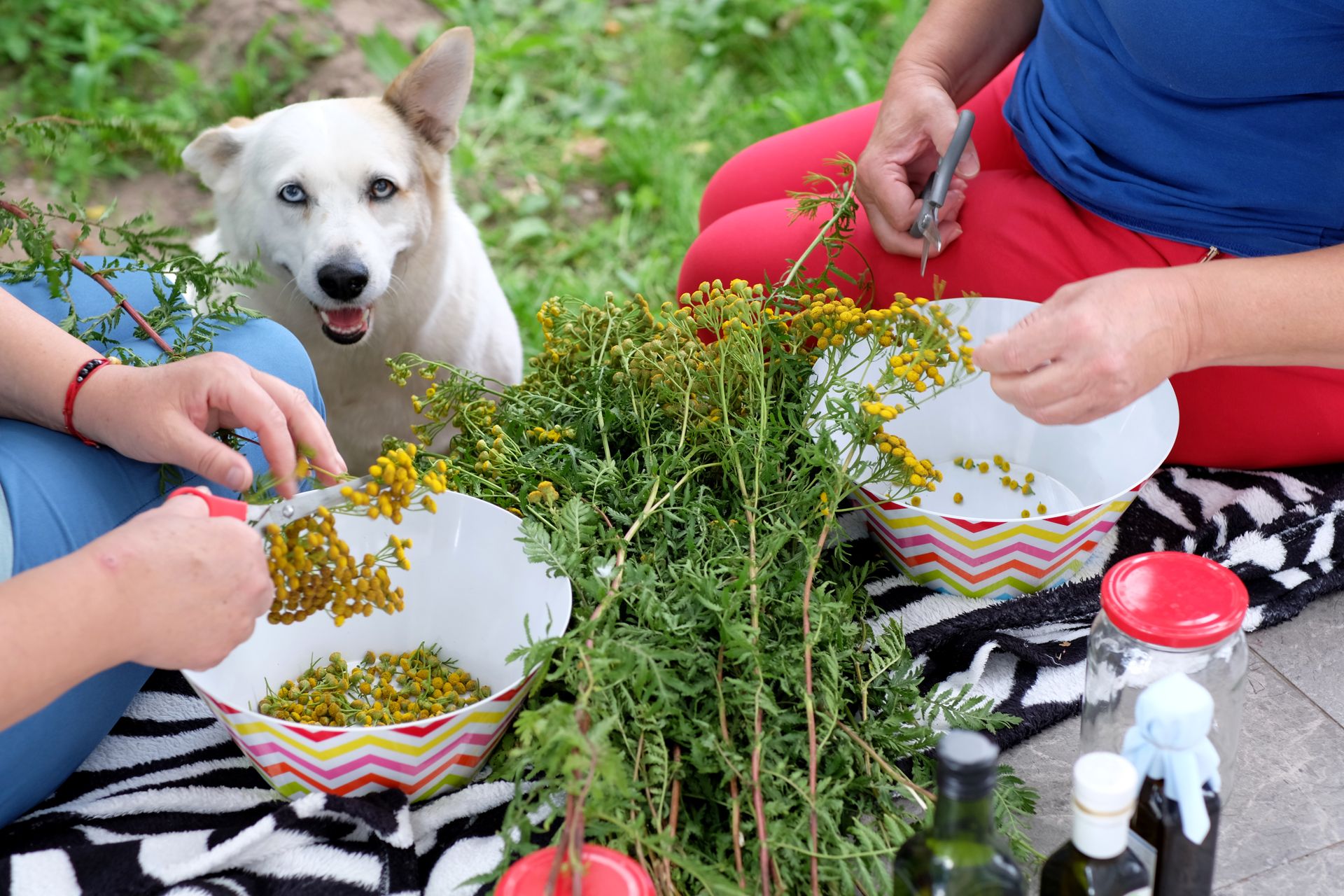
From the kitchen
Small additions are not a substitute for a balanced diet.


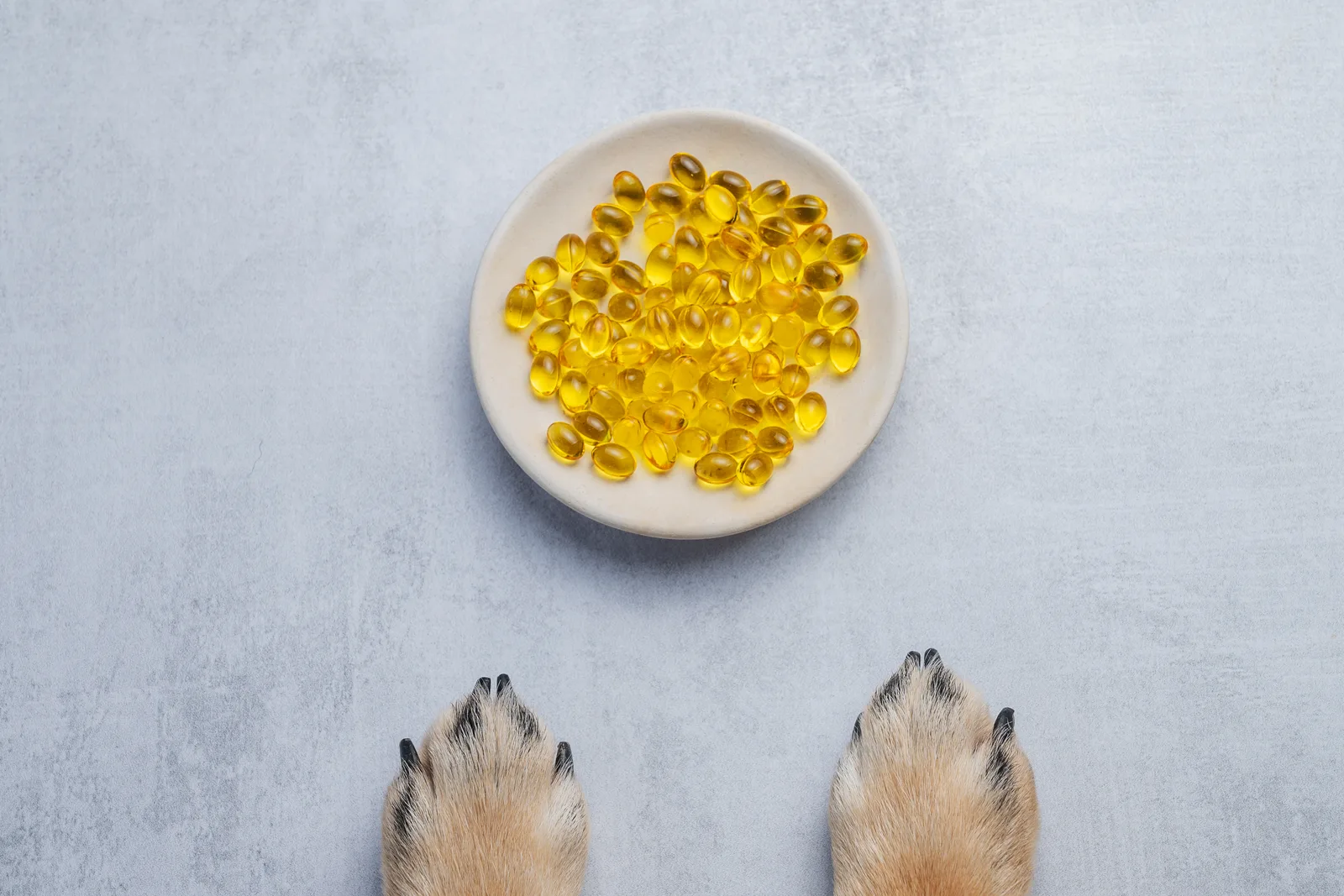
As a supplement
Useful alongside a complete feed, not instead of one.
III · What brings more than any addition
The right amount. A dog of the right weight lives longer, moves better, and needs less of everything sold here – this has been proven in long-term studies, and it doesn't cost a cent, just the willingness to use a slightly smaller portion. Place your hands on its chest once a week; that's all the monitoring you need.
Advertising: The product links lead to partner shops. We receive a commission on any purchases made through these links, but the price remains the same for you. Images are for illustrative purposes only – packaging may vary. Supplementary feed is not a substitute for veterinary treatment.
SourcesWhat this page is based on
- Axelsson E. et al.: The genomic signature of dog domestication reveals adaptation to a starch-rich diet. Nature 2013.
- Stockman J. et al.: Evaluation of recipes of home-prepared maintenance diets for dogs. JAVMA 2013.
- van Bree FPJ et al.: Zoonotic bacteria and parasites found in raw meat-based diets for cats and dogs. Veterinary Record 2018.
- Kealy RD et al.: Effects of diet restriction on life span and age-related changes in dogs. JAVMA 2002.
- FEDIAF: Nutritional Guidelines for Complete and Complementary Pet Food for Cats and Dogs.
- Federal Association for Animal Health: Information on the labelling of complete and supplementary feedstuffs.


