
Date (Phoenix dactylifera)
OriginThe Bread of the Desert
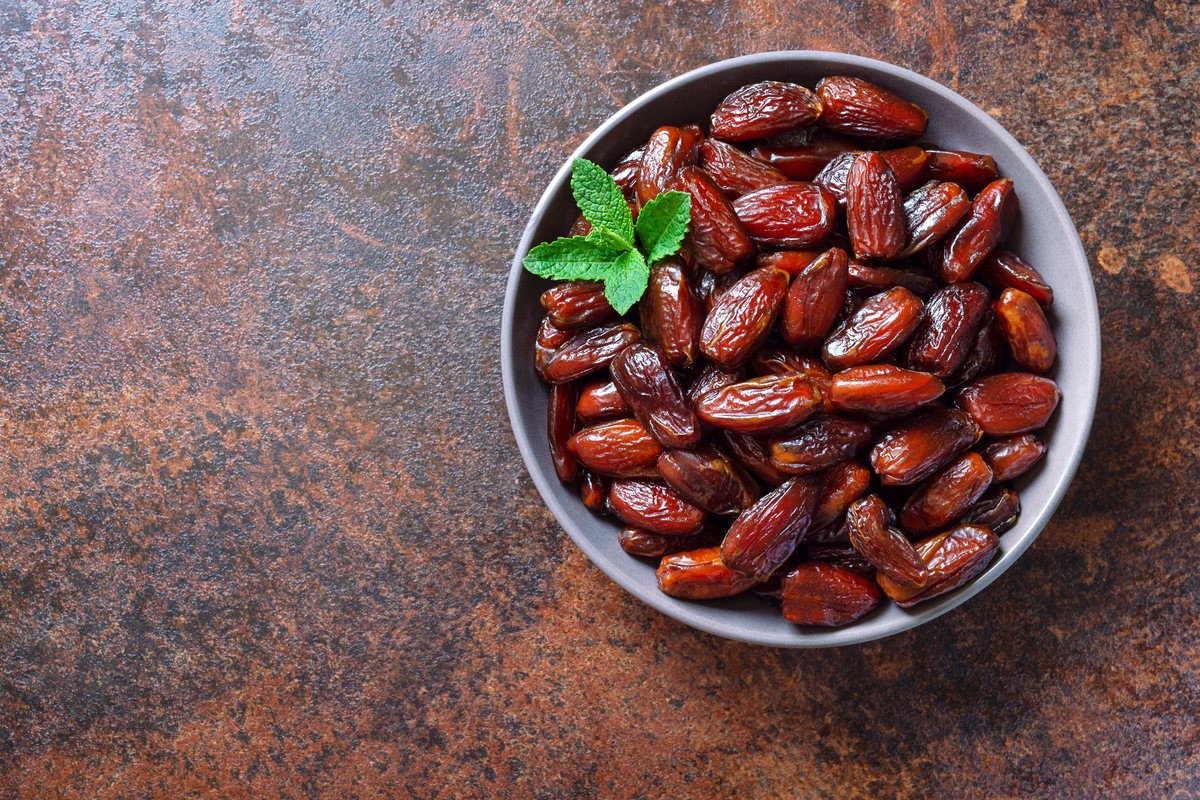
A single date palm can bear over 100 kg of fruit per year - and can live up to 100 years.
The date palm was cultivated between Mesopotamia and the Arabian Peninsula as early as 7,000 years ago. It sustained caravans and oases and is frequently mentioned in the Bible and the Quran. Palm trees are dioecious: for a female palm to bear fruit, farmers have traditionally pollinated it by hand with the blossoms of male trees.
According to Islamic tradition, the Prophet Muhammad broke his fast with dates and water – therefore, for many Muslims, the fast begins with dates. Iftar During Ramadan, a date is still eaten today. The most important growing countries are Egypt, Saudi Arabia, Iran, Algeria, and Iraq. The large, soft ones Medjool They originally come from Morocco; the slender, amber-colored Deglet Nour („Finger of Light“) from Algeria and Tunisia.
To useWhat dates can do for you
100g of dried dates provide approximately 280 kcal, 63 to 67g Sugar (primarily glucose and fructose), 7 to 8 g Dietary fiber, around 650 to 700 mg potassium and 40 to 55 mg of magnesium. A Medjool weighs about 24 g and provides around 66 kcal, a Deglet Nour only 7 to 8 g and about 20 kcal. They also contain polyphenols, especially phenolic acids and flavonoids.
Despite their high sugar content, dates cause a smaller rise in blood sugar than one might think: A study from the Emirates found that glycemic index Of the five varieties, dates have a blood glucose level between approximately 44 and 55 – in the low to medium range, even for people with type 2 diabetes. This makes dates a more sensible sweetener than table sugar, but not a food that can be consumed in unlimited quantities. Incidentally, date syrup contains hardly any fiber and, like honey, is classified as a free sugar.
It is often reported that dates can ease childbirth in the final weeks of pregnancy. Several small studies, mostly from Jordan and Iran, found that women who ate six dates daily from around week 36 onward experienced a more ripe cervix and a shorter active labor phase. A 2020 meta-analysis confirms these findings but classifies the studies as being of low to moderate quality. Anyone wishing to try this should consult their midwife beforehand.
IngredientsThis is what's in the date
Dates contain glucose, fructose and, depending on the variety, some sucrose, soluble and insoluble fiber (cellulose, hemicellulose, pectin), potassium, magnesium, copper, manganese, iron, calcium, vitamin B6, niacin and folate, as well as polyphenols such as caffeic acid, ferulic acid, flavonoids and tannins.
Soft varieties like Medjool are rich in invert sugar (glucose and fructose), while semi-dry varieties like Deglet Nour contain more sucrose and are firmer. Fresh yellow or red dates taste crisp and tart because the tannins have not yet broken down.
Enhanced combinationsWhat makes dates stronger
Dates are sweet with fiber - best enjoyed together with fat, protein or other fiber.
Fat and protein slow down blood sugar levels.
Instead of sugar in the porridge.
Replaces sugar in cakes and bars.
Oriental and warming.
Sweet and salty contrast.
Like during Ramadan: a gentle start after fasting.
What contradicts itselfIt's best to avoid these combinations.
Quickly burns 300 kcal and more.
Low in fiber, free sugars.
Sticky sweeteners promote tooth decay.
Fructose and fructans cause bloating.
High in potassium.
Check the ingredient list.
In the kitchenWhere they belong
- Energy ballsWith nuts, oats and cocoa.
- date pasteAs a sugar substitute for baking.
- Stuffed datesWith almond or cream cheese.
- TagineWith lamb or chickpeas.
- PorridgeWith chopped dates instead of sugar.
- SmoothieWith banana and plant-based milk.
- Dates wrapped in baconOr vegetarian with goat cheese.
- Couscous saladWith mint and pomegranate.
- Date chutneyGoes well with cheese and curries.
- raw food cakeBase made from dates and nuts.
As a home remedyDates for sluggish digestion
Soaked dates
- Pit and halve three to four dried dates.
- Place in a glass with about 200 ml of water in the evening.
- Leave to soak overnight.
- Eat the dates slowly in the morning and drink the soaking water with them.
A mild, time-tested home remedy for sluggish digestion: fiber and fluids soften stools. This is primarily evidenced by the fiber content – similar to soaked prunes or figs.
Three to four dates a day. Include them in your carbohydrate intake if you have diabetes; avoid them if you have fructose intolerance.
Ayurveda & TCMWhat the old systems say
Ayurveda
In Ayurveda, the date (Kharjura) is considered sweet, cooling, heavy, and nourishing. It is said to give strength, calm Vata and Pitta, and is recommended for exhaustion and to strengthen after illness; it should be consumed sparingly by Kapha.
Traditional Chinese Medicine
In Traditional Chinese Medicine (TCM), the date is considered similar to the Chinese jujube (Da Zao), although they are botanically unrelated. According to current understanding, it is regarded as warming and sweet, said to strengthen the spleen and stomach, and nourish the blood.
Warning noticesWhen you should be careful
Please note
- Sugar: Dates are very high in sugar - for people with diabetes and gestational diabetes, they should only be consumed in agreed-upon quantities.
- Potassium: Pay attention to the amount if you have kidney disease or are taking potassium-sparing medication.
- Pregnancy: Studies on date consumption before birth are small - no substitute for medical or midwife care.
- Digestion: Dates can cause bloating and diarrhea in people with fructose intolerance and irritable bowel syndrome.
- Toddlers: Whole dates and pits pose a choking hazard - remove the pits and cut into small pieces.
- Quality: Check for mold and insect infestation; candied dates contain added sugar.
This page provides information and does not replace medical advice. If symptoms persist, please consult a doctor.
Related to the topicRead on and cook along!
Shop links lead to our product pages; it is indicated there if a partner is involved.
SourcesWhat is this based on?
- USDA FoodData Central: Dates, Medjool and Dates, deglet noor.
- Al-Shahib W, Marshall RJ. The fruit of the date palm: its possible use as the best food for the future? International Journal of Food Sciences and Nutrition 2003; 54(4): 247–259.
- Alkaabi JM et al. Glycemic indices of five varieties of dates in healthy and diabetic subjects. Nutrition Journal 2011; 10:59.
- Al-Kuran O et al. The effect of late pregnancy consumption of date fruit on labor and delivery. Journal of Obstetrics and Gynecology 2011; 31(1).
- Bagherzadeh Karimi A et al. Effects of date fruit (Phoenix dactylifera L.) on labor and delivery outcomes: a systematic review and meta-analysis. BMC Pregnancy and Childbirth 2020; 20:210.


