Hazelnut (Corylus avellana)
OriginThe Stone Age nut
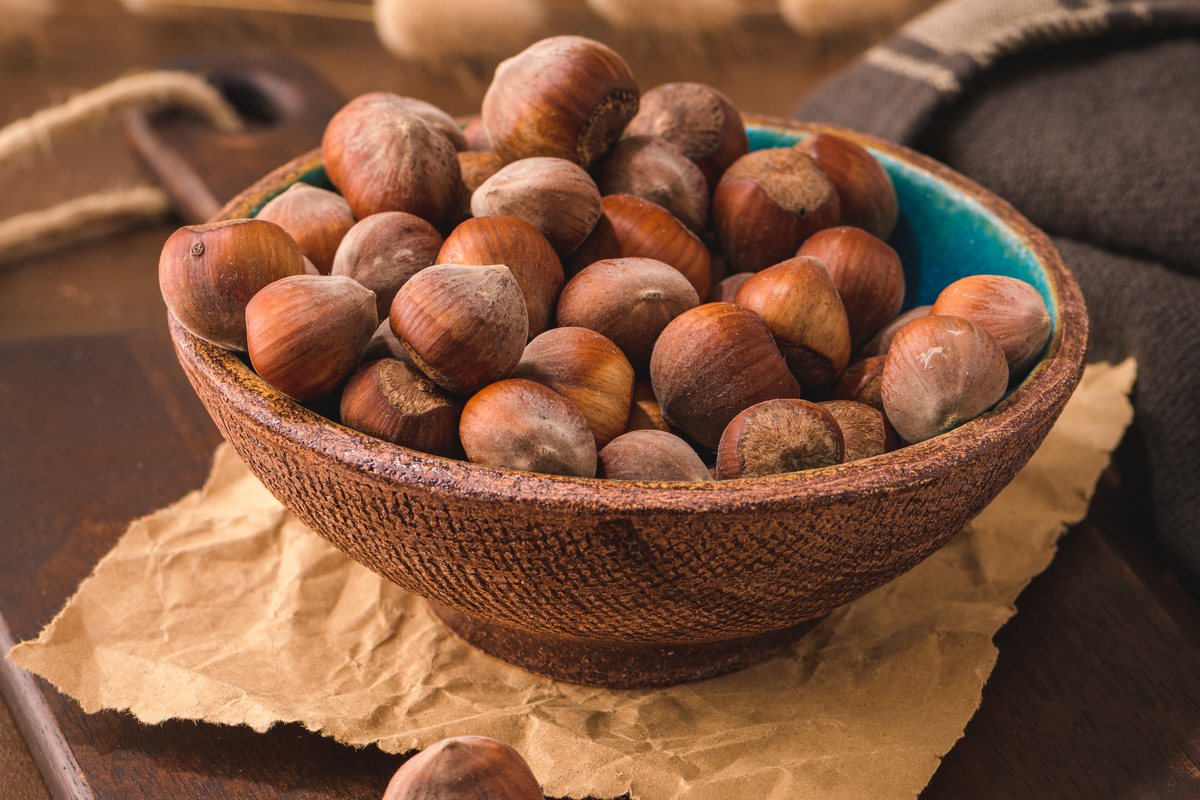
After the last ice age, the hazel was one of the first shrubs to reclaim Central Europe - people collected its nuts by the thousands.
Huge quantities of roasted hazelnut shells have been found in Mesolithic settlements in Northern Europe – the nut was a staple food for hunter-gatherers. In many cultures, the hazel was considered a magical shrub; dowsing rods were traditionally cut from hazel twigs.
Today, around two-thirds of the world's hazelnut harvest comes from Turkey, primarily from the Black Sea coast; Italy (Piedmont) is known for its aromatic varieties. The hazel is a member of the birch family – therefore, many people with birch pollen allergies also react to the nut.
To useWhat the hazelnut does for you
Hazelnuts consist of approximately 60 percent fat, predominantly oleic acid as in olive oil. In addition, there are approximately 15 mg. Vitamin E Per 100g, magnesium, copper, manganese, folate, fiber and polyphenols in brown skin.
A meta-analysis of controlled trials found that hazelnuts lower LDL cholesterol and total cholesterol without increasing body weight. Large observational studies link regular nut consumption—about a handful a day—to a lower risk of cardiovascular disease and lower overall mortality.
The difference to hazelnut-chocolate spread is significant: the popular spread is over half sugar and contains only about 13 percent hazelnuts. Pure hazelnut butter with a little cocoa and a touch of honey is the honest alternative.
IngredientsThis is what's inside the hazelnut
Hazelnuts contain oleic acid, Linoleic acid, approximately 15 percent protein, 10 percent fiber, Vitamin E, Vitamin B6, folate, magnesium, copper, manganese, phytosterols and proanthocyanidins, which are mainly found in the skin.
Nuts can be infested by molds that Aflatoxins Avoid eating nuts that taste bitter or musty. Nuts contain several allergens; Cor a 1 is similar to the birch pollen allergen and is partially destroyed during roasting, while others are heat-stable.
Enhanced combinationsWhat makes hazelnuts stronger
Hazelnuts love roasted flavors, chocolate and fruit - and also go well in savory dishes.
Roast in the oven at 170 °C for 10 minutes, then rub off the skin - intense and sweet.
Homemade hazelnut-nougat cream with more nuts and less sugar.
Chopped in porridge or muesli.
Roasted hazelnuts in a winter salad.
Hazelnut and parsley pesto or as a crust for fish.
Vitamin E is fat-soluble - sprinkle it over vegetables.
What contradicts itselfIt's best to avoid these combinations.
Can trigger severe reactions - even in trace amounts in baked goods and chocolate.
Aflatoxins - throw them away.
Over half sugar - doesn't count as a nut.
Choking hazard - only use when ground or as a puree.
Approximately 630 kcal per 100 g - a handful is enough.
They become rancid in cool, dark, airtight conditions.
In the kitchenWhere she belongs
- Hazelnut butterRoasted nuts in a blender for 10 minutes.
- Hazelnut-nougat creamWith cocoa, a little honey and a pinch of salt.
- Nut braidYeast pastry with hazelnut filling.
- Hazelnut porridgeWith apple and cinnamon.
- lettuceLamb's lettuce with pear and hazelnuts.
- PestoWith parsley and Parmesan cheese.
- Fish with nut crustHazelnuts, breadcrumbs, butter.
- MacaronsWith ground hazelnuts.
- Frangelico dessertPanna cotta with hazelnut.
- Energy ballsWith dates and cocoa.
As a home remedyThe honest hazelnut-nougat cream
Hazelnut-cocoa spread
- Roast 200g of hazelnuts at 170°C for 10 to 12 minutes, then rub off the skin in a cloth.
- Grind in a blender for 8 to 10 minutes until smooth, scraping down the sides occasionally.
- Mix in 2 tablespoons of cocoa, 1 to 2 tablespoons of honey or maple syrup and a pinch of salt.
- Pour into a glass jar, store in a cool place, and consume within three weeks.
A spread with approximately 85 percent hazelnuts instead of sugar as the main ingredient – for children and adults who don't want to miss out on hazelnut nougat. Provides vitamin E, magnesium, and healthy fats.
One to two teaspoons per slice of bread. Not for children under one year old (honey) and not for those with nut allergies.
Ayurveda & TCMWhat the old systems say
Ayurveda
The hazelnut is not described in classical Ayurveda. Like other nuts, it is considered today to be sweet, heavy, oily, and warming – nourishing and calming for Vata, but only suitable for Kapha and Pitta in small quantities.
Traditional Chinese Medicine
In Traditional Chinese Medicine (TCM), the hazelnut (Zhen ZiIt is sweet and neutral. It is said to strengthen the spleen and stomach, replenish Qi, and clear the eyes – traditionally used for lack of appetite and weakness.
Warning noticesWhen you should be careful
Please note
- Allergy: A common and potentially severe allergen, cross-reaction with birch pollen.
- Aflatoxins: Discard any bitter, musty, or moldy nuts.
- Toddlers: Whole nuts pose a choking hazard.
- Honey: Not for infants under one year old.
- Calories: A handful a day is enough.
This page provides information and does not replace medical advice. If symptoms persist, please consult a doctor.
Related to the topicRead on and cook along!
Shop links lead to our product pages; it is indicated there if a partner is involved.
SourcesWhat is this based on?
- Perna S et al. Effects of hazelnut consumption on blood lipids and body weight: a systematic review and Bayesian meta-analysis. Nutrients 2016; 8(12): 747.
- Aune D et al. Nut consumption and risk of cardiovascular disease, total cancer, all-cause and cause-specific mortality: a systematic review and dose-response meta-analysis of prospective studies. BMC Medicine 2016; 14: 207.
- Estruch R et al. Primary prevention of cardiovascular disease with a Mediterranean diet supplemented with extra-virgin olive oil or nuts. New England Journal of Medicine 2018; 378(25): e34.
- Mithen S et al. Hunter-gatherer plant use in Holocene Scotland: the Mesolithic site of Staosnaig, Colonsay. Journal of Archaeological Science 2001; 28(3): 223–234.
- USDA FoodData Central: Nuts, hazelnuts or filberts.