
Arugula (Eruca vesicaria)
OriginFrom romaine to pizza topping
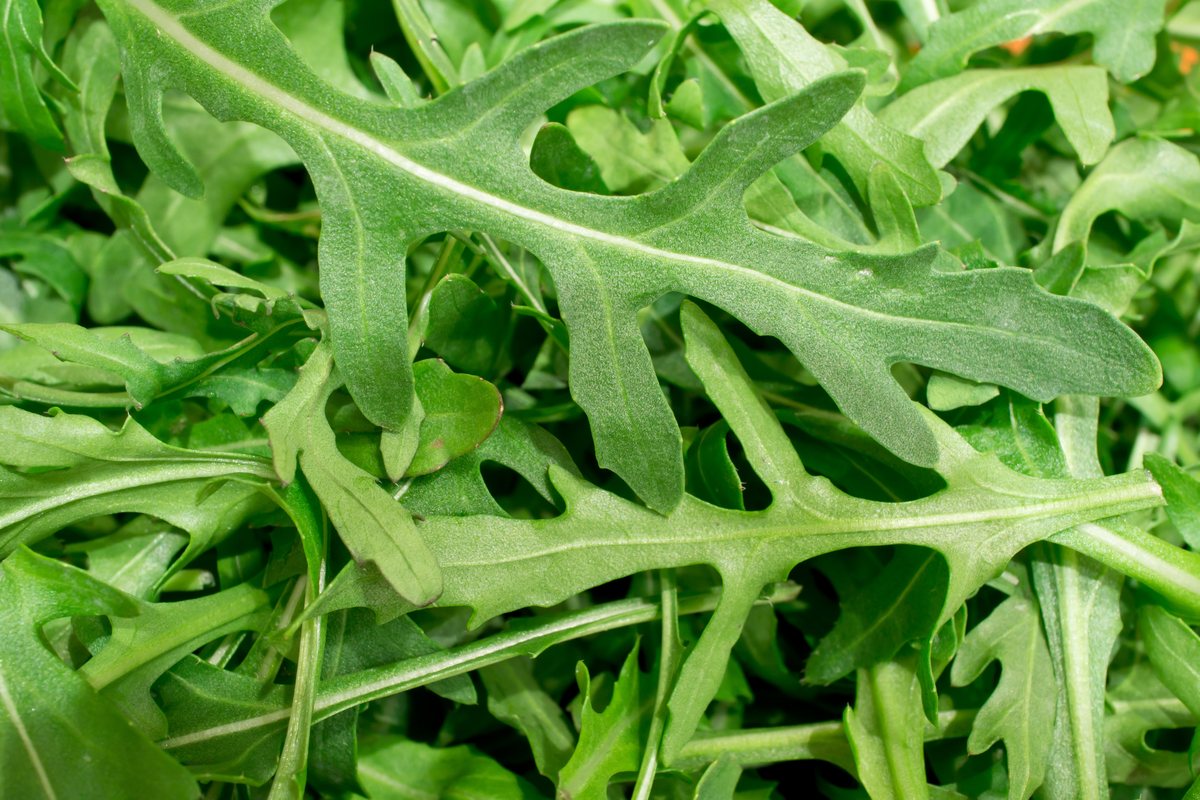
What is sold here as rocket is usually not salad rocket at all, but its relative, wild rocket.
Arugula originates from the Mediterranean region and was eaten by the Greeks and Romans, often together with lettuce to balance its mildness. In Italy, it remained a wild herb used in simple cuisine for centuries.
In Germany, rocket only became popular in the 1990s with the rise of Italian cuisine. Wild rocket is the variety most commonly found in stores (Diplotaxis tenuifolia) with narrower, more serrated leaves and a stronger taste - both types are closely related and used in the same way.
To useWhat rocket does for you
Arugula provides approximately 110 µg per 100 g. Vitamin K - more than the daily requirement -, almost 100 µg Folate, 160 mg Calcium and vitamin C at only about 25 kcal. It also contains carotenoids like lutein, which are important for the eyes.
Its sharpness comes from Glucosinolates, especially glucoerucine, which, when chewed, isothiocyanates such as sulforaphane derivatives are produced. These substances, as with other cruciferous vegetables, are being intensively researched; observational studies link high consumption of cruciferous vegetables with a lower risk of some types of cancer.
Arugula is rich in nitrate. When ingested from vegetables, nitrate is partially converted in the body to nitric oxide, which dilates blood vessels – studies with nitrate-rich vegetables show slightly blood pressure-lowering effects. At the same time, EU maximum levels exist due to the potential formation of nitrosamines; normal portions of salad are safe.
IngredientsThis is what's in arugula
Arugula contains glucosinolates (especially glucoerucin and glucoraphanin), flavonols such as quercetin and kaempferol glycosides, vitamin K, folate, vitamin C, beta-carotene, lutein, calcium, potassium, iron and plenty of nitrate.
Nitrate content depends heavily on light and fertilization: winter and greenhouse-grown arugula contains significantly more than field-grown arugula in summer. The stems store more nitrate than the leaf surfaces.
Enhanced combinationsWhat makes arugula stronger
Arugula needs a counterpoint - something sweet, fatty or salty to balance the spiciness.
Fruit absorbs the spiciness.
Makes vitamin K and carotenoids available.
The Italian classic.
It inhibits nitrosamine formation and helps with iron absorption.
For pesto and salad.
Freshly placed, not baked.
What contradicts itselfIt's best to avoid these combinations.
Nitrate plus nitrite and heat promote nitrosamines.
Wilted arugula produces more nitrite.
Do not keep vegetables high in nitrates warm.
Because of the high nitrate levels.
Ragwort leaves may be mixed in.
Eat plenty of vitamin K – evenly.
In the kitchenWhere he belongs
- Arugula with ParmesanOlive oil, lemon, pepper.
- pizzaTopped after baking.
- Arugula pestoWith walnuts instead of basil.
- Pear and arugula saladWith walnuts and goat cheese.
- pastaFinally, fold it in.
- CarpaccioBeef or beetroot with arugula.
- RisottoStirred in at the end.
- BreadArugula on tomato bread.
- SmoothieA handful with apple.
- potato saladWith arugula instead of cucumber.
As a home remedyArugula and walnut pesto
Arugula and walnut pesto
- Briefly toast a handful of walnuts without oil.
- Roughly mix with 80g of arugula, half a clove of garlic, 30g of Parmesan cheese and the juice of half a lemon.
- Gradually add 80 ml of olive oil until a creamy pesto is formed.
- Season with salt, fill into a glass and cover with oil.
A flavorful, green serving of cruciferous vegetables to accompany pasta, bread, or roasted vegetables. Walnuts provide omega-3, lemon vitamin C, and oil makes vitamin K bioavailable.
It will keep for about 5 days in the refrigerator. 1 to 2 tablespoons per serving.
Ayurveda & TCMWhat the old systems say
Ayurveda
rocket (TaramiraIt is known in India as an oilseed. According to Ayurveda, the leaves are pungent, bitter, and warming – stimulating Agni and reducing Kapha; use sparingly in cases of Pitta excess.
Traditional Chinese Medicine
In Traditional Chinese Medicine (TCM), arugula is not classically described. Spicy and bitter leafy greens are considered warming and lung-opening.
Warning noticesWhen you should be careful
Please note
- Nitrate: Not for infants; eat arugula fresh and not reheated.
- Groundsel: Identify and discard toxic additives - they contain pyrrolizidine alkaloids.
- Blood thinners: Plenty of vitamin K - consistent amounts for coumarins.
- Thyroid: Normal amounts are harmless.
- Allergy: Rare, cross-reaction with mustard possible.
This page provides information and does not replace medical advice. If symptoms persist, please consult a doctor.
Related to the topicRead on and cook along!
Shop links lead to our product pages; it is indicated there if a partner is involved.
SourcesWhat is this based on?
- Bell L, Wagstaff C. Glucosinolates, myrosinase hydrolysis products, and flavonols found in rocket (Eruca sativa and Diplotaxis tenuifolia). Journal of Agricultural and Food Chemistry 2014; 62(20): 4481–4492.
- Higdon JV et al. Cruciferous vegetables and human cancer risk: epidemiological evidence and mechanistic basis. Pharmacological Research 2007; 55(3): 224–236.
- Siervo M et al. Inorganic nitrate and beetroot juice supplementation reduces blood pressure in adults: a systematic review and meta-analysis. Journal of Nutrition 2013; 143(6): 818–826.
- Commission Regulation (EU) 2023/915 on maximum levels of certain contaminants in foodstuffs (nitrate in rocket).
- Federal Institute for Risk Assessment: Questions and answers about pyrrolizidine alkaloids in food.


