
OriginThe seed that only becomes spicy when wet
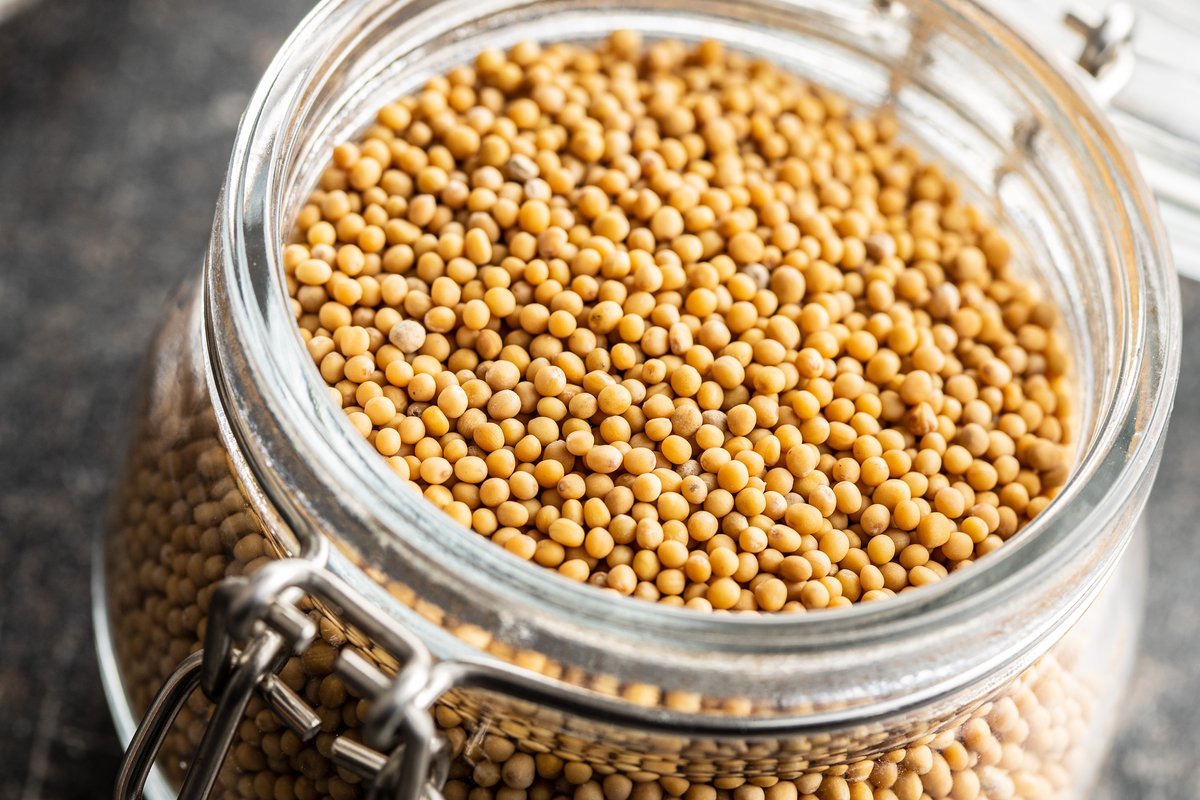
A dry mustard seed tastes of nothing. Crushed and mixed with water, it reacts within minutes to create what stings the nose – a chemical reaction, not a finished product.
Mustard is one of the oldest spices known to humankind. The Greeks knew it, and the Romans mixed the seeds with grape must to create "mustum ardens"—burning must—giving it the name it bears throughout much of Europe. In the Middle Ages, mustard was the spice of the poor: pepper came from India and was expensive, while mustard grew in the field next door. Dijon became the mustard capital in the 14th century because the Duke of Burgundy made mustard a trade commodity.
Botanically, they are three plants: white mustard (Sinapis alba, yellow seeds, mild - German and American mustard), brown mustard (Brassica juncea, Indian cuisine, Dijon) and black mustard (Brassica nigra, the hottest, now rare). Mustard is now mainly cultivated in Canada, Nepal and Ukraine; as green manure it is grown on half of Germany's fields in autumn.
To useWhat mustard seeds can do for you
Mustard is a A digestive spice that is absorbed through the nose. The mustard oils – more precisely, isothiocyanates, which are formed from mustard oil glycosides when crushed with water – irritate the mucous membranes, stimulate saliva and gastric juices, and accelerate the digestion of fat. That's why mustard is a staple with sausage, roasts, and cheese: it makes heavy foods lighter.
These same mustard oils are effective against bacteria and fungi – clearly demonstrated in test tubes, and plausibly observed in the gut. They are related to substances found in broccoli, horseradish, and nasturtium, which are being studied in cancer research; for mustard seeds themselves, only laboratory data exists. And the oil from the seeds (cold-pressed mustard oil) is a valuable cooking oil rich in omega-3 fatty acids.
The classic use, however, is external: mustard flour applied to the skin draws blood to the uppermost layers, warms deeply, and relieves pain in joints and respiratory tracts – the mustard poultice our grandmothers knew for bronchitis. It works, but it's a powerful tool with rules.
IngredientsThat's what's in the grain
White mustard contains the glycoside Sinalbin, brown and black mustard Sinigrin. Both are tasteless until the enzyme Myrosinase It splits in water: Sinalbin becomes a mild substance, sinigrin the pungent one. Allyl mustard oil, which rises into the nose. Heat destroys the enzyme - cooked mustard becomes mild, cold-mixed mustard is pungent.
This includes around 30 percent fatty oil (erucic acid in older varieties, now cultivated to be low in it), 25 percent protein, mucilage in the seed coat (which is why white mustard swells), calcium, magnesium, selenium and the cruciferous glucosinolates.
Enhanced combinationsWhat makes mustard seeds stronger
Mustard combines with fat, acid and sweetness - and becomes a different spice in each combination.
The spiciness only develops if myrosinase can react in the water. Mix mustard flour with cold water, wait 10 minutes, then add vinegar – this stops the reaction and fixes the spiciness.
Indian tadka: Brown mustard seeds cooked in hot ghee until they pop – then they are nutty instead of spicy. Served over dal, vegetables, or rice.
Dijon mustard is mustard flour with verjus, German mustard is mustard flour with vinegar. The acid makes it shelf-stable and gives it a smooth texture.
Sweet mustard with white sausage, honey mustard with salmon, fig mustard with cheese - sweetness takes the edge off the spiciness.
Three digestive spices for meat and cabbage: mustard and horseradish with mustard oils, caraway with essential oil - the trinity of German cuisine.
Mustard seeds in cucumber brine, in pickled pumpkin, in the marinade for fish: they keep germs away and add crunch.
What contradicts itselfIt's best to avoid these combinations.
Hot water destroys the enzyme – the mustard remains bitter and bland. Always mix with cold water.
Add the mustard to the sauce only at the very end. When cooked, it loses its pungency and becomes slightly bitter.
Sole, scallops, desserts: mustard belongs to robust dishes.
Children's skin burns in minutes. Do not apply mustard flour to the skin of children under twelve.
Mustard oils irritate the stomach lining. People with ulcers or sensitive stomachs should only eat mustard in small amounts.
Glucosinolates can inhibit iodine absorption. This isn't an issue when used as a spice, but it is a concern when using mustard seeds as a treatment for iodine deficiency and hypothyroidism.
To which courtWhere they belong
- Homemade mustard100g mustard flour, 100ml cold water, wait 10 minutes, then add 50ml vinegar, salt, a little honey - let it mature for a week.
- Indian DalRoast brown mustard seeds in ghee until they pop, then sprinkle over the lentils with cumin and curry leaf.
- Pickled cucumbersAdd 1 tablespoon of yellow mustard seeds per glass to the brine along with dill, bay leaf and allspice.
- Mustard celebrationHard-boiled eggs in mustard sauce - the North German answer to the question of what else you can do with mustard.
- Kasseler & SauerkrautMustard is a must here: it digests the fat and tastes good with the cabbage.
- Honey and mustard dressing2 tsp mustard, 1 tsp honey, 2 tbsp vinegar, 6 tbsp oil - emulsified thanks to the mucilage in the mustard.
- Mustard crustDijon with herbs and breadcrumbs on lamb or salmon - 15 minutes in the oven.
- Fried cabbageMustard seeds with caraway seeds in butter, then add pointed cabbage or Brussels sprouts - cruciferous vegetables with cruciferous vegetables.
- Mustard sauce for the fishClassic accompaniments to carp and trout: butter, mustard, cream, dill.
- Mustard sproutsGerminate mustard seeds on damp kitchen paper - after 5 days you'll have spicy cress for your bread.
As a home remedyMustard poultices for bronchitis and joint pain
Mustard flour roll
- Mix 2 to 4 tablespoons of mustard flour (freshly ground black or brown mustard) with lukewarm water to form a paste - never hot.
- Spread the mustard about a finger's thickness onto a cloth, then place a second cloth over it so that the mustard does not directly touch the skin.
- Place on chest or joint, cover with a towel. As soon as it burns noticeably, leave for no more than 3-5 minutes – never longer than 10 to 15 minutes in total.
- Remove skin, rub with oil, rest for 30 minutes. No more than once a day, for a few consecutive days.
For persistent coughs and bronchitis in adults, muscle and joint pain, and tension. The compress draws blood to the skin, warms deeply, and relaxes – a proven remedy when the rules are followed.
Only for adults, only once a day, only 10–15 minutes. The skin will turn red – that's normal. Blisters are not normal: that means it was done for too long.
Ayurveda & TCMWhat the old systems say
Ayurveda
As Sarshapa A pungent, hot spice that reduces Kapha and Vata and ignites Agni. Mustard oil is the everyday oil in North India and Bengal – for cooking and daily massage, especially in winter.
Traditional Chinese Medicine
Bai Jie Zi, White mustard seed, according to Traditional Chinese Medicine (TCM), warms the lungs, loosens "cold phlegm," and is used for coughs with thick sputum and joint pain caused by cold – internally in small doses, externally as a poultice. It is one of the few European spices with a firm place in both systems.
Warning noticesWhen you should be careful
Please note
- Mustard wrap Adults only, maximum 10-15 minutes, never on broken skin, never while asleep. Blisters indicate a burn.
- Children: Do not apply mustard flour to the skin of children under twelve years of age; mustard in food only in small amounts from toddler age onwards.
- Stomach: For stomach ulcers, gastritis, and irritable bowel syndrome, use only a small amount of mustard – the mustard oils are irritating.
- Thyroid: Large quantities of raw mustard seeds can inhibit iodine absorption; avoid seed treatments in cases of hypothyroidism.
- Allergy: Mustard is one of the 14 allergens that must be labelled in the EU - reactions can be severe.
- Pregnancy: Mustard in food is harmless, mustard poultices and mustard baths are not.
This page provides information and does not replace medical advice. If symptoms persist, please consult a doctor.
Related to the topicRead on and cook along!
Shop links lead to our product pages; it is indicated there if a partner is involved.
SourcesWhat is this based on?
- Commission E: Monograph Sinapis nigrae semen (black mustard seed), Federal Gazette 1990 - externally for catarrh of the respiratory tract and chronic-degenerative joint diseases.
- Blaschek W (ed.): Wichtl - Herbal drugs and phytopharmaceuticals. 6th edition 2016, entries Sinapis albae and nigrae semen.
- Regulation (EU) No 1169/2011, Annex II - Mustard as an allergen requiring labelling.
- USDA FoodData Central: Spices, mustard seed, ground.
- Gernot Katzer's Spice Pages: Entry Mustard - Types, chemistry of spiciness, culinary uses.


