
Sugar snap peas (Pisum sativum var. saccharatum)
OriginThe pea without parchment
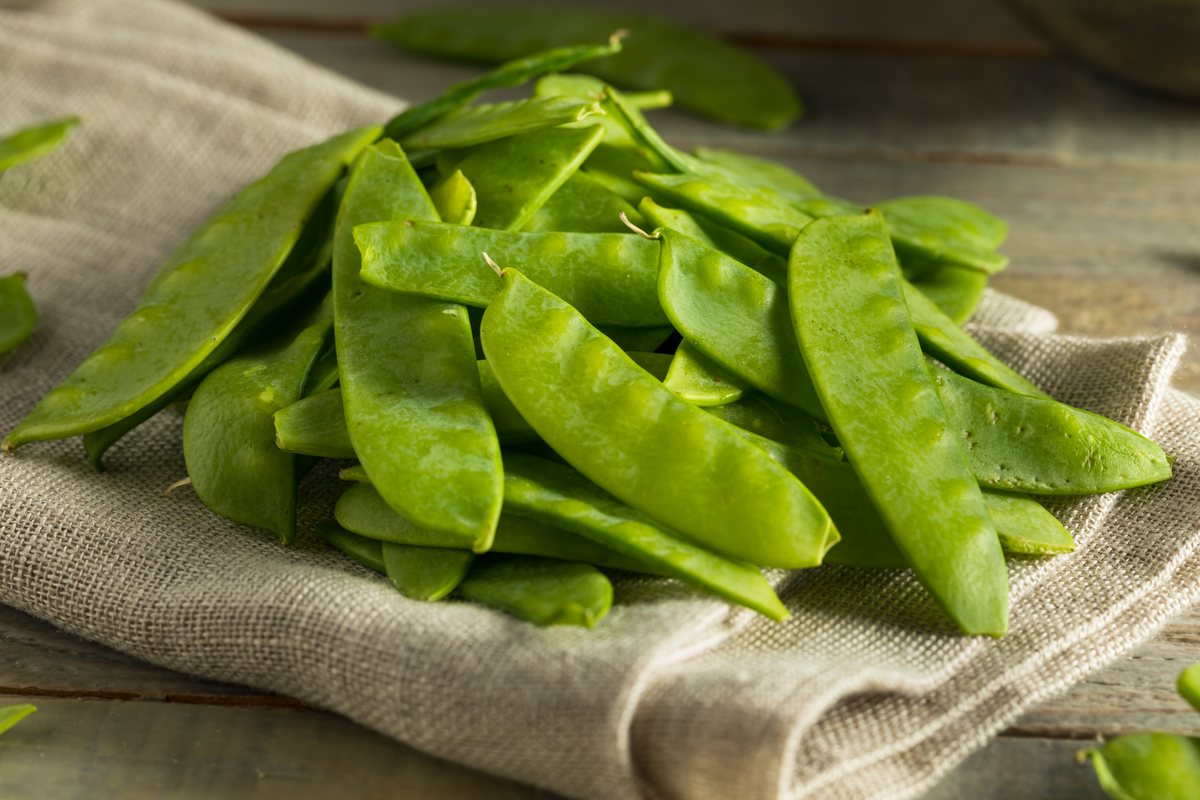
The French mangetout The best way to put it is: "eat everything".
The pea is one of the oldest cultivated plants and was grown in the Fertile Crescent around 10,000 years ago. For a long time, people primarily ate the dried seeds. It wasn't until the early modern period that gardeners in the Netherlands and France bred varieties whose pods didn't form a tough parchment layer – the sugar snap pea. At the court of Louis XIV, young, sweet peas were considered a fashionable delicacy.
There are two types: the flat Sugar pea or snow pea (English) snow pea), which is harvested while the kernels are tiny, and the round, fleshy Snap pea (sugar snap), which was only bred in the USA in the 1970s. In Germany, sugar snap peas grow well in gardens and on balconies; outside of summer, they are often imported from Kenya, Guatemala, or Morocco.
To useWhat sugar snap peas can do for you
According to the USDA, 100g of raw sugar snap peas provide approximately 42 kcal and about 60 mg of carbohydrates. Vitamin C - more than an orange and well over half the daily requirement - plus around 25 µg Vitamin K, 42 µg Folate, 2.6 g of fiber, 2.8 g of protein, as well as iron, potassium and the carotenoids beta-carotene and lutein.
Because they are eaten raw or very briefly cooked, the heat-sensitive vitamin C is largely preserved. The vitamin C also improves the absorption of iron from the meal – a benefit for those who eat little meat. The fiber and plant-based protein are satiating without being heavy. Sugar snap peas are also considered one of the most easily digestible legumes and cause less bloating than mature beans or lentils.
No specific health benefits have been proven for sugar snap peas. Their value is simple: high in vitamin C with low energy, crisp, sweet, and ready in two minutes. According to the German Federal Institute for Risk Assessment (BfR), sugar snap peas and peas are an exception among legumes because they contain very few lectins – they can be eaten raw in moderation.
IngredientsThis is what's in sugar snap peas
Sugar snap peas contain sugar (mainly sucrose), starch, protein, dietary fiber such as pectins and cellulose, small amounts of lectins, flavonoids such as quercetin and kaempferol glycosides, chlorophyll, beta-carotene, lutein, as well as vitamin C, vitamin K, folate, vitamin B1, potassium, magnesium and iron.
After harvesting, the sugar slowly converts into starch - that's why sugar snap peas taste sweetest when fresh and should be eaten within a few days.
Enhanced combinationsWhat makes sugar snap peas stronger
Sugar snap peas prefer low heat and fresh companion plants.
Vitamin C helps with iron absorption.
Sear for one minute.
One drop of sesame oil is enough.
Colorful vegetable stir-fry.
For the fat-soluble carotenoids.
Raw in salad.
What contradicts itselfIt's best to avoid these combinations.
Grey, soft, and low in vitamins.
Sugar is turned into starch.
Low in lectins, but in moderation.
They always need to be cooked.
Remove the stem base along with the thread.
May cause bloating in people with sensitive intestines.
In the kitchenWhere she belongs
- Raw food snackPlain or with hummus.
- Stir-fried vegetablesWith ginger and sesame.
- Fried noodlesFinally, a word about that.
- Spring saladWith radishes and mint.
- RisottoFolded in just before the end.
- vegetable curryWith coconut milk.
- Buttered vegetablesWith carrots and parsley.
- Pasta saladBlanched and cold.
- bowlWith rice, tofu and avocado.
- Soup garnishSliced diagonally in clear broth.
As a home remedyVitamin C raw vegetables with sugar snap peas
Raw sugar snap peas
- Wash 150g of fresh sugar snap peas, remove the stem and string.
- Cut the pods diagonally into thin strips.
- Mix with a grated carrot, some lemon juice, 1 teaspoon of oil and a pinch of salt.
- Sprinkle with chopped mint and toasted sesame seeds, if desired, and eat immediately.
As a fresh source of vitamin C, it complements iron-rich meals such as lentils, whole grains, or tofu – the vitamin C improves the absorption of plant-based iron. Raw foods retain the most vitamin C.
A portion of 100 to 150 g as a side dish or snack. For sensitive digestive systems, blanch briefly.
Ayurveda & TCMWhat the old systems say
Ayurveda
In Ayurveda, young peas are considered sweet and astringent, cooling and light – balancing Pitta and Kapha. For those with a Vata constitution, they are best cooked briefly and eaten with a little ghee and cumin.
Traditional Chinese Medicine
In Western Traditional Chinese Medicine (TCM) nutritional theory, peas are considered sweet and neutral. They are said to strengthen the digestive system (spleen and stomach) and eliminate dampness. In Chinese cuisine, fresh peas are only briefly stir-fried in a wok.
Warning noticesWhen you should be careful
Please note
- Raw in moderation: Sugar snap peas contain very few lectins and can be eaten raw - but not by the kilo; small children should eat them cooked.
- Confusion: Green beans look similar, but are poisonous when raw - only eat real sugar snap peas raw.
- Allergy: Cross-reactions with other legumes such as peanuts, soy, lentils or lupins are possible.
- Irritable bowel syndrome: Larger portions can cause bloating due to sugar and fructans.
- Blood thinners: Eat consistent amounts when taking vitamin K antagonists.
This page provides information and does not replace medical advice. If symptoms persist, please consult a doctor.
Related to the topicRead on and cook along!
Shop links lead to our product pages; it is indicated there if a partner is involved.
SourcesWhat is this based on?
- USDA FoodData Central: Peas, edible-podded, raw.
- Federal Institute for Risk Assessment (BfR): Lectins in plant-based foods: Is there a health risk? Statement 03/2024 dated January 23, 2024.
- Federal Centre for Nutrition (BZfE): Time for sugar snap peas. Press release dated June 11, 2025.
- Federal Centre for Nutrition (BZfE): Pulses: From shopping to the kitchen.
- Consumer Advice Center Bremen: The sweet power food of summer: Everything about the sugar snap pea. Press release from May 23, 2023.


