OriginThe foundation of every kitchen
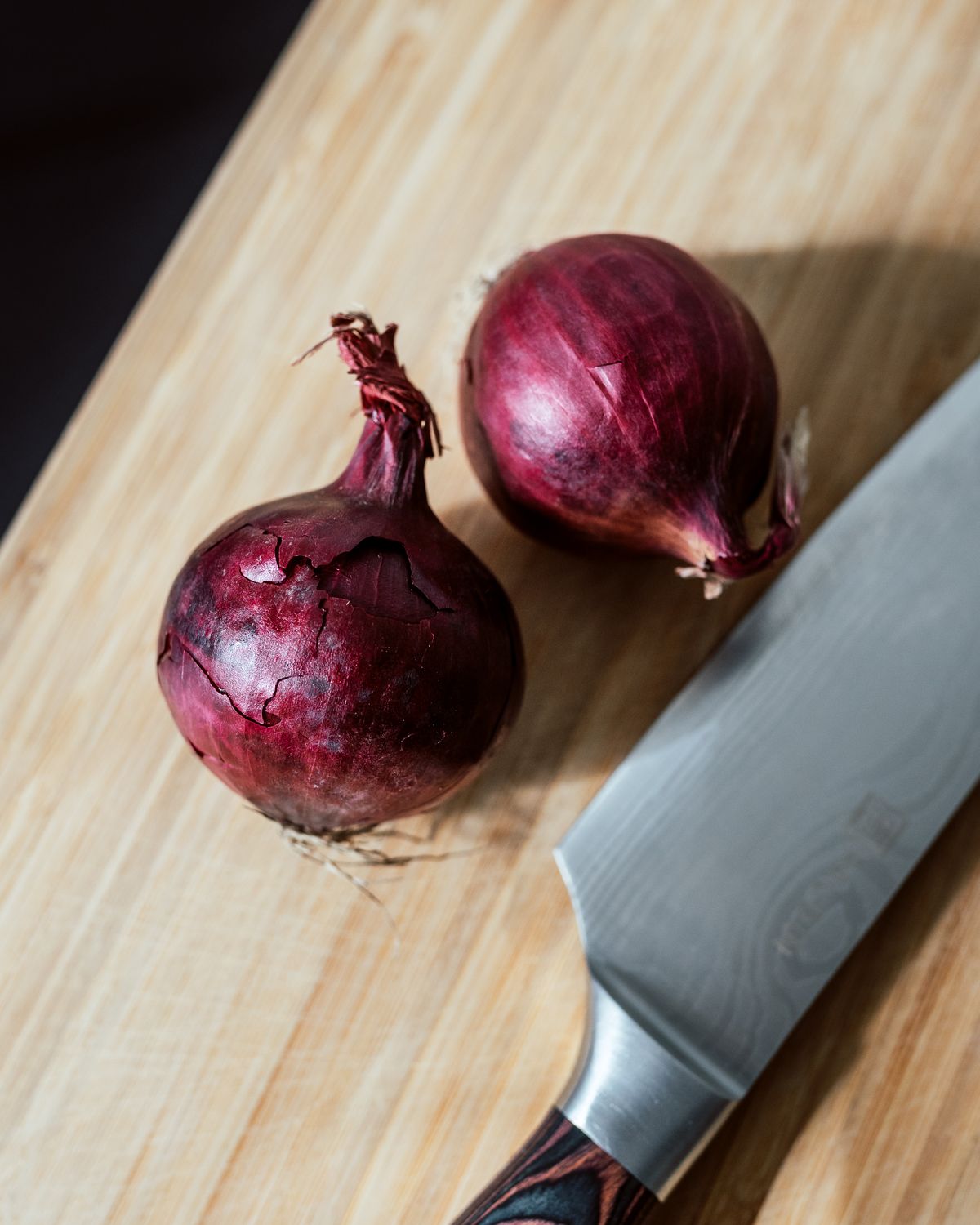
The Egyptians swore by the onion, the pyramid workers were paid with it, and half the world's cuisine begins with the phrase: "Sauté the onion in fat".
The onion originated in Central Asia and has been cultivated for at least 5,000 years – wild forms no longer exist. The Egyptians saw its concentric rings as a symbol of eternity and placed them in the tombs of pharaohs; the Romans introduced them to every province; in the Middle Ages, along with cabbage and turnips, it was the vegetable that sustained the population through the winter.
Today, onions grow on every continent; China and India are the largest producers. Yellow onions are the all-purpose variety, red ones milder and more suitable for raw use, white ones sharper and more watery, shallots more delicate for sauces, and sweet onions large and sweet. What they all have in common: sulfur compounds that cause a burning sensation when cut and turn sweet when cooked.
To useWhat the onion does for you
The onion is a Vegetables with medicinal properties. Their sulfur compounds – related to garlic allicin – have antimicrobial, anticoagulant, and mildly blood pressure-lowering effects; the German Commission E has recognized onions as beneficial for loss of appetite, digestive problems, and the prevention of vascular changes. Furthermore, onions are the most important source of quercetin in the Western diet – a flavonoid with antioxidant and anti-allergic properties.
In folk medicine, it's the go-to cough remedy: onion juice with honey or sugar loosens mucus, and an onion poultice placed on the ear soothes earaches. Both are based on simple scientific studies, but with a plausible explanation: the sulfur compounds have expectorant and antibacterial properties, and the warmth and moisture do the rest.
Frankly, onions aren't a medicinal plant that you dose – they're a food you eat every day, and that's precisely where their benefits lie. Observational studies link regular onion consumption with a lower incidence of stomach and colon cancer; a correlation, not proof, but a good one.
IngredientsThis is what's in the onion
The Sulfur compounds (Alliin, which breaks down into sulfides and the tear-forming substance propanethial S-oxide when cut) is responsible for the pungency, odor, and effect all at once. When cooked, it decomposes into sweet, mild substances – that's why you cry when cutting it and taste sugar in a stew. Quercetin It is found primarily in the outer layers and in red onions.
It also contains fructans (prebiotic fibers, the cause of bloating in sensitive individuals), vitamin C, potassium, folic acid, and chromium. The brown peel contains the most quercetin – cook it in the broth, then strain.
Enhanced combinationsWhat makes the onion stronger
The onion is the base – almost everything else combines with it. The crucial factor is how long you cook it.
Sauté over medium heat until translucent; caramelize over low heat for 45 minutes. The sweetness comes from the time, not the sugar.
The family together: onion as a base, garlic later (it burns faster), leek for mildness - soups, stews, sofrito.
Red onions pickled in vinegar lose their sharpness and gain color - perfect for salads, tacos, and burgers.
Onion soup, broth, pot roast: The Harz herbs give depth to the sweetness of the onions.
Quercetin is better absorbed with fat - onions fried in oil are the more effective form.
Chopped onion soaked in honey overnight: The syrup draws out the sulfur compounds - the oldest cough remedy in the home medicine cabinet.
What contradicts itselfIt's best to avoid these combinations.
Burnt onions are bitter. Use medium heat and be patient – the browning should come from sugar, not soot.
Cut onions absorb odors and spoil quickly - store in an airtight container, keep cool, and consume within two days.
Raw spiciness overpowers everything - for salads, use red onions, briefly soaked in cold water.
The fructans in onions are FODMAPs – often the trigger for bloating in people with irritable bowel syndrome. Cooking them longer improves their fructan content; the green part of the spring onion is low in fructans.
Onions slightly inhibit coagulation - as a vegetable, this is not a problem; however, discuss onion therapy or extract with warfarin.
Onions are toxic to dogs and cats (anemia) - even cooked, even in leftovers.
To which courtWhere she belongs
- Onion soupCaramelize one kilogram of onions in butter for 45 minutes, add broth and white wine, and top with cheese bread.
- Sofrito & SoffrittoOnion, carrot, celery in oil - the beginning of every Italian and Spanish sauce.
- Onion tartYeast dough with braised onions, bacon, caraway, creamed egg - for Federweißer (new wine).
- Pickled red onionsRings in vinegar, water, sugar, salt - after an hour pink and mild.
- Onion ringsDeep-fried in beer batter - the American sin.
- Fried onionsThinly sliced, coated in flour, fried golden brown in oil - on cheese spaetzle, hot dog, lentils.
- BhajiIndian onion rings in chickpea batter with cumin.
- Tarte Tatin with onionsCaramelized shallots under puff pastry, turned out - with thyme.
- Onion brothBoil onion skins with bay leaf and pepper for 30 minutes - quercetin and color.
- raw foodThinly sliced red onion in tomato salad, chickpea salad, on bread with lard.
As a home remedyOnion syrup for coughs
Onion and honey syrup
- Finely dice a large onion and place it in a screw-top jar.
- Cover with 3 to 4 tablespoons of honey (for children under one year: sugar), stir.
- Cover and let steep at room temperature for 6 to 12 hours - juice will form.
- Strain; use one teaspoon several times a day. Keeps for two days in the refrigerator.
Chesty cough, scratchy throat, cold – for children and adults alike. A traditional remedy for earaches is an onion poultice (warm, chopped onion wrapped in a cloth): place it on the ear for 20 minutes.
Three to five teaspoons a day, for as long as the cough lasts. No honey for infants under twelve months (risk of botulism). A cough lasting longer than a week or accompanied by fever should be seen by a doctor.
Ayurveda & TCMWhat the old systems say
Ayurveda
Palandu In Ayurveda, it is considered heavy, pungent, and sweet – reducing Vata but increasing Pitta and Kapha. It is used for indigestion and as a tonic, but avoided in sattvic diets (yoga, meditation) because it is considered stimulating.
Traditional Chinese Medicine
Yang Cong In Traditional Chinese Medicine (TCM), spring onion is a warming, pungent vegetable that opens the surface and dispels cold – used for the onset of a cold, stagnant digestion, and to move Qi. The spring onion (Cong BaiIt is still firmly established in tradition as a remedy for colds.
Warning noticesWhen you should be careful
Please note
- Irritable bowel syndrome: Raw onions are rich in fructans (FODMAP) - a common cause of bloating; cooked onions are usually better.
- Blood clotting: Large quantities or extracts slightly increase the effects of blood thinners.
- Heartburn: Raw onions can cause reflux in sensitive individuals.
- Pets: Toxic to dogs and cats - do not feed leftovers.
- Allergy: Rare; contact dermatitis from cutting is possible.
- Honey: Onion syrup with honey is not suitable for infants under one year old.
This page provides information and does not replace medical advice. If symptoms persist, please consult a doctor.
Related to the topicRead on and cook along!
Shop links lead to our product pages; it is indicated there if a partner is involved.
SourcesWhat is this based on?
- Commission E: Monograph Allii cepae bulbus (bulb), Federal Gazette 1986 - Loss of appetite, digestive problems, prevention of age-related vascular changes.
- Blaschek W (ed.): Wichtl - Herbal drugs and phytopharmaceuticals. 6th edition 2016.
- Galeone C et al. Onion and garlic use and human cancer. American Journal of Clinical Nutrition 2006; 84(5): 1027–1032.
- Slimestad R, Fossen T, Vågen IM. Onions: a source of unique dietary flavonoids. Journal of Agricultural and Food Chemistry 2007; 55(25): 10067–10080.
- USDA FoodData Central: Onions, raw.