OriginThe most beautiful poisonous plant in the forest
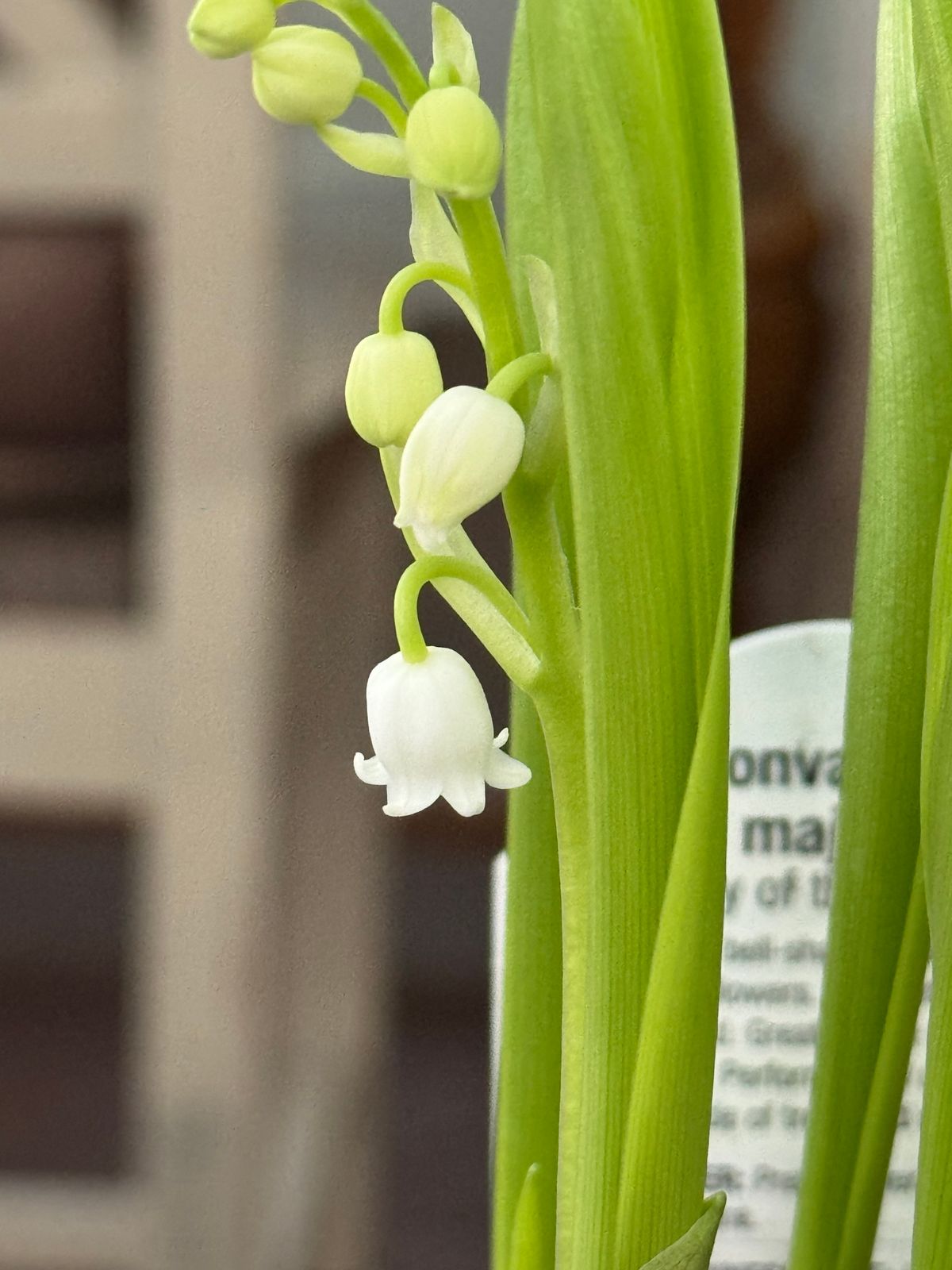
Hardly any plant is so loved and so underestimated: its fragrance is famous, its appearance delicate - and its contents work on the same target as digitalis medications.
Lily of the valley grows in open deciduous and mixed forests, along forest edges, and on calcareous soils throughout Europe, Western Asia, and North America. It spreads via underground runners, forming extensive stands in which all plants are genetically identical. New shoots emerge from the rhizome in spring. two, less often three leaves from a common stem This characteristic is crucial for distinguishing it from wild garlic. The white bell-shaped flowers appear in May, therefore Majalis; bright red berries follow in late summer.
Culturally, it is exceptionally present: In France, people give each other small bouquets of lilies of the valley on May 1st - muguet —a custom dating back to Charles IX in the 16th century, which still involves millions of bouquets today. In Christian iconography, it represents purity and is a symbol of Mary. And its fragrance is one of the most copied motifs in perfumery—although virtually all "lily of the valley" fragrances are synthetic, because no usable essential oil can be extracted from the flower.
In medicine, it once played a real, though now largely obsolete, role. Because its cardiac glycosides act on the same enzyme as the digitalis glycosides of foxglove, standardized lily of the valley preparations were used for mild heart failure – Commission E assessed this use for tested, standardized finished medicinal products. Today, it plays virtually no role: modern cardiology works with more precisely controlled substances, and cardiac glycosides as a whole have been significantly reduced in use. What remains is a very beautiful plant that one should know – because of spring.
To useWhy this page is primarily a warning
All parts of the lily of the valley contain cardioactive glycosides, especially convallatoxin and convalloside – over thirty different types have been described. They inhibit a transport enzyme in the heart muscle cell, thereby increasing the force of contraction, but at the same time slowing the heartbeat and potentially disrupting electrical conduction. This very mechanism makes them medicinally useful in tested doses and dangerous in untested doses: the difference between the effective and toxic levels is very small for cardiac glycosides.
There is no sensible way to use this plant for self-medication. No tea, no tincture, no infusion – the glycoside content varies so greatly depending on location, season, and plant part that calculating a precise dosage is impossible. Standardized preparations were and still are only available as prescription medications, and even these are rarely used today. Those seeking heart support can find it at... Hawthorn, which has a recognized application and an excellent safety profile.
Today, the lily of the valley is practically relevant primarily as Cause of poisoning. Three situations occur repeatedly. First: Children eat the red berries, which are very noticeable in late summer. Secondly: Someone is drinking the Water from the flower vase, in which lilies of the valley were growing – the glycosides leach into the water, and children especially drink from vases. Thirdly, and most consequentially: the Confusion with wild garlic in the spring.
The good news is that severe poisoning in humans is less common than its reputation suggests – the glycosides are poorly absorbed from the intestines, and a few berries usually only cause nausea, vomiting, and abdominal pain. The bad news is that larger quantities – such as a portion of wild garlic from mistaken leaves – can lead to cardiac arrhythmias, visual disturbances, confusion, and in extreme cases, cardiac arrest. Therefore: Any suspicion of lily of the valley ingestion warrants contacting the poison control center., not for waiting.
IngredientsThis is what's in the lily of the valley
The substances that determine the effectiveness and are also toxic are the Cardenolide glycosides - Convallatoxin, convalloside, convallatoxol, and many others. They occur in all parts of the plant, with the highest concentrations in the Flowers and seeds. Chemically and in their effects, they are related to the digitalis glycosides of foxglove: They inhibit the sodium-potassium pump of the heart muscle cell, causing calcium to accumulate in the cell and increasing the contractile force.
For practical purposes, one property is particularly important: The glycosides are water soluble and pass into any aqueous environment – into tea, into soup, into the water in a flower vase. This is the reason for the unusual-sounding, but real, warning about vase water. At the same time, only a small portion is absorbed from the gastrointestinal tract, which explains why most poisonings are mild.
In addition, the plant contains saponins, flavonoids, and mucilage—these play no role in the evaluation. With this plant, the glycosides are what matters, and everything else is secondary. A practical tip for the garden: Anyone who has lily of the valley in their flowerbed should know that... Dogs and cats They may react sensitively; for pets with chewing habits, it is worth reconsidering the location.
Enhanced combinationsWhat you should know about the lily of the valley
This is not about combinations, but about the situations in which this plant becomes dangerous - and what helps instead.
When collecting wild garlic, look at each individual leaf and rub it – not the whole handful.
Lily of the valley: two leaves, common stem, glossy on both sides. Wild garlic: each leaf separate, underside matte.
The garlic test only works as long as your fingers don't smell of garlic themselves.
The safe and recognized plant for declining cardiac function.
Children drinking from vases - place lily of the valley bouquets up high and do not let the water stand.
Beautiful, but not in areas frequented by small children and nibbling pets.
What contradicts itselfIt's best to avoid these combinations.
The glycoside content varies greatly - it is impossible to calculate the correct dosage.
The red berries in late summer are conspicuous and are eaten.
The glycosides leach into the water - a real and often underestimated route of poisoning.
The most common fatal mistake in spring - check each leaf individually.
They too are sensitive to cardiac glycosides.
Any suspicion should be reported to the poison control center, not left to wait.
ApplicationHow to deal with this
- As a garden plantBeautiful and easy to care for in the shade - with a view of children and pets.
- As a May bouquetThe French custom on May 1st - place the vase out of reach.
- Not for self-applicationNo tea, no tincture, no infusion - the content is incalculable.
- Prescription requiredStandardized preparations are only available by prescription and are hardly used anymore.
- Hawthorn insteadThe recognized and safe plant for declining cardiac function.
- Wild garlic identificationTwo leaves from one stem, glossy on both sides, no garlic smell.
- Remove berriesCut out gardens with small children in late summer.
- Pour out the vase waterDo not leave standing and keep out of reach of children.
- Poison Control CenterKeep it visibly in the home - don't wait until an emergency to look for it.
- Nature conservationThis species is specially protected - do not dig it up.
As a home remedyThe emergency plan
What to do if you suspect lily of the valley poisoning
- Call the poison control center immediately. - the number of the relevant poison control center. Don't wait to see if symptoms appear: Symptoms can be delayed with cardiac glycosides.
- Do not induce vomiting And don't give milk – both are outdated pieces of advice that can be harmful. What the poison control center says is what counts.
- Have the information ready: What was eaten or drunk (leaves, berries, vase water), approximately how much, when, age and weight of the affected person. If possible, save a part of the plant.
- Know the warning signs: Nausea, vomiting, abdominal pain, slow or irregular pulse, visual disturbances including color vision, confusion, dizziness. In case of heart problems or altered consciousness, call 112 immediately.
In the event that occurs frequently in spring and late summer: a child has eaten berries, someone has drunk from a flower vase, or it turns out after a meal that there was something else in the wild garlic pesto. We are deliberately not listing any home remedies here because there isn't one – with cardiac glycosides, the only appropriate response is to call a specialist who can assess the amount and advise whether and how monitoring is necessary.
There is no safe amount of this plant for self-medication – neither as a tea nor in any other form. Poison control centers are available 24/7, their services are free, and they are expressly intended for suspected cases where no adverse effects have yet occurred. It's better to call too often than too late. It's a good idea to keep the contact number for your region in a visible place at home.
Ayurveda & TCMWhat the old systems say
Ayurveda
Lily of the valley is not represented in Ayurveda. We deliberately refrain from classifying it according to principles here: With a plant containing heart-affecting glycosides and a small margin between efficacy and toxicity, any assignment to doshas would be misleading. The Ayurvedic heart plant is Arjuna (Terminalia arjuna), and that is something completely different.
Traditional Chinese Medicine
Even in the Chinese Materia Medica Convallaria majalis not listed; an East Asian relative, Convallaria keiskei, It is used regionally, but plays no role in classical pharmacopoeias. Chinese medicine recognizes drugs containing cardiac glycosides and treats them with the same caution as Western pharmacology – as substances for specialists, not for home use.
Warning noticesWhen you should be careful
Please note
- All parts of the plant are poisonous: Leaves, flowers, berries and rhizome contain cardioactive glycosides - the highest levels are found in flowers and seeds.
- Wild garlic mix-up: The most common serious poisoning in spring - check each leaf individually, not the handful.
- Vase water: The glycosides leach into the water - keep vases out of reach of children and discard the water.
- Do not use on your own: No tea, no tincture - the glycoside content is unpredictable.
- Pets: Dogs and cats are also sensitive to cardiac glycosides.
- Emergency: In case of suspected poisoning, call the poison control center immediately; in case of heart problems or loss of consciousness, call 112.
This page provides information and does not replace medical advice. If symptoms persist, please consult a doctor.
Related to the topicRead on and cook along!
Shop links lead to our product pages; it is indicated there if a partner is involved.
SourcesWhat is this based on?
- Roth L, Daunderer M, Kormann K: Poisonous plants - plant toxins. 6th edition - Convallaria majalis, glycoside content and symptoms of poisoning.
- Commission E: Monograph Convallariae herba (Lily of the valley herb), Federal Gazette 1984 - standardized finished medicinal products, prescription required.
- Federal Institute for Risk Assessment: Information on confusing wild garlic with lily of the valley and autumn crocus.
- Joint Poison Control Center of the German States: Case reports and recommendations on Convallaria ingestion.
- Blaschek W (ed.): Wichtl - Herbal drugs and phytopharmaceuticals. 6th edition 2016, monograph Convallariae herba.