
Animal health · Nutrition
Nutritional basics for cats
The cat is the most uncompromising carnivore among our pets. It needs to obtain substances from animal tissue that other animals produce themselves – and this makes its diet less flexible than many people think.
Before you add anything extra to their food
Cats often show signs of illness late and subtly – an animal that withdraws and eats less has often been ill for some time. Therefore, any change in diet for a sick, very young, or old cat should be discussed, and in cases of kidney, thyroid, or urinary tract problems, diet plays a crucial role in the course of the illness.
Taurine, vitamin A, arachidonic acid: Cats must obtain these three nutrients from their food; they cannot produce them themselves. Therefore, a labeled complete cat food is not about convenience, but about safety – and vegan cat food is not a good idea for the same reason. The second important point is water: Cats naturally drink too little.
The starting pointWhat „obligate carnivore“ really means
Over the course of evolution, the cat has lost metabolic pathways it didn't need – because prey took them away from it.
Taurine Taurine deficiency is the most well-known of these deficiencies. Dogs and humans produce it themselves from sulfur-containing amino acids; cats can barely do so and also constantly lose it through bile. Without it, the retina degenerates, and the heart muscle weakens. This led to a rise in dilated cardiomyopathy in domestic cats in the 1980s, until Paul Pion and colleagues identified taurine deficiency as the cause in 1987. Since then, cat food has been fortified with taurine, and the disease has become rare. It is one of the clearest examples of how food composition saves lives.
Vitamin A The cat also needs to finish its diet. It cannot convert beta-carotene from plants to any significant extent – carrots are of no use to it. Arachidonic acid, a fatty acid that other animals produce from linoleic acid, must also come from animal fat in this animal.
In addition, there are small details with a big impact: cats cannot taste sweetness - the gene responsible for this is non-functional in them - and they cover their energy needs more from protein than other animals because their liver continuously produces new sugar instead of increasing it as needed.
All of this boils down to one practical principle: A cat needs food that is explicitly labeled as a complete food for cats. Homemade rations without professional calculation are riskier for cats than for dogs – and a vegan diet for cats is not compatible with their metabolism.
WaterThe point at which almost every house cat is getting too little
The domestic cat is descended from the African wildcat, an animal from arid habitats. Its prey consists of roughly two-thirds to three-quarters water, and consequently, its sense of thirst is weak: cats do not reliably compensate for a dry diet by drinking.
Therefore, wet food is the better base for most cats – not because dry food is bad, but because it simply provides a more balanced fluid intake. Those who feed dry food should actively encourage their cats to drink more water.
What helps: several bowls in different locations, far away from the food bowl and the litter box. Wide, shallow bowls, because many cats dislike bumping their whiskers against the sides. A drinking fountain, because moving water is more appealing. And fresh water daily – stagnant water is avoided.
Why this matters: Insufficient fluid intake is considered a factor in lower urinary tract diseases and plays a role in chronic kidney disease, which is extremely common in older cats.
The everydayHow cats actually want to eat
A free-roaming cat hunts small prey, consuming ten to twenty tiny meals a day, spread throughout the twilight hours. Two large canned portions are the opposite.
This doesn't necessarily have to be a problem, but it explains a lot: the begging between meals, the vomiting after eating too quickly, the tendency to keep checking the food bowl all day. Offering several small portions or hiding part of the ration in treat balls and snuffle mats gets closer to the cat's natural rhythm – and keeps the cat occupied at the same time.
Furthermore, cats are less curious about their food than dogs: many develop a preference for certain textures early on and later reject everything else. Therefore, it's worthwhile to introduce young cats to different consistencies, as long as they are receptive to them.
And another practical point: Cats don't like it when their food and litter box are close together, and multiple cats in a household need multiple feeding stations. Conflicts at the food bowl are a common, often overlooked reason why an animal might not eat enough.
PracticeThe points where the budget is struggling
| Point | Why |
|---|---|
| Never let them go hungry | A cat that barely eats for several days may develop hepatic lipidosis – a serious liver disease. A lack of appetite for more than 24 hours should be investigated. |
| Changeover very slow | Over ten to fourteen days. Cats reject new things more quickly than dogs, and force doesn't work. |
| No cow's milk | Adult cats usually no longer produce lactase - milk leads to diarrhea, even if they like to drink it. |
| No dog food | It contains too little taurine, vitamin A, and arachidonic acid. Harmful as a long-term solution. |
| Weight in focus | Obesity is the most important modifiable risk factor for diabetes in cats. |
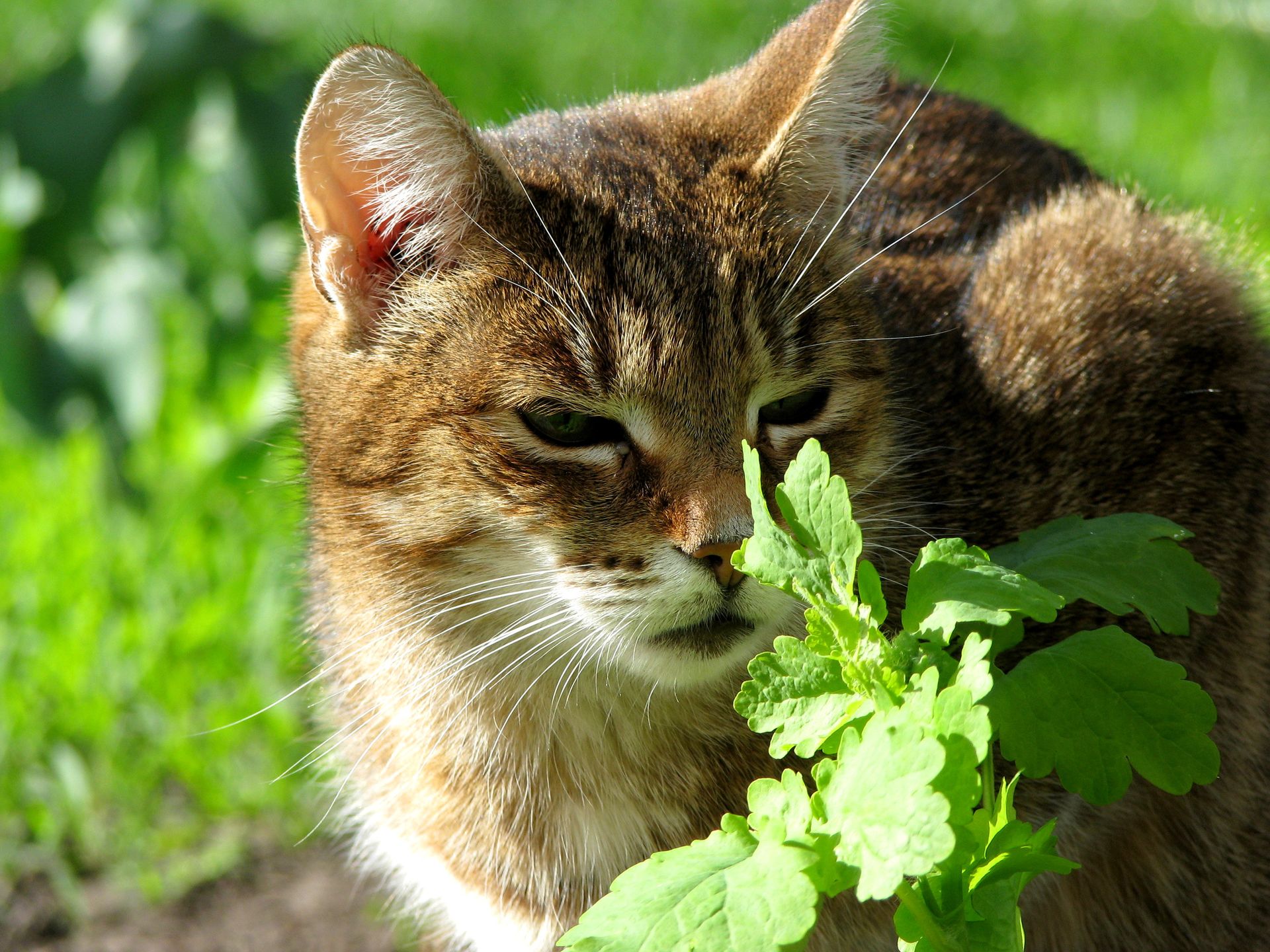
| Offer cat grass | It helps with coughing up hair - and keeps it away from houseplants, many of which are poisonous. |
Related to the topicTwo ways - and one of them costs nothing
Two ways - and one of them costs nothing
Here's what you can buy from this article, if you wish. In this order.
From the kitchen
Cats don't leave much food on their plates - that's not a flaw, it's their biology.

follows
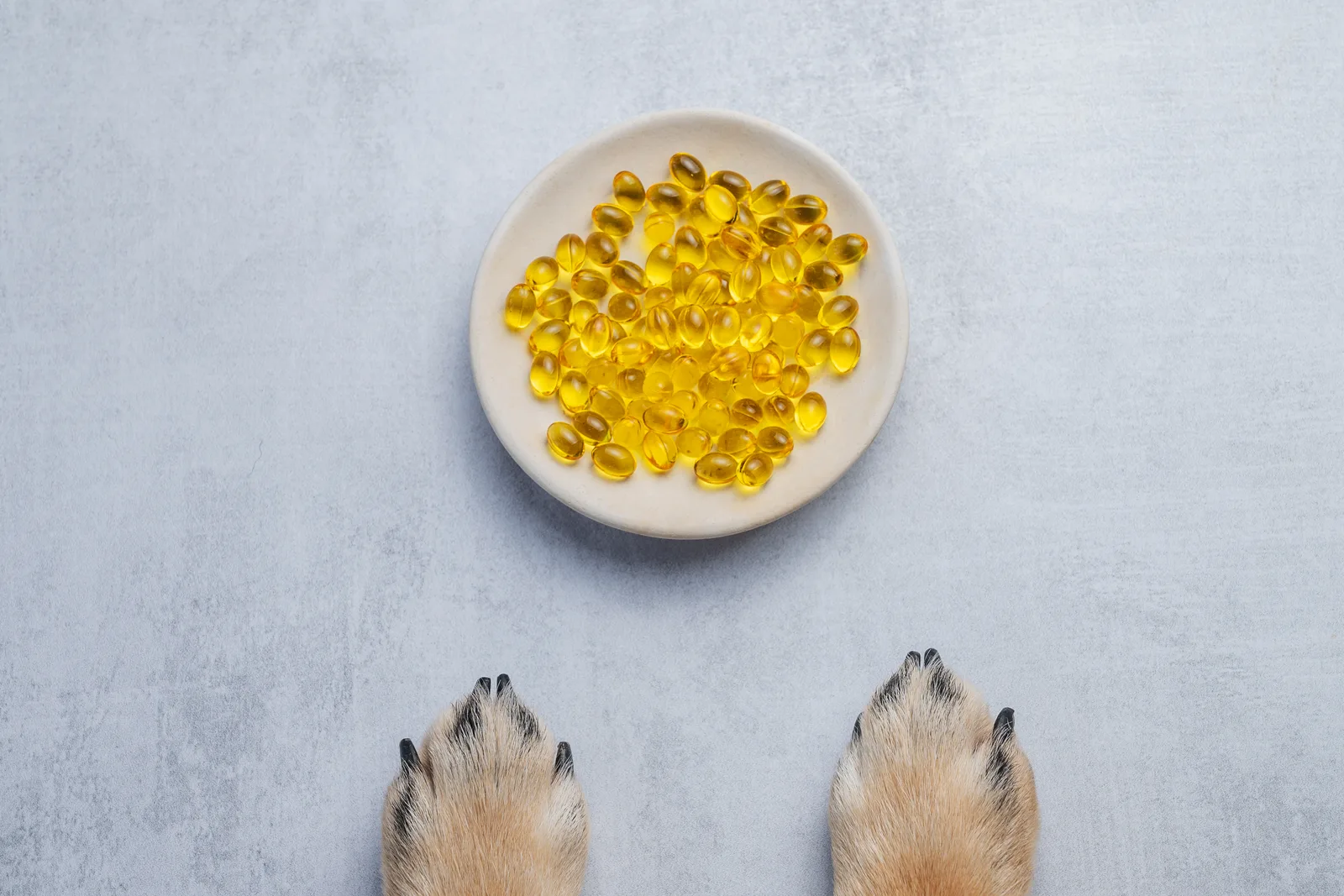
As a supplement
In addition to a complete feed, not instead of one.
III · The most effective thing costs nothing
More water and more hunting. Two additional water bowls in quiet spots, wide and shallow, fresh daily – and five minutes of feather toy twice a day. This addresses the two areas where indoor cats truly fall short: hydration and stimulation. No other product on this page offers a comparable solution.
Advertising: The product links lead to partner shops. We receive a commission on any purchases made through these links, but the price remains the same for you. Images are for illustrative purposes only – packaging may vary. Supplementary feed is not a substitute for veterinary treatment.
SourcesWhat this page is based on
- Pion PD et al.: Myocardial failure in cats associated with low plasma taurine - a reversible cardiomyopathy. Science 1987.
- Li X. et al.: Pseudogenization of a sweet-receptor gene accounts for cats' indifference toward sugar. PLoS Genetics 2005.
- Morris JG: Idiosyncratic nutrient requirements of cats appear to be diet-induced evolutionary adaptations. Nutrition Research Reviews 2002.
- Zoran DL: The carnivore connection to nutrition in cats. JAVMA 2002.
- FEDIAF: Nutritional Guidelines for Complete and Complementary Pet Food for Cats and Dogs.
- International Cat Care: Advice on water intake, feeding management and multi-cat households.


