Avocado (Persea americana)
OriginThe fruit that awaits an extinct animal
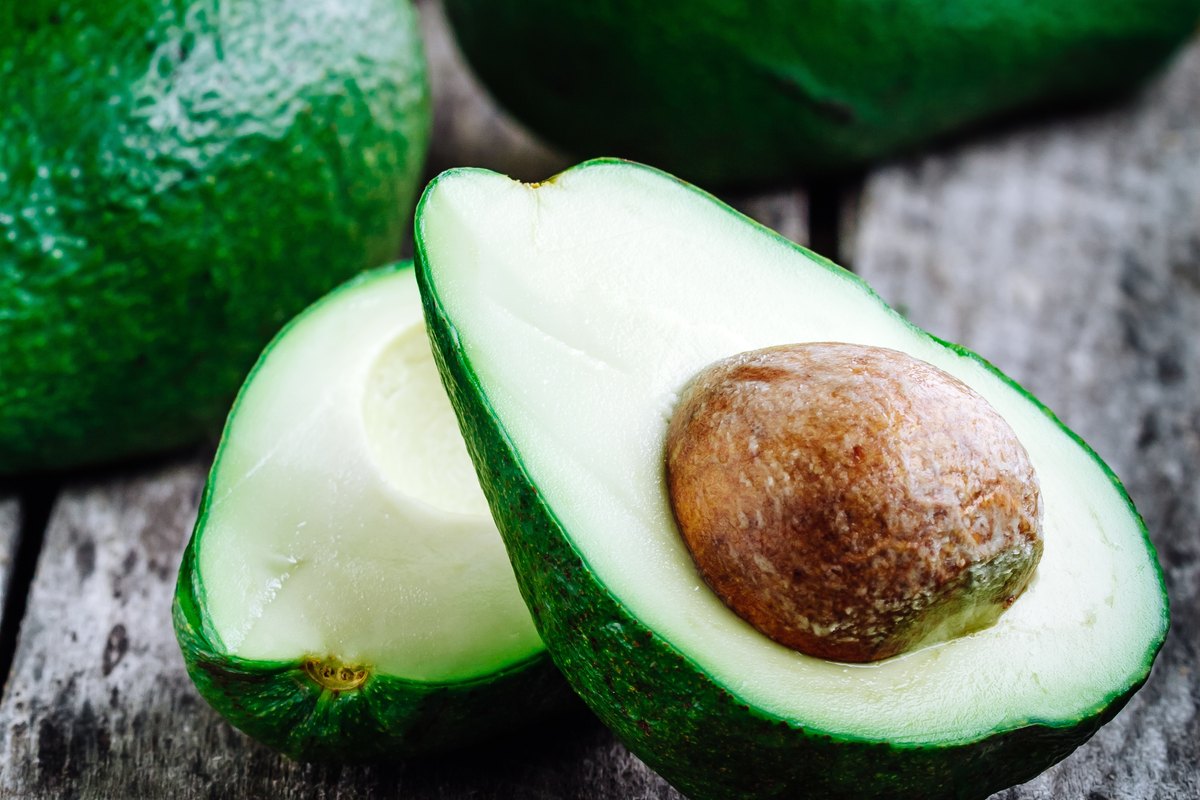
Its core is too large for any American animal alive today - it was designed for giant sloths.
Persea americana The laurel tree is native to Central America and belongs to the laurel family – meaning it is related to cinnamon, bay leaves, and sassafras, but not to other fruits. Botanically, its fruit is a single-seeded berry with an exceptionally large pit. It was domesticated in Mexico at least five thousand years ago; its name comes from the Nahuatl word. āhuacatl.
A fascinating hypothesis addresses precisely this point. Fruits with large seeds require large animals that can swallow them whole and excrete the seeds elsewhere. In Central America today, there is no animal capable of swallowing an avocado whole. Biologist Daniel Janzen suggested that the avocado is an "ecological anachronism fruit": evolved for the giant sloths and gomphotheres that became extinct at the end of the last Ice Age. Without humans, it would likely have disappeared along with them.
Today it is a global commodity, with Mexico as the largest producer. The Hass variety, which dominates the world market, traces its origins back to a single tree that California postman Rudolph Hass cultivated from a chance seedling in the 1920s – all Hass avocados worldwide are clones of this one tree.
To useNutrition, Persin and the water question
From a nutritional standpoint, the avocado is unique. It contains hardly any sugar, but fifteen to twenty percent fat, predominantly monounsaturated oleic acid – the same fatty acid profile as olive oil. It also contains plenty of potassium, fiber, folate, vitamin E, and the carotenoids lutein and zeaxanthin. Half an avocado provides more potassium than a banana.
There are studies on blood lipids in which replacing saturated fats with avocado lowered LDL cholesterol—which is to be expected when replacing saturated with monounsaturated fatty acids, and is not specific to avocados. A well-documented side effect: avocado in a salad significantly increases the absorption of fat-soluble carotenoids from the other vegetables. This is a real, measurable benefit and a good reason to include it in a salad.
Now, let's talk about persin. This is a fungicidal substance found in the leaves, bark, peel, and pit of avocados, and only in trace amounts in the flesh. It is harmless to humans in typical quantities. However, this is not the case for several animal species: severe poisoning with heart muscle damage has been documented in birds, rabbits, guinea pigs, goats, sheep, and horses. Reactions in dogs and cats are usually milder, but avocados should not be in their food bowls—and the pit also poses a risk of choking and intestinal obstruction.
And then there's the environmental aspect, which we don't want to ignore. Avocado cultivation is water-intensive – estimates range from several hundred to over a thousand liters per kilogram, depending on the region and method. In Mexico's main growing areas, the boom has led to deforestation, water conflicts, and documented crime. This doesn't make the avocado a bad food, but it does make it one where origin and quantity matter.
Ingredientskernel, shell and a common kitchen accident
Avocado pits are regularly touted as a superfood: dried, ground, and stirred into smoothies. We advise against this. They contain persin, tannins, and other compounds in significantly higher concentrations than the flesh. There is no reliable safety assessment for consuming larger quantities, nor is there any proven benefit. Several food safety authorities have advised against their use.
For ripening: Avocados don't ripen on the tree, but only after harvesting – this is unusual and convenient. During this process, they produce the ripening gas ethylene. If you want a hard avocado to ripen faster, place it in a paper bag with an apple or a banana; both also release ethylene. The process stops in the refrigerator – it should only be refrigerated once it's fully ripe.
The ripeness test isn't done on the fruit itself, but at the stem end: If the small stem remnant lifts easily and is green underneath, the fruit is ripe. If it's brown, it's overripe; if it doesn't lift, it's still hard. Pressing on the belly of the fruit will only cause it to turn brown at that point.
And a word of caution that's more serious than it sounds: "Avocado hand" is a documented type of injury. When trying to pry out the pit with a knife, people regularly slip and injure tendons and nerves in their hand – there are surgical case series and warnings from professional societies in the UK and the US. The safe way: cut the fruit in half, scoop out the pit with a spoon, or place the half with the pit on a board, not in your hand.
Enhanced combinationsAvocado in the kitchen
It is fatty, mild and prone to oxidation - and works best with acid and salt.
The acid slows down browning and enhances the mild flavor. Guacamole's composition is no accident.
Their fat significantly increases the absorption of fat-soluble carotenoids from the rest of the vegetables - a measurable, proven effect.
Both release ethylene; a hard avocado ripens in one to two days.
Lift off the stem end: green underneath means ripe, brown means overripe. Do not press on the belly.
Scoop out the kernel with a spoon, do not knock it out with a knife.
Cultivation is water-intensive and conflict-ridden in the main growing regions. Origin and quantity are worth considering.
What contradicts itselfIt's best to avoid these combinations.
It contains persin and tannins in high concentrations. There is no proven benefit and no safety assessment; several authorities advise against its use.
Persin causes severe, sometimes fatal, poisoning in these animals. Avocado is also unsuitable for dogs and cats.
"Avocado hand" is a documented type of injury involving tendon and nerve damage. Use a spoon.
Cold temperatures stop the ripening process. It only belongs in the fridge when it's fully ripe.
There is a known cross-allergy syndrome between natural latex and avocado, banana, kiwi and chestnut.
It is high in calories, and its ecological footprint is considerable. A conscious food choice, not a staple food.
In the kitchenWhat's going on with her?
- GuacamoleWith lime, salt, onion, coriander and chili - the classic.
- On breadCrushed with salt, lemon, and chili flakes.
- lettuceIn cubes - it improves the absorption of carotenoids from the other vegetables.
- SmoothieIt makes smoothies creamy without dairy products.
- FilledHalved, the hollow center filled with egg, shrimp or salsa.
- dessertIn Mexico and Brazil, it is served as a dessert with sugar and lime.
- SoupCold avocado soup with cucumber and yogurt.
- TiresWith an apple in a paper bag.
- StoreCut open with the pit and lemon juice, seal airtight.
- Dispose of coreIt is not a foodstuff.
As a home remedyOpen safely
How to cut up an avocado without risk of injury
- Place the avocado on a cutting board, do not pick it up in your hand. This is the most important point – most injuries happen because the fruit is held in the hand.
- Using a sharp knife, cut lengthwise all the way around to the core and twist the two halves against each other.
- Place half of the potato, pit side down, flat on the board. Use a tablespoon to slide the pit underneath and pry it out – do not use a knife to cut into it and twist.
- If you do use a knife: leave half of it on the board and place a kitchen towel between your hand and the fruit as protection. Never use your open palm.
- Scoop the pulp out of the peel with a spoon, or score half of it crosswise with a knife and scoop it out.
- Sprinkle cut halves with lemon juice, leave the pit in the unused half and store in an airtight container in the refrigerator - this way it will keep for a day without browning too much.
For anyone who regularly cuts up avocados: "Avocado hand" is a real injury, documented in surgical case series – and it's completely preventable with a spoon.
Avocados are a food of choice, with an eye on calorie content and origin. The pit is not eaten, and avocados do not belong in animal feed.
Ayurveda & TCMWhat the old systems say
Ayurveda
The avocado is a Central American fruit and is not used in Ayurveda. In modern Indian medicine, it is described as sweet, heavy, and cooling., vata-soothing and Kapha-increasing - a subsequent allocation that matches its fat content.
Traditional Chinese Medicine
The Chinese materia medica also lacks this. Persea americana. In modern Chinese dietary therapy, it is described as sweet and cooling, with a connection to the liver and intestines, and classified as moistening. More interesting is its relationship: the avocado belongs to the laurel family and is thus a close relative of the cinnamon tree – one of the most important medicinal plants in Chinese medicine. Two plants from the same family, whose uses could hardly be more different.
Warning noticesWhen you should be careful
Please note
- Do not eat the kernel: It contains persin and tannins in high concentrations. There is no proven benefit and no safety assessment; several authorities advise against its use.
- Toxic to many pets: Persin causes severe poisoning in birds, rabbits, guinea pigs, goats, sheep, and horses. Also unsuitable for dogs and cats.
- Avocado hand: Never use a knife to remove the pit from the fruit while holding it in your hand. Place the fruit on a board and use a spoon.
- Latex cross-allergy: A known cross-allergy syndrome exists between natural latex and avocado, banana, kiwi and chestnut.
- Do not refrigerate unripe fruit: Cold temperatures stop the ripening process.
- Ecological costs: Cultivation is water-intensive and, in major growing regions, is associated with deforestation and conflict. Choose origin and quantity consciously.
This page provides information and does not replace medical advice. If symptoms persist, please consult a doctor.
Related to the topicRead on and cook along!
Shop links lead to our product pages; it is indicated there if a partner is involved.
SourcesWhat is this based on?
- Souci-Fachmann-Kraut: The composition of foods, entry avocado.
- Unlu NZ et al.: Carotenoid absorption from salad and salsa by humans is enhanced by the addition of avocado or avocado oil. Journal of Nutrition 2005.
- Oelrichs PB et al.: Isolation and identification of a compound from avocado leaves which causes necrosis of the mammary gland. Natural Toxins 1995 - to Persin.
- British Association of Plastic, Reconstructive and Aesthetic Surgeons: „avocado hand“ warnings.
- Janzen DH, Martin PS: Neotropical anachronisms - the fruits the gomphotheres ate. Science 1982.