Standardized to alkylamides.
Echinacea extract
Available soonWhat tradition tells us about the Red Coneflower
Little hedgehog
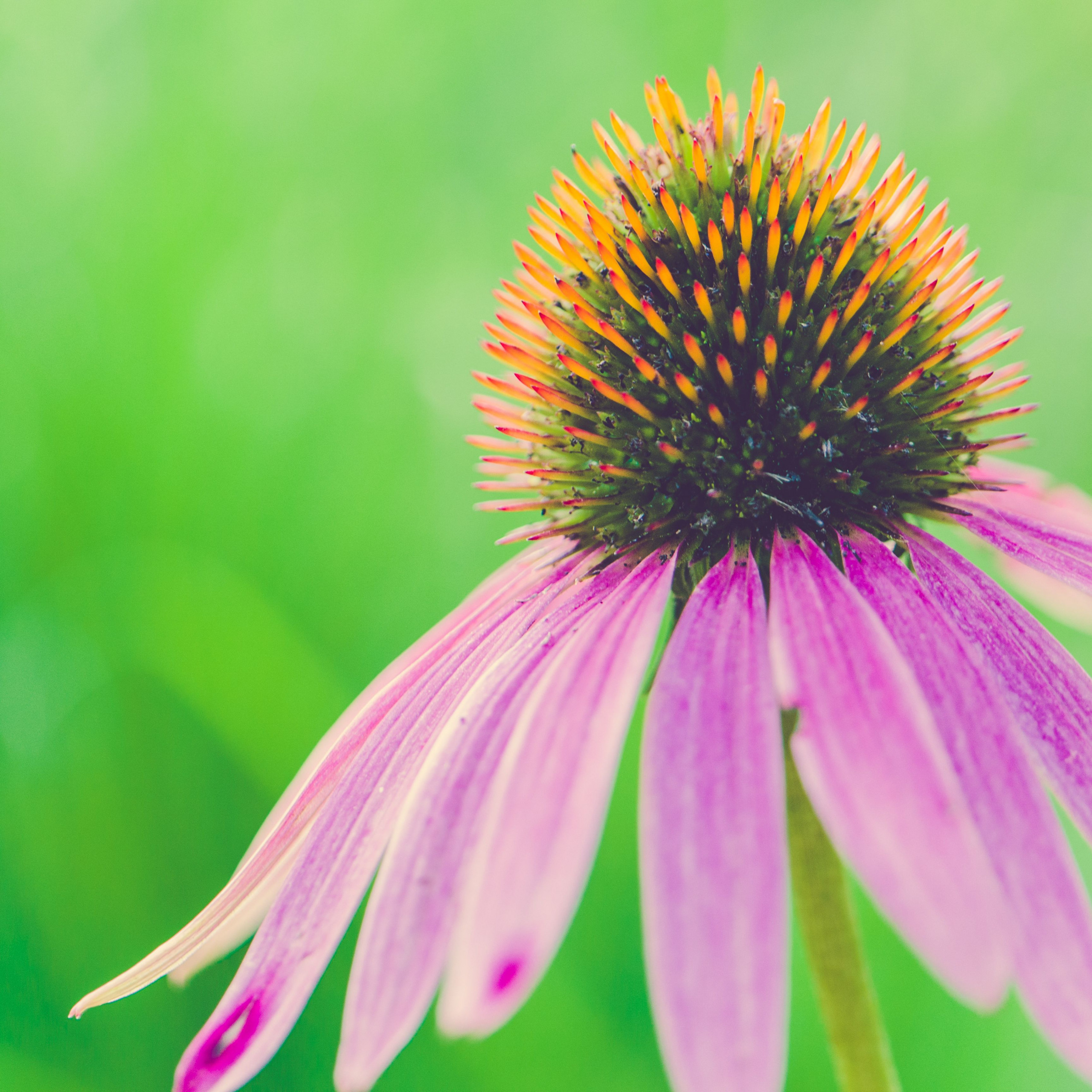
Echinacea comes from the Greek word for hedgehog. This refers to the spiky bracts that protrude from the center of the flower head.
From the prairie
It originally grew on the prairies of North America. Today, it is a popular garden perennial in our region, swarmed by bees and butterflies.
The tingling
A typical identifying characteristic: preparations made from echinacea cause a noticeable tingling sensation on the tongue. The taste is tart and slightly spicy.
The profile in the Botanical Archive: benefits, ingredients, home remedies, Ayurveda & TCM and all sources.
What folk medicine used echinacea for: in the Botanical Archives →Extract from purple coneflower (Echinacea purpurea), standardized to alkylamides.
At a glance
- Plant: Echinacea purpurea (purple coneflower)
- Origin: North American prairies
- Standardized to: Alkylamide
- Tradition: traditionally used by the indigenous peoples of North America
What tradition says: Purple coneflower is a prairie flower that was used in a variety of ways by the indigenous peoples of North America. European settlers brought the plant into gardens in the 19th century. Today, it is one of the world's best-selling medicinal plants. This profile explores what tradition attributes to it and what research has to say about it.
Folk medicine, tradition, research
What the prairie peoples of North America used echinacea for, what alkylamides are, and what studies show today.
Good to know
- Echinacea is intended for short-term use, not continuous intake. A few weeks, then a break.
- People who are allergic to plants in the daisy family usually cannot tolerate Echinacea.
- Consult a doctor beforehand if you have autoimmune diseases or are taking immunosuppressants.
As always, dietary supplements are a supplement, not a substitute for good food and not a substitute for medical advice. If you are pregnant or breastfeeding, have children, pre-existing medical conditions, or are taking long-term medication, it is advisable to consult your doctor beforehand.
Questions
Frequently Asked Questions
Where do I buy Echinacea extract ?
We are currently looking for a partner who meets our criteria. Until then, you can find other products from verified sources in our shop.
What was the red coneflower used for in the past?
We explain this in detail in the Botanical Archive: what folk medicine used the purple coneflower for, what research says about it today, and with all sources. View portrait →
How do you choose your partners?
We check ownership, origin, organic certification, and, where available, laboratory analyses. We do not accept partners belonging to a pharmaceutical company.