Cashew (Anacardium occidentale)
OriginFrom the cashew apple to the world
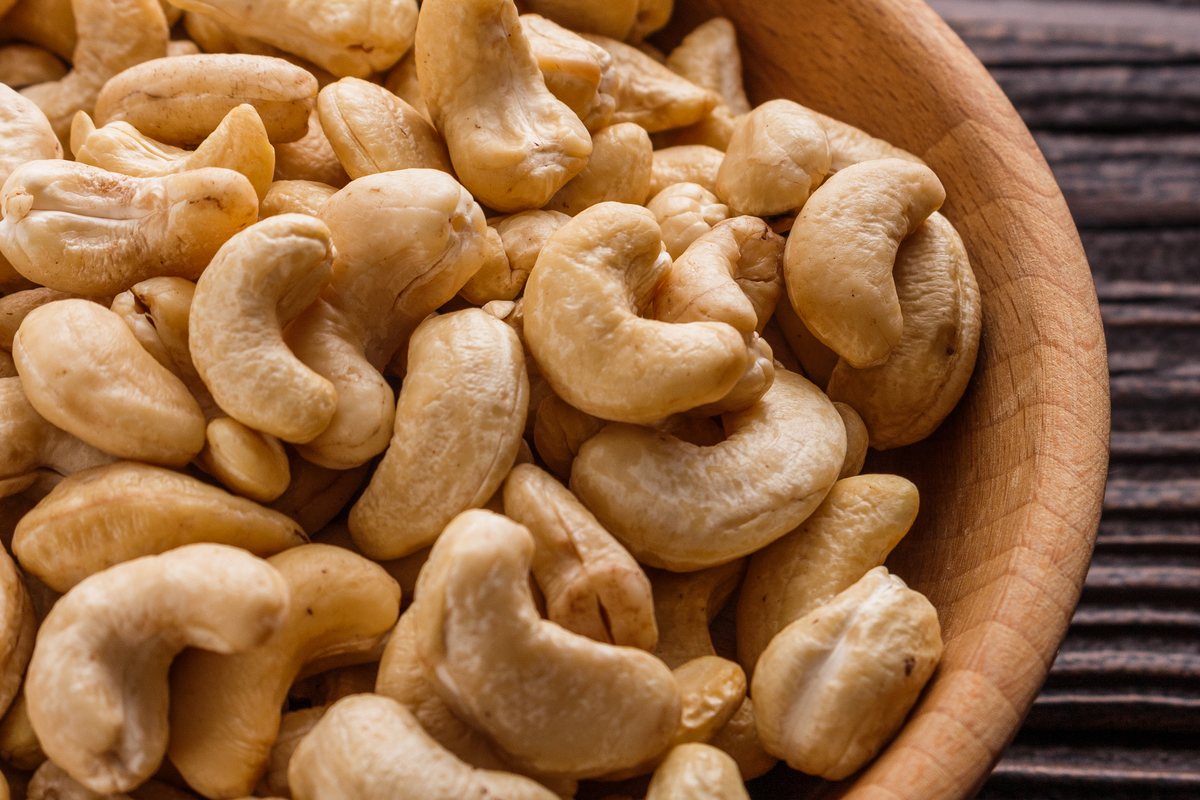
The name comes from the Tupi language of Brazil: acajú That was the name given to the fruit by the indigenous people.
The cashew tree originates from northeastern Brazil. Portuguese sailors brought it to India and East Africa in the 16th century, where it was planted on barren coastal soils to combat erosion. The actual fruit is the kidney-shaped kernel inside a hard shell, located at the bottom of the juicy, yellow-red cashew apple. The apple itself is very delicate and is eaten locally, processed into juice, or used to make spirits such as the Indian feni.
Today, most raw cashews come from West Africa, especially Ivory Coast, but they are often shelled in Vietnam and India. Cracking them is done by hand and is not without its dangers: the shell oil burns the skin, and human rights organizations have repeatedly documented low wages, lack of protection, and in some cases, forced labor. Fair trade cashews and those shelled in the country of origin improve the situation for the workers.
To useWhat cashews can do for you
100g of cashew nuts provide around 18g of protein, 44g of fat (predominantly monounsaturated oleic acid), and about 30g of carbohydrates – more than most other nuts. Their mineral content is outstanding: almost 300mg. magnesium, approximately 2 mg copper and approximately 6 mg iron. A handful of 30 g thus covers about a quarter of the daily requirement for magnesium and about half of the requirement for copper.
Large observational studies link regular nut consumption of about a handful a day with fewer cardiovascular diseases. Specifically on cashews, there are only a few small studies: In one study with people with type 2 diabetes, HDL cholesterol rose slightly and systolic blood pressure decreased somewhat, while blood sugar remained unchanged. This is encouraging, but not conclusive evidence of an independent health benefit.
The practical value is CreaminessSoaked and blended, cashews become a mild cream that thickens soups, sauces, and desserts—milk-free, lactose-free, and easier to digest than many rich cream sauces. However, at around 550 kcal per 100 g, cashews are high in energy; it's the portion size that matters.
IngredientsThis is what's in cashews
Cashew nuts contain fat (mainly oleic acid, also linoleic acid), protein, starch and sugar, little fiber, as well as magnesium, copper, iron, zinc, phosphorus, manganese, vitamin K, vitamin B1 and B6, phytosterols and polyphenols such as catechins in the seed coat.
The shell, however, is not edible: it contains cashew shell oil with Anacardic acid and Cardol, These substances are related to urushiol from poison ivy and mango peel. Roasting or steaming the whole nut breaks down or removes these substances before the kernel is extracted.
Enhanced combinationsWhat makes cashews stronger
Cashews carry flavor well - and need a touch of freshness to go with them.
It helps the body absorb plant-based iron.
The protein complements each other in the curry.
Make cashew cream fresh instead of heavy.
Classic in the Indian Korma style.
A handful in the porridge.
Cashew cream in pumpkin soup.
What contradicts itselfIt's best to avoid these combinations.
Severe reactions are possible.
The shell oil is corrosive to skin and mucous membranes.
Approximately 550 kcal per 100 g.
Preferably natural or dry roasted.
Cool and dark, otherwise it will go rancid.
Choking hazard, better to use a puree.
In the kitchenWhere they belong
- Cashew creamAs a cream substitute for soups and sauces.
- vegetable curryWith chickpeas and spinach.
- KormaIndian sauce with cashew paste.
- Stir-fried vegetablesWith roasted kernels.
- Cashew butterOn bread or in porridge.
- Plant-based "cream cheese"„Fermented with lemon and herbs.
- PestoWith basil instead of pine nuts.
- Pumpkin soupWith a spoonful of cashew cream.
- lettuceToasted over a leafy salad.
- Energy ballsWith dates and cocoa.
As a home remedyCashew cream as a mild cream alternative
Cashew cream
- Cover 100g of natural cashew nuts with water and soak for 4 hours or overnight.
- Drain the soaking water and rinse the kernels.
- Blend with 150 ml of fresh water, a pinch of salt and a squeeze of lemon juice in a blender for 1 to 2 minutes until completely smooth.
- Pour into a glass and store in the refrigerator.
For those who don't tolerate cream or milk well, for example due to lactose intolerance or a sensitive stomach: This cream makes soups, sauces, and mashed potatoes creamy without feeling heavy. It's a kitchen aid, not a cure.
2 to 3 tablespoons per serving. Keeps for 3 to 4 days in the refrigerator. Not suitable for those with nut allergies.
Ayurveda & TCMWhat the old systems say
Ayurveda
In Ayurveda, the cashew is called Kaju. It is considered sweet, heavy, oily and warming - nourishing and balancing for Vata, but burdensome for Kapha and Pitta in large quantities.
Traditional Chinese Medicine
Cashews are barely described in classical Traditional Chinese Medicine (TCM). In modern nutritional theory, they are classified as sweet and neutral to warming, and are said to strengthen the digestive system and nourish the blood.
Warning noticesWhen you should be careful
Please note
- Allergy: Cashews are a common trigger for severe nut allergies, often with cross-reactions to pistachios. Allergy sufferers should avoid even traces of cashews and carry an emergency kit.
- Peel: Never crack or roast whole, untreated cashew nuts yourself - the shell oil burns the skin, and the smoke irritates the eyes and respiratory tract.
- Toddlers: No whole nuts for children under 4 years old due to choking hazard.
- Energy: Approximately 550 kcal per 100 g - a handful is a sensible portion.
- Oxalate: Cashews contain a moderate amount of oxalate; those prone to calcium oxalate kidney stones should eat them in moderation.
This page provides information and does not replace medical advice. If symptoms persist, please consult a doctor.
Related to the topicRead on and cook along!
Shop links lead to our product pages; it is indicated there if a partner is involved.
SourcesWhat is this based on?
- USDA FoodData Central: Nuts, cashew nuts, raw.
- Aune D et al. Nut consumption and risk of cardiovascular disease, total cancer, all-cause and cause-specific mortality: a systematic review and dose-response meta-analysis of prospective studies. BMC Medicine 2016; 14: 207.
- Mohan V et al. Cashew nut consumption increases HDL cholesterol and reduces systolic blood pressure in Asian Indians with type 2 diabetes: a 12-week randomized controlled trial. Journal of Nutrition 2018; 148(1): 63–69.
- EFSA Panel on Dietetic Products, Nutrition and Allergies (NDA). Scientific opinion on the evaluation of allergenic foods and food ingredients for labeling purposes. EFSA Journal 2014; 12(11): 3894.
- Regulation (EU) No 1169/2011 on the provision of food information to consumers, Annex II (nuts as major allergens).