
Redcurrant (Ribes rubrum)
OriginThe berry from St. John's Day
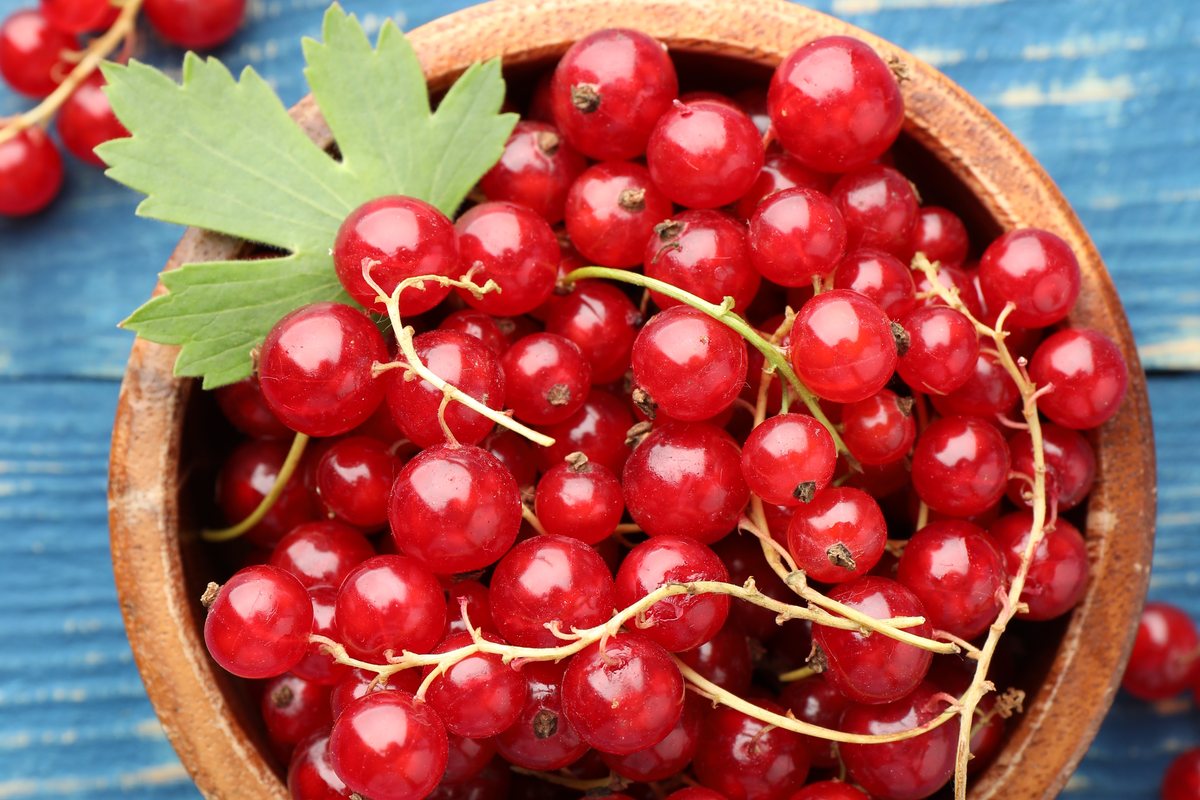
It bears its name because the first varieties ripen around June 24th - the day of John the Baptist.
Unlike many fruits, currants did not have to be introduced from the south: wild varieties grow in the damp forests and floodplains of Western and Central Europe. The Greeks and Romans hardly knew them. It was only in the late Middle Ages that monastery gardeners and farmers brought the bushes into their gardens, first in the Netherlands, France, and Germany.
In Austria and Bavaria, it's still called Ribisel, and in Switzerland, "Meertrübeli." White currants, by the way, aren't a separate species, but a colorless variety of red currants lacking anthocyanins. Today, currants are a staple in almost every allotment garden and are also commercially cultivated in Germany.
To useWhat red currants can do for you
According to USDA data, 100 g of red currants provide approximately 41 mg of vitamin D. Vitamin C This covers almost half of the daily requirement. Blackcurrants, with around 180 mg, contain more than four times that amount. Red currants also provide a good 4 g. Dietary fiber, It contains approximately 275 mg of potassium and only about 56 kcal. Most of the fiber is found in the peel and seeds.
They owe their typical taste to the Citric and malic acid. The acid makes the berries refreshing and protects their color and vitamin C during cooking, but it irritates sensitive stomachs and tooth enamel. The red color comes from Anthocyanins, which make up the largest part of the polyphenols in red varieties - but in much smaller quantities than in blackcurrants or blueberries.
What's special about this is... pectinTogether with the acid, it ensures that currant juice gels reliably when cooked with sugar. Pectin is a soluble fiber that swells in the intestines and creates a feeling of fullness. There are hardly any targeted studies on the health effects of red currants – they are simply a good, vitamin-rich summer fruit.
IngredientsThis is what's in red currants
Red currants contain water, fructose and glucose, citric and malic acid, pectin and other dietary fiber, vitamin C, some vitamin K and folate, as well as potassium, calcium, magnesium, and iron. Polyphenols present include anthocyanins (especially cyanidin glycosides), flavonols such as quercetin, proanthocyanidins, and phenolic acids.
White currants have a similar composition but do not contain anthocyanins and have a slightly milder taste. Some of the vitamin C is lost during cooking, while pectin and minerals are largely retained.
Enhanced combinationsWhat makes currants stronger
The acidity of the blackcurrant needs a soft counterpart - and goes surprisingly well with savory dishes.
It reduces acidity and adds protein.
Vitamin C helps with plant-based iron.
It balances the acid without sugar.
As jelly or Cumberland sauce.
For red berry compote.
It rounds off the flavor.
What contradicts itselfIt's best to avoid these combinations.
The acid will soften the tooth enamel briefly - wait 30 minutes.
May worsen heartburn.
Then the sugar predominates.
The berries burst and become leached.
Keep refrigerated for a maximum of three days.
Significantly less vitamin C.
In the kitchenWhere they belong
- blackcurrant jellyClear, solid, bright red.
- currant cakeWith a meringue topping.
- Red fruit jellyWith other summer berries.
- Cumberland sauceWith game and pâté.
- blackcurrant syrupWith water as a spritzer.
- quark dishWith a little honey.
- MuesliFreshly sprinkled over oats.
- SorbetCrisp and cool.
- lettuceA few berries on a bed of lamb's lettuce with goat cheese.
- ChutneyWith onion and vinegar.
As a home remedyBlackcurrant jelly with its own pectin
blackcurrant jelly
- Wash 1 kg of red currants and boil them with 100 ml of water, including the stems, until the berries burst.
- Place the mixture into a cloth or fine sieve and let the juice drain without pressing.
- Boil 750 ml of juice with 500 g of sugar or gelling sugar 2:1 and boil vigorously according to the package instructions.
- Perform a gel test: A drop placed on a cold plate should solidify.
- Pour hot into clean jars and seal immediately.
For a supply from your own garden. Currants contain so much pectin and acid that they gel well even with less sugar. A treat, not a medicine.
A teaspoonful for breakfast or as a side dish. Because of the sugar, jelly is best reserved for small portions – fresh berries are a better choice.
Ayurveda & TCMWhat the old systems say
Ayurveda
Blackcurrants are not described in classical Ayurveda. According to modern classification, they are considered sour and cooling – refreshing in summer, but only in small quantities for those with high Pitta dosha.
Traditional Chinese Medicine
In Traditional Chinese Medicine (TCM), red currants do not play a traditional role. In Western TCM dietary theory, they are classified as acidic and cooling, and are said to preserve body fluids and cool heat.
Warning noticesWhen you should be careful
Please note
- Acid: If you have a sensitive stomach, heartburn, or gastritis, consume only small amounts.
- Teeth: Rinse with water after eating, then wait half an hour before brushing your teeth.
- Sugar: Jelly, syrup and nectar contain a lot of added sugar.
- Allergy: Reactions to currants are rare, but have been described.
- Wash: Rinse purchased and locally picked berries briefly before eating.
This page provides information and does not replace medical advice. If symptoms persist, please consult a doctor.
Related to the topicRead on and cook along!
Shop links lead to our product pages; it is indicated there if a partner is involved.
SourcesWhat is this based on?
- USDA FoodData Central: Currants, red and white, raw.
- USDA FoodData Central: Currants, European black, raw.
- Määttä K, Kamal-Eldin A, Törrönen R. Phenolic compounds in berries of black, red, green, and white currants (Ribes sp.). Antioxidants & Redox Signaling 2001; 3(6): 981–993.
- Federal Centre for Nutrition (BZfE): The currants are ripe. Press release, 2023.


