OriginThe sacred herb from the roadside
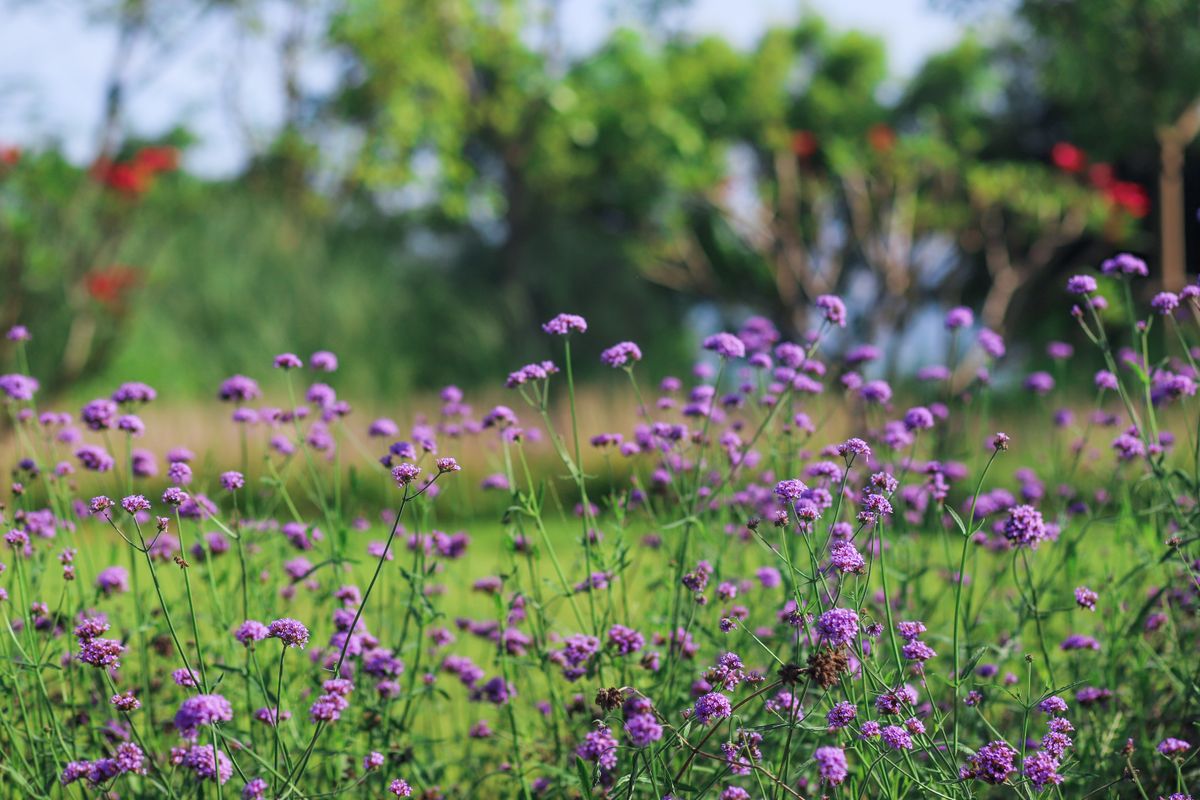
Hardly any plant had so much importance in antiquity despite its unremarkable appearance: The Romans swept the altars of Jupiter with vervain, the Druids harvested it at the new moon, and it looks like a weed growing on a wall.
Common vervain grows throughout Europe, North Africa, and large parts of Asia along roadsides, in rubble heaps, on walls, and embankments. It's one of those plants you pass by a hundred times: thin, angular stems with hardly any leaves, and long, spike-like inflorescences with tiny, pale lilac flowers that are never all open at once. Nothing about it is particularly striking—and yet, for centuries, it was one of the most important ritual plants in Europe.
The Romans called it verbenae The sacred branches were used to cleanse altars; ambassadors who concluded treaties wore them as a symbol of inviolability. Pliny reports that the Druids harvested it during certain phases of the moon and with offerings. In the Christian Middle Ages, it was called "Kreuzkraut" (crosswort) because, according to legend, it grew beneath the cross, and it held a firm place in blessings and protective spells. The German name "Eisenkraut" (ironwort) probably derives from its use in treating iron wounds—or from the hardness of the stems; the sources disagree on this point.
And this is where most of the confusion occurs: Vervain is not lemon verbena. Lemon verbena (Aloysia citrodora, Lemon verbena (also known as vervain or lemon bush) is a South American shrub with intensely lemon-scented leaves that only arrived in Europe in the 18th century – this is the French "vervain" tea that smells so wonderful. True vervain (Verbena vulgaris) has no scent and tastes bitter. Two completely different plants from two different continents that are constantly confused in the trade.
To useWhat vervain can do for you
Vervain is primarily known today Relevant as part of a mix, not as a soloist. Vervain has a firm place in modern phytotherapy, particularly in a well-known combination preparation for acute and chronic sinusitis, where it is combined with gentian root, primrose, elderflower, and sorrel. Clinical studies have demonstrated the effectiveness of this five-ingredient combination in reducing mucus flow and symptoms—studies that do not exist for vervain alone. This is an important distinction, and it should not be overlooked.
Traditionally, it was considered the classic Bitter herb with a wide range of usesVervain stimulates the appetite and digestion, like all bitter herbs; it induces sweating in cases of fever; it promotes wound healing when applied as a poultice; it stimulates milk production during breastfeeding; and in folk medicine, it is also used for exhaustion and low spirits. The European Medicines Agency lists vervain as a traditional use for cold symptoms—that is, based on long-standing experience, not on clinical studies. This is an honest category, and we refer to it as such here.
What was found in the lab: anti-inflammatory, antibacterial, and antioxidant effects of verbenalin and verbascoside, along with expectorant properties suitable for use in sinusitis. These are lab results, not claims of a cure. For everyday use, vervain is therefore a solid bitter herb in a cold or stomach remedy mixture—and a plant with a cultural history that overshadows any specific medicinal effect.
IngredientsThat's what's in vervain
The characteristic ingredients are Iridoid glycosides, above all Verbenalin and hastatoside. These are responsible for the pronounced bitter taste and thus for everything attributed to a bitter herb: stimulation of saliva and gastric juice flow, appetite, and digestion. Verbenalin is also suspected of inducing labor – this is the reason for its avoidance during pregnancy.
The second important group are the Phenylpropanoid glycosides, above all Verbascoside (also called acteoside). This substance has the most laboratory findings: anti-inflammatory, antioxidant, antibacterial. It is also found in mullein and olive leaves, where it is considered one of the most interesting substances.
In addition to these, it contains flavonoids, tannins, silica, mucilage, and only traces of essential oil – and this is precisely how you can distinguish it from lemon verbena, whose entire character is based on essential oil. Vervain has practically no scent when you open the package. If it smells strongly of lemon, you have the wrong plant.
Enhanced combinationsWhat makes vervain stronger
Vervain is a mixed herb. On its own, it is bitter and unremarkable – but in the right company, it becomes useful.
The classic five-herb combination with gentian root and sorrel - that's the combination for which there are studies.
Thyme for the bronchi, sage for the throat, vervain as a bitter base note in the mixture.
When it comes to appetite and sluggish digestion, vervain belongs to the group of classic bitter herbs.
The bitterness is pronounced - a spoonful of honey and a squeeze of lemon make the tea suitable for everyday use.
In cold remedies, bitter vervain and echinacea complement each other effectively.
Even if there is hardly any essential oil present: letting it steep covered for ten minutes brings out the iridoids better.
What contradicts itselfIt's best to avoid these combinations.
Verbena smells lemony and is a South American shrub - if you want vervain, you'll get something bitter without a scent.
Verbenalin is considered to induce labor; therefore, vervain is not used during pregnancy.
Bitter herbs are intended for short-term stimulation; consistently high doses irritate the stomach.
The studies concern the five-herb combination, not the herb alone - these should be distinguished.
Bitter substances increase acid production and are detrimental to an irritated or inflamed stomach.
Unlike lemon verbena, vervain has no place in the kitchen - it is simply bitter.
ApplicationHow it is used
- Vervain teaTwo teaspoons of dried herb to 250 ml, covered for ten minutes - distinctly bitter.
- Cold mixtureUse equal parts of thyme, sage and elderflower as a daytime tea for colds.
- Sinus mixtureWith primrose, elderflower and gentian root - the traditional in-house version of the well-known preparation.
- finished medicinal productsA standardized combination preparation for acute and chronic sinusitis, available from pharmacies.
- Bitter tea before mealsHalf a cup twenty minutes before a meal - the classic use of all bitter herbs.
- gargle solutionCooled strong infusion for a scratchy throat, three to four times a day.
- Wound dressingHistorical use: Infusion applied to a cloth, placed on minor skin irritations.
- tinctureAlcoholic extract from the pharmacy, added drop by drop to water - bitter, but can be dosed sparingly.
- Incense herbDried herbs as traditional incense - the ritual history lives on here.
- garden plantUndemanding, drought-tolerant and a good source of nectar for wild bees.
As a home remedyTea for the sinuses
Sinus herbal tea
- Mix one teaspoon each of dried vervain, elderflowers and primrose flowers.
- Pour 250 ml of boiling water over the elderflowers and let it steep, covered, for ten minutes - the lid keeps the volatile components of the elderflowers in the infusion.
- Strain, sweeten with honey to taste and drink slowly while hot.
- Two to three times a day, plus plenty of water throughout the day - thin secretions drain better than thick ones.
For pressure on the forehead and cheeks, a blocked nose, and the thick mucus of a lingering cold. The combination follows the composition of the well-known over-the-counter preparation, but it's not the same: there, the herbs are standardized in dosage and tested in studies; here, it's a home-grown tea. What the tea certainly provides is warmth and hydration—and both of these have been proven to help clear mucus more than you might think.
Two to three cups daily for a maximum of one week. Not during pregnancy, not if you have an acute stomach infection. If symptoms persist for more than ten days, worsen after initial improvement, are accompanied by fever, or if you experience severe, one-sided pain, you should consult a doctor – a bacterial sinus infection requires more than just tea.
Ayurveda & TCMWhat the old systems say
Ayurveda
Vervain is not a classic Ayurvedic plant and is not mentioned in the traditional texts. Based on its properties, it would be described as cooling, light, and bitter (Tikta): reducing Pitta and Kapha, but should be used sparingly in cases of Vata and weakened digestion, as bitterness is drying and cooling. This is a classification based on principle, not on traditional knowledge.
Traditional Chinese Medicine
There is indeed a parallel here, albeit of a different kind: Verbena officinalis is in the Chinese Materia Medica as Ma Bian Cao It is described as bitter and cooling, and associated with the liver and spleen meridians. Traditionally, it is used there to cool heat, to move blood stagnation, and for swelling, as well as for malaria-like fevers. It is also considered to be to be avoided during pregnancy – two traditions that independently reach the same conclusion.
Warning noticesWhen you should be careful
Please note
- Pregnancy: Verbenalin is considered to induce labor - do not use vervain during pregnancy, neither as tea nor as tincture.
- Breastfeeding period: Despite its folk use as a milk-boosting herb, safety data is lacking; it is best to avoid it.
- Confusion: Verbena officinalis (bitter, odorless) and Aloysia citrodora (Lemon-scented) are various plants with different uses.
- Stomach: Bitter substances stimulate acid production - unsuitable for gastritis, reflux and ulcers.
- Iron uptake: The tannins contained in the tea bind iron; do not drink tannin-rich teas directly with iron-rich meals.
- No replacement: A sinus infection that is purulent or lasts longer than ten days should be examined by a doctor.
This page provides information and does not replace medical advice. If symptoms persist, please consult a doctor.
Related to the topicRead on and cook along!
Shop links lead to our product pages; it is indicated there if a partner is involved.
SourcesWhat is this based on?
- EMA/HMPC: European Union herbal monograph on Verbena officinalis L., herba - traditional use for cold symptoms.
- Blaschek W (ed.): Wichtl - Herbal drugs and phytopharmaceuticals. 6th edition 2016, monograph Verbenae herba.
- Jund R et al. Clinical efficacy of a dry extract of five herbal drugs in acute viral rhinosinusitis. Rhinology 2012; 50(4): 417–426.
- Federal Institute for Drugs and Medical Devices: Reprocessing Monograph Verbenae herba, Federal Gazette 1985.
- Chinese herbal medicine: Verbenae herba (Ma Bian Cao) - bitter, cooling, liver and spleen; contraindicated in pregnancy.