
Endive (Cichorium endivia)
OriginThe winter salad of the cottage gardens
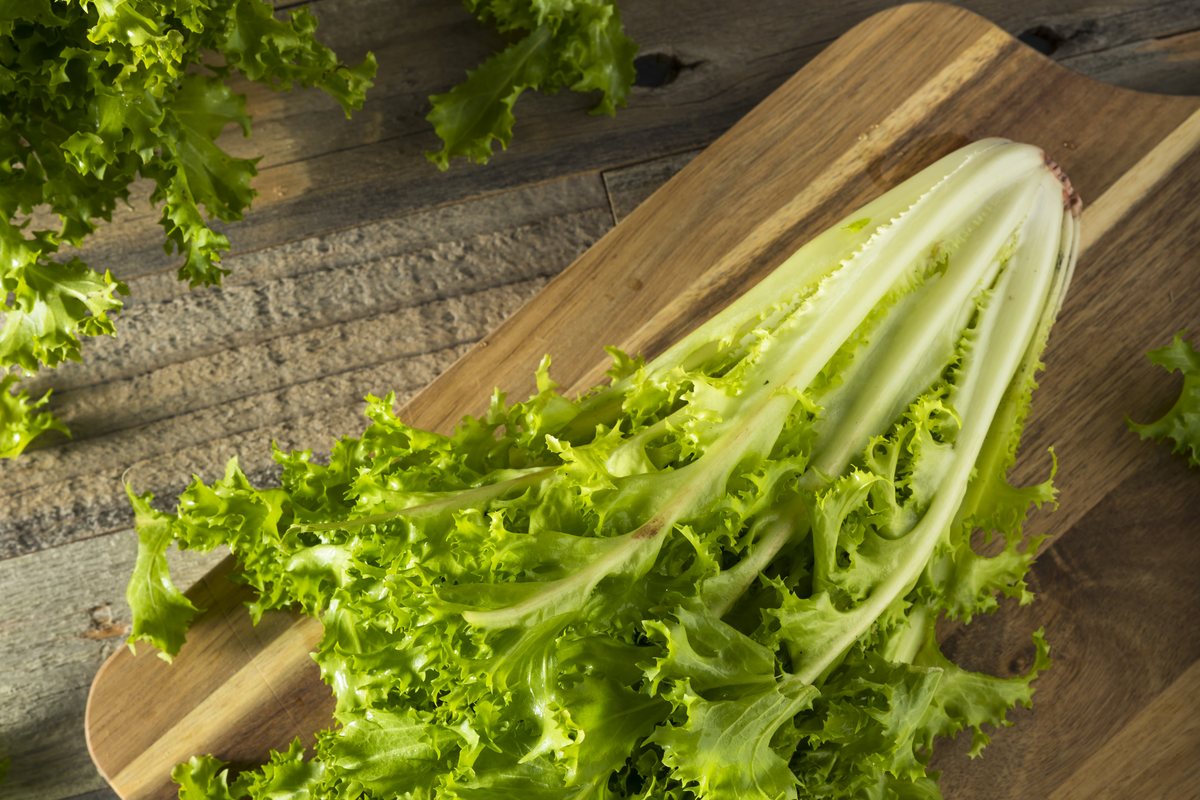
Endive is one of the oldest salad plants in Europe - the Egyptians, Greeks and Romans already ate its bitter leaves.
Endive likely originated in the eastern Mediterranean and is closely related to chicory. It spread to Central Europe via monastery gardens and became the most important salad green during the autumn and winter months, before greenhouse-grown lettuce was available.
Today, two forms are distinguished: The Escariol– or escarole endive (var. latifoliumIt has broad, smooth leaves and a firm heart, which Frisée (var. crispum) finely split, curly leaves. Breeding has also significantly reduced the bitterness of endive – older varieties can still be found at farmers' markets and community-supported agriculture (CSA) farms.
To useWhat endive does for you
According to the USDA, 100g of endive provides only about 17 kcal, but around 140 µg of vitamin D. Folate - just under half of the German Nutrition Society's (DGE) reference value of 300 µg for adults. The body needs folate for cell division and blood formation; the requirement is particularly high during pregnancy. In addition, there are approximately 230 µg. Vitamin K, about 3g of fiber, approximately 310mg of potassium, 50mg of calcium and plenty of beta-carotene.
The bitter note comes from bitter substances such as lactucopicrin and phenolic acids. In addition, there are... FlavonoidsStudies show that endive - unlike green lettuce - contains primarily kaempferol glycosides, with the outer, green leaves having significantly more of them than the light-colored heart.
The realistic benefit of endive lies in its Nutrient densityIt brings plenty of green, low-calorie flavor to the table in winter, and according to the German Federal Centre for Nutrition (BZfE), bitter flavors keep you feeling full longer. Important to know: People taking vitamin K antagonist blood thinners (such as phenprocoumon) don't need to avoid endive, but should eat it in regular amounts and not suddenly consume large quantities.
IngredientsThis is what's in the endive
Endive contains bitter substances from the group of sesquiterpene lactones (lactucin, lactucopicrin), phenolic acids such as chicory acid, chlorogenic acid and caffeic acid, flavonoids mainly as kaempferol glycosides, carotenoids (beta-carotene, lutein), folate, vitamin K, vitamin C, potassium, calcium and dietary fiber including small amounts of inulin.
The darker, outer leaves are more nutrient-rich and bitter, while the yellow heart is more tender and milder. Folate is sensitive to heat and light – endive provides the most when eaten raw and fresh.
Enhanced combinationsWhat makes endive stronger
Endive needs warmth, acidity and a little fat - then it turns bitter into simply spicy.
The Rhineland classic.
Makes beta-carotene and vitamin K available.
It balances out the bitterness.
A flavorful base for the dressing.
Omega-3 and bite.
French as Frisée salad.
What contradicts itselfIt's best to avoid these combinations.
A quick wash in lukewarm water is sufficient.
Frisée wilts quickly.
Folate is lost.
Consume vitamin K regularly.
Ethylene causes the leaves to wilt.
Cross-reactions are possible.
In the kitchenWhere she belongs
- Endive saladWith warm potatoes and bacon or smoked tofu.
- Endives among themselvesRhineland style with mashed potatoes.
- Frisée aux lardonsFrench with a poached egg.
- Winter saladWith lamb's lettuce, apple and walnuts.
- Escarole, steamedWith garlic and olive oil.
- Endive soupWith potatoes and broth.
- Endive with pearAnd blue cheese.
- Pizza scarolaNeapolitan style with olives and capers.
- Lentil saladWith frisée lettuce and mustard dressing.
- Salad with orangesAnd red onions.
As a home remedyEndives among themselves - the Rhineland winter salad
Endives among themselves
- Boil 500g of floury potatoes, peel and roughly mash them, stir in some warm vegetable broth.
- Cut half an endive into fine strips, wash briefly in lukewarm water and drain well.
- Mix together 2 tablespoons of rapeseed oil, 1 tablespoon of vinegar, a finely chopped shallot, salt and pepper to make a dressing.
- Gently fold the endive and dressing into the still-warm potatoes and eat immediately.
A nutrient-rich winter meal when fresh greens are scarce. The warm potatoes reduce the bitterness, the oil makes beta-carotene and vitamin K more bioavailable, and one serving provides a large portion of the daily requirement of folate.
As a main course for 2 people. Those taking vitamin K antagonists should eat endive regularly in similar quantities rather than only occasionally in large portions.
Ayurveda & TCMWhat the old systems say
Ayurveda
Endive is not specifically described in classical Ayurveda. According to current understanding, it is considered, like other bitter leafy greens, to be cooling and light – balancing Pitta and Kapha; for Vata, it is better eaten warm with potatoes and oil.
Traditional Chinese Medicine
Endive plays no role in classical Traditional Chinese Medicine (TCM). In Western TCM dietary theory, it is considered bitter and cooling: it is said to clear heat, support the liver and gallbladder, and eliminate dampness. For coldness in the body, it is best eaten lukewarm or steamed.
Warning noticesWhen you should be careful
Please note
- Blood thinners: Those taking vitamin K antagonists such as phenprocoumon or warfarin should not avoid endive, but should eat it as regularly as possible and discuss any major changes with their doctor.
- Allergy: Endive is a member of the daisy family - cross-reactions are possible in case of allergy to mugwort, chamomile or chicory.
- Bile: Bitter substances stimulate bile flow; if you have gallstones, eat in normal quantities and have any symptoms checked out.
- Hygiene: The curly frisée leaves hold onto soil and sand - wash thoroughly but briefly.
- Nitrate: Winter salads from greenhouses can contain more nitrate - prefer field-grown produce and variety.
This page provides information and does not replace medical advice. If symptoms persist, please consult a doctor.
Related to the topicRead on and cook along!
Shop links lead to our product pages; it is indicated there if a partner is involved.
SourcesWhat is this based on?
- USDA FoodData Central: Endive, raw.
- DuPont MS, Mondin Z, Williamson G, Price KR. Effect of variety, processing, and storage on the flavonoid glycoside content and composition of lettuce and endive. Journal of Agricultural and Food Chemistry 2000; 48(9): 3957–3964.
- Violi F, Lip GY, Pignatelli P, Pastori D. Interaction between dietary vitamin K intake and anticoagulation by vitamin K antagonists: is it really true? A systematic review. Medicine 2016; 95(10): e2895.
- German Nutrition Society (DGE): Reference values for nutrient intake - folate.
- Federal Centre for Nutrition (BZfE): Put more bitter foods on your plate. Press release.


