
Radicchio (Cichorium intybus var. foliosum)
OriginThe red chicory from Veneto
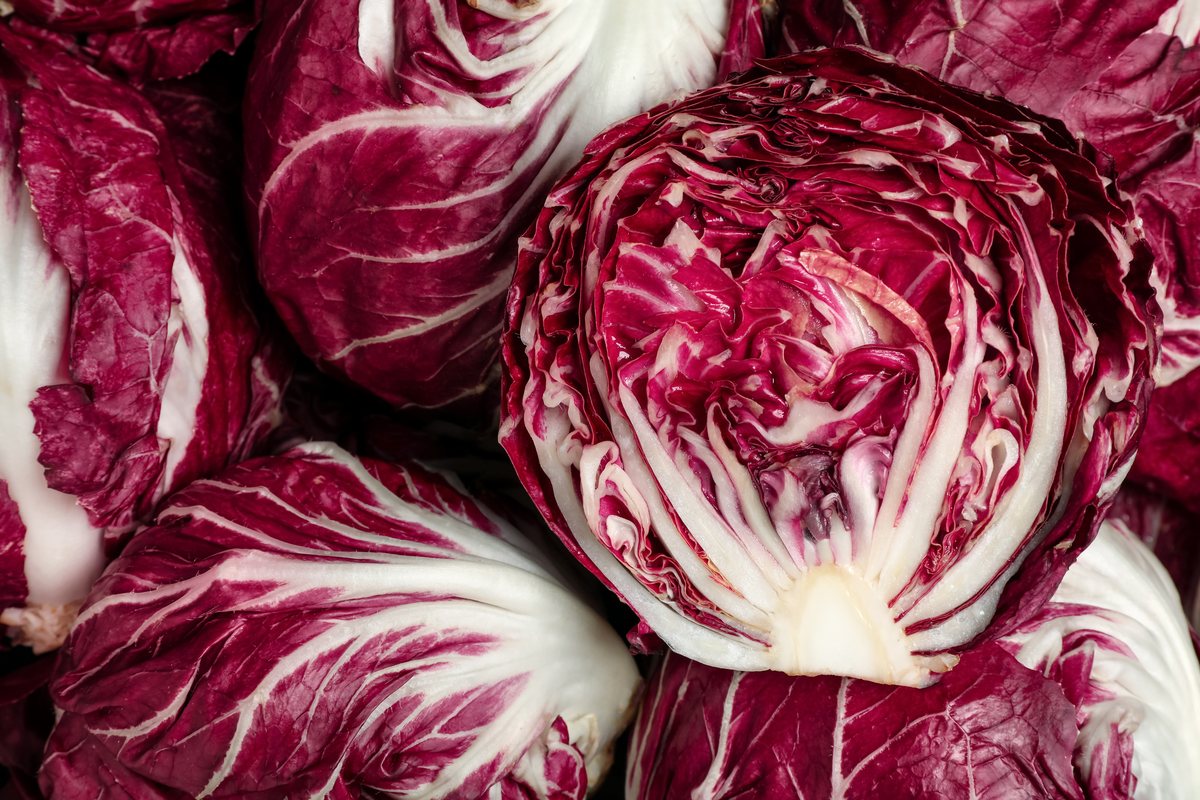
The name comes from Latin. radix, root - chicory, too, was long cultivated primarily for its root.
All radicchio varieties originate from chicory (Cichorium intybus) which grows along our roadsides with its sky-blue flowers. Root chicory, chicory and leaf chicories such as radicchio were bred from it.
The home of red radicchio is Veneto. The round Chioggia Today, the most common type of radicchio in German stores is the elongated variety. Treviso It is considered a premium variety. For the Treviso Tardivo variety, the plants are harvested after the first frosts and placed with their roots in basins of flowing spring water. In the dark, they sprout new, pale leaves with bright white veins and wine-red tips. A Belgian landscape architect is said to have brought this technique to Treviso in the 19th century. Treviso and Castelfranco are now protected geographical indications (PGI).
To useWhat Radicchio does for you
According to the USDA, 100g of radicchio contains only 23 kcal, but provides around 255 µg of vitamin D. Vitamin K - several times the daily requirement -, plus about 60 µg folate, 300 mg potassium, a good 2 mg vitamin E and some vitamin C. It contains relatively little fiber at just under 1 g.
His characteristics are Bitter substances: Sesquiterpene lactones such as lactucin and Lactucopicrin (also called intybin in older literature). Bitter tastes reflexively stimulate the flow of saliva, gastric juices, and bile; therefore, herbal medicine has long used bitter plants for loss of appetite and bloating. Commission E has given a positive assessment to the related chicory for this application. There are no clinical studies on radicchio as a vegetable – however, as a bitter starter to a meal, it fits perfectly into this tradition.
The red color comes from Anthocyanins, primarily cyanidin glycosides, along with chlorogenic acid and chicory acid. And the inulin? That's mainly concentrated in the chicory root; the leaves contain very little. Radicchio is therefore not a noteworthy source of inulin. Inulin-Source.
IngredientsThis is what's in radicchio
Radicchio contains bitter substances from the group of sesquiterpene lactones (lactucin, 8-deoxylactucin, lactucopicrin), anthocyanins such as cyanidin-3-O-(6-malonyl)-glucoside, phenolic acids such as chlorogenic acid and chicory acid, flavonoids such as quercetin and kaempferol glycosides, a small amount of inulin, as well as vitamin K, folate, vitamin E, vitamin C, potassium and carotenoids such as lutein.
The bitter compounds are mainly found in the leaf ribs and the stem. The anthocyanins become brighter when exposed to acid and more brownish when heated.
Enhanced combinationsWhat makes radicchio stronger
Bitterness needs a counterpart: sweetness, fat and salt round out radicchio.
It balances the bitterness.
For vitamins K and E.
Salt and umami against bitterness.
Makes the color bright.
Mild meets tart.
A classic from Treviso.
What contradicts itselfIt's best to avoid these combinations.
Too bitter for beginners.
It becomes muddy and grey.
It costs vitamins - 10 minutes is enough.
Lots of vitamin K.
Bitter substances stimulate gastric juice production.
Keeps the vegetable drawer fresh for a week.
In the kitchenWhere he belongs
- Radicchio risottoWith red wine and Parmesan cheese.
- Grilled TrevisoQuartered lengthwise with olive oil.
- Braised RadicchioWith balsamic vinegar and honey.
- Winter saladWith pear and walnuts.
- pastaWith radicchio, bacon or pine nuts.
- Orange saladWith radicchio and fennel.
- Oven-roasted vegetablesWith pumpkin and red onions.
- Pizza biancaTopped after baking.
- Mixed saladA few red leaves are enough.
- Radicchio boatsLeaves filled with cream cheese.
As a home remedyBitter appetizer salad before heavy meals
Radicchio appetizer
- Wash, dry, and finely slice some radicchio leaves.
- Cut half a pear or orange into pieces and add it.
- Dress with 1 tablespoon of olive oil, a splash of balsamic vinegar and a pinch of salt.
- Chew slowly and thoroughly, eat as a small portion before the main course.
According to the old principle of bitter remedies: a bitter taste before meals is supposed to stimulate appetite and digestive juices and prevent bloating after fatty meals. This use is based on tradition and the positive assessment of chicory by Commission E, not on studies with radicchio.
A small bowl before the main course. It's best to avoid it if you have stomach ulcers or heartburn; if you have gallstones, consult a doctor beforehand.
Ayurveda & TCMWhat the old systems say
Ayurveda
Radicchio is not described in classical Ayurveda. According to current understanding, it is considered bitter, cooling, and light – balancing for Pitta and Kapha; for Vata, it is better cooked with a little oil.
Traditional Chinese Medicine
In traditional Chinese medicine, chicory is described as bitter and cooling; it is said to clear heat and support the liver and gallbladder. Western TCM nutritional theory classifies radicchio similarly.
Warning noticesWhen you should be careful
Please note
- Blood clotting: Radicchio is very rich in vitamin K. Those taking coumarin blood thinners such as phenprocoumon should eat it regularly in consistent amounts and discuss any major changes with their doctor.
- Bile: Bitter substances stimulate bile flow; in case of gallstones or blockage of the bile ducts, bitter substances should only be used after consulting a doctor.
- Stomach: Bitter substances can be irritating in cases of acute gastritis or stomach ulcers.
- Allergy: People allergic to plants in the Asteraceae family may react to chicory; contact dermatitis has also been reported when cleaning larger quantities.
- Germs: Wash all leafy salads thoroughly before eating them raw.
This page provides information and does not replace medical advice. If symptoms persist, please consult a doctor.
Related to the topicRead on and cook along!
Shop links lead to our product pages; it is indicated there if a partner is involved.
SourcesWhat is this based on?
- USDA FoodData Central: Radicchio, raw.
- Innocenti M et al. Evaluation of the phenolic content in the aerial parts of different varieties of Cichorium intybus L. Journal of Agricultural and Food Chemistry 2005; 53(16): 6497–6502.
- Street RA, Sidana J, Prinsloo G. Cichorium intybus: traditional uses, phytochemistry, pharmacology, and toxicology. Evidence-Based Complementary and Alternative Medicine 2013; 2013: 579319.
- Wesołowska A et al. Analgesic and sedative activities of lactucin and some lactucin-like guaianolides in mice. Journal of Ethnopharmacology 2006; 107(2): 254–258.
- Commission E: Monograph Cichorium intybus (Chicory).
- Consorzio di Tutela Red Radicchio di Treviso and Variegato di Castelfranco IGP: Il tardivo.


