
Potato (Solanum tuberosum)
OriginThe tuber that fed Europe
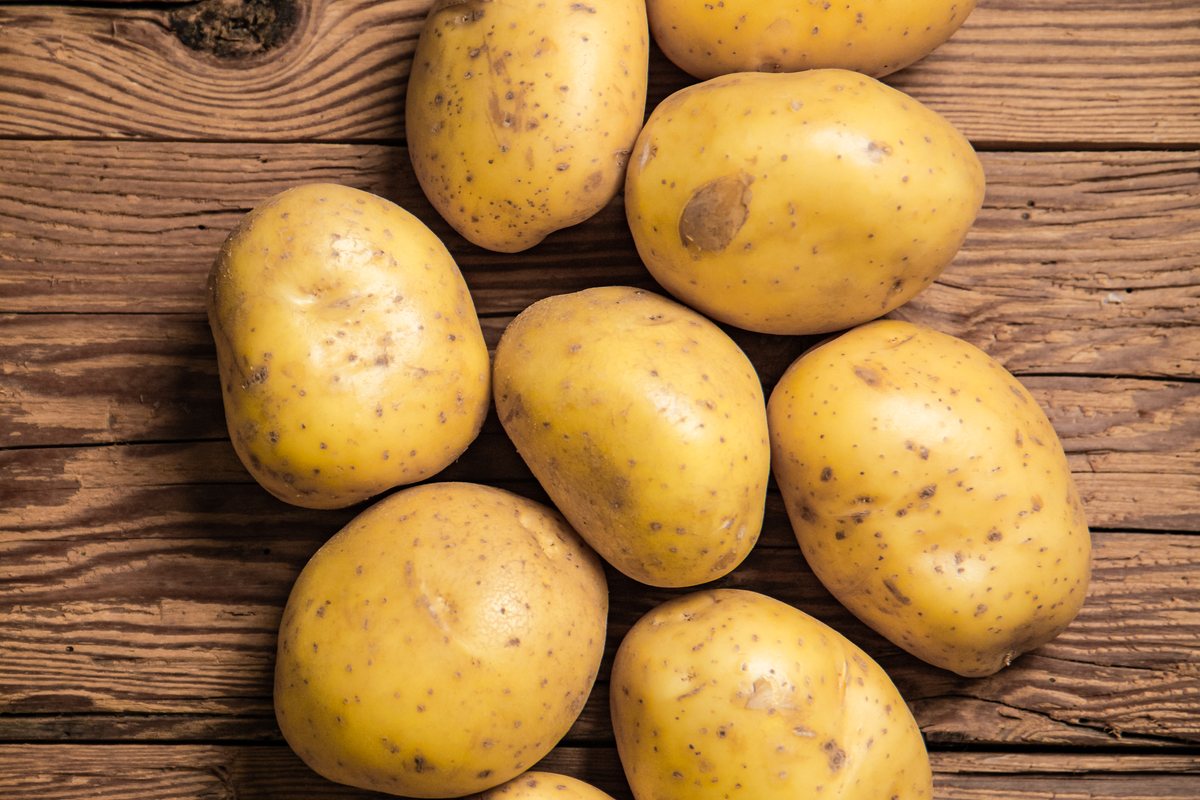
In 1756, Frederick the Great issued his "Potato Edict," ordering the cultivation of the tuber in Prussia - but the farmers didn't trust it.
The potato was domesticated in the Andes of Peru and Bolivia about 8,000 years ago; the Andean peoples still know thousands of varieties and freeze-dried them to make chuño. Spaniards brought it to Europe in the 16th century, where it was long considered an ornamental plant and animal fodder – the green berries are poisonous, and the tuber was viewed with suspicion.
In the 18th century, rulers like Frederick the Great promoted potato cultivation because potatoes fed more people than grain on the same area. They ended the great famines—and caused a new one: the Irish famine of 1845 arose because almost the entire country depended on a single, susceptible variety, which was decimated by late blight.
To useWhat the potato does for you
A medium-sized potato (150 g) provides approximately 600 mg. potassium, 15 to 20 mg Vitamin C, Vitamin B6, magnesium, and approximately 3g of high-quality protein – combined with egg, this makes for one of the highest-quality protein mixtures available. The nutrients are best preserved when potatoes are boiled in their skins.
Cooked and cooled Part of the starch crystallizes into resistant starch, These are substances that the small intestine cannot digest and that feed the gut bacteria in the large intestine. Therefore, leftover potato salad causes blood sugar to rise more slowly than fresh mashed potatoes.
The potato's bad reputation stems from French fries and chips: fried and salted, it delivers a lot of fat, salt, and the roasting byproduct acrylamide. Boiled, steamed, or baked in the oven, it is a good, filling staple food with few calories.
IngredientsThis is what's in the potato
Potatoes consist of approximately 78 percent water, 15 to 18 percent starch, and protein., potassium, Vitamin C, Vitamin B6, magnesium, fiber (especially in the peel) and polyphenols such as chlorogenic acid, particularly in blue and red varieties.
Green parts, sprouts and the peel of young tubers are contained Glycoalkaloids such as solanine, which can cause nausea, abdominal pain, and diarrhea. They are heat-stable – therefore, generously cut away green parts and sprouts and store potatoes in a dark place.
Enhanced combinationsWhat makes the potato stronger
The potato is the canvas of German cuisine - the crucial thing is how you cook it.
Potatoes combined with egg or quark produce a particularly high-quality protein.
Potato salad, fried potatoes from the day before: more resistant starch.
Boiled potatoes with quark and linseed oil - simple and valuable.
Cooking in the peel preserves vitamin C and potassium.
Baked potatoes with olive oil and rosemary.
Potatoes with leafy greens - the vitamin C helps with iron absorption.
What contradicts itselfIt's best to avoid these combinations.
Solanine - generously remove green areas and sprouts, discard very green tubers.
Acrylamide is formed during strong browning – „gilding instead of charring“.
Below 6 °C, starch turns into sugar - resulting in more acrylamide during frying and a sweeter taste.
Light promotes the formation of solanine.
Hot mashed potatoes cause blood sugar to rise quickly - boiled or cooled potatoes are preferable.
Very high in potassium - soaking and double boiling reduces the content.
In the kitchenWhere she belongs
- Boiled potatoes with quarkAnd linseed oil.
- potato saladSwabian style with broth or with mayonnaise.
- Baked potatoesWith rosemary and olive oil.
- Potato soupWith leek, carrot and marjoram.
- Fried potatoesMade from boiled potatoes from the previous day.
- mashed potatoesWith butter and nutmeg.
- potato pancakesWith applesauce.
- GnocchiMade from floury potatoes.
- RöstiMade from raw or cooked potatoes.
- Heaven and EarthMashed potatoes with applesauce.
As a home remedyThe potato wrap
Warm potato poultice
- Boil 3 to 4 medium-sized potatoes with their skins on until soft.
- Place on a kitchen towel, fold the towel into a packet and crush the potatoes inside.
- Check the temperature on your forearm - pleasantly warm, not hot - and place it on your neck or chest.
- Secure it with a scarf or towel and leave it for 20 to 30 minutes until it cools down.
Sore throat, cough, stubborn mucus, and tension in the neck. Potatoes retain heat for a long time and release it moistly and evenly – a tried-and-tested home remedy.
Once or twice daily. Always check the temperature beforehand, especially with children – risk of burns. Do not use in cases of fever or acute inflammation with redness and swelling.
Ayurveda & TCMWhat the old systems say
Ayurveda
The potato (AluminumIn Ayurveda, it is considered sweet, heavy, dry, and cooling – it increases Vata and Kapha. Therefore, it is prepared with ghee, cumin, turmeric, and ginger, as in... Aloo Gobi.
Traditional Chinese Medicine
In Traditional Chinese Medicine (TCM), the potato (Ma Ling Shu) sweet and neutral. It is said to strengthen the spleen and stomach, replenish Qi and moisten the intestines; raw potato juice is traditionally drunk for stomach ailments.
Warning noticesWhen you should be careful
Please note
- Solanine: Generously remove green parts and sprouts, discard green tubers.
- Acrylamide: Do not fry or roast too dark.
- Potassium: In case of kidney failure, discuss quantities; soak potatoes.
- Blood sugar: Hot mashed potatoes cause sugar levels to rise quickly.
- Wraps: Check temperature - risk of burns.
This page provides information and does not replace medical advice. If symptoms persist, please consult a doctor.
Related to the topicRead on and cook along!
Shop links lead to our product pages; it is indicated there if a partner is involved.
SourcesWhat is this based on?
- Birt DF et al. Resistant starch: promise for improving human health. Advances in Nutrition 2013; 4(6): 587–601.
- Federal Institute for Risk Assessment: Glycoalkaloids in potatoes - statement, 2018.
- EFSA CONTAM Panel. Scientific opinion on acrylamide in food. EFSA Journal 2015; 13(6): 4104.
- Spooner DM et al. A single domestication for potato based on multilocus amplified fragment length polymorphism genotyping. PNAS 2005; 102(41): 14694–14699.
- USDA FoodData Central: Potatoes, flesh and skin, raw.


