
Millet (Panicum miliaceum)
OriginThe grain of the sweet porridge
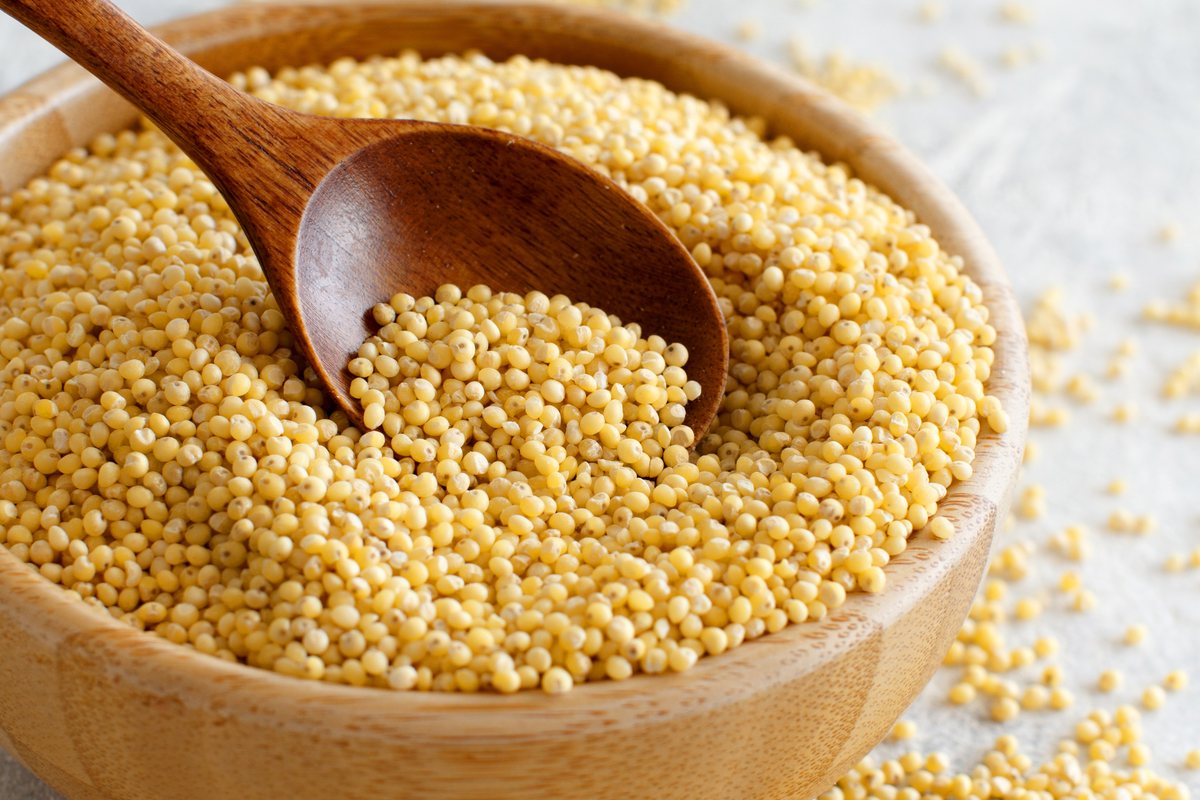
In the Brothers Grimm fairy tale, a small pot cooks sweet millet porridge for so long that the whole town sinks into it.
Foxtail millet was domesticated in northern China around 10,000 years ago, making it one of the oldest cultivated grains. It requires little water, matures in just three months, and thus became a staple food in arid regions of Asia and Africa, and a staple food for the poor in Europe. In Central Europe, millet porridge was eaten daily until the 18th century – then the potato displaced it.
Millet is a collective term: Foxtail millet (golden millet) is the common type of millet used in our region, but other varieties include foxtail millet, pearl millet, finger millet, teff, and sorghum. The United Nations declared 2023 the International Year of Millet because it is considered a climate-resilient grain for the future.
To useWhat millet does for you
Millet is naturally gluten-free and easily digestible. It provides complex carbohydrates and around 11 percent protein., magnesium, Phosphorus, iron (depending on variety and source, 3 to 7 mg per 100 g), zinc and B vitamins, especially niacin and vitamin B6. Brown millet, which is ground with the hull, also contains more fiber and minerals.
A meta-analysis found that millet, as a staple food, slightly lowers fasting and long-term blood sugar levels in people with diabetes compared to rice or wheat. The studies are predominantly from India and vary in quality.
Millet is often mentioned because of its nutritional content. Silica Recommended for skin, hair, and nails. However, hulled golden millet contains very little of these nutrients, and reliable studies are lacking. Its value lies elsewhere: as a gluten-free, mineral-rich everyday grain.
IngredientsThis is what's in millet
Millet contains starch, protein, some fat, fiber, magnesium, Phosphorus, iron, zinc, copper, manganese, niacin, vitamin B6 and folate, as well as polyphenols. Silica (silicon) is found primarily in the hull of brown millet.
Like other grains, millet contains phytic acid, which binds minerals – washing, soaking, and cooking reduce this. Pearl millet contains flavonoids, which, in very high quantities and in cases of iodine deficiency, can inhibit thyroid function; however, the amounts typically consumed in our region and the use of iodized salt make this effect negligible.
Enhanced combinationsWhat makes millet stronger
Millet is neutral in flavor and cooks quickly - it goes well with both sweet and savory foods.
Rinse millet in a sieve with hot water - this removes bitter substances.
Toast in a dry pan or with a little butter, then pour in the liquid - nuttier.
Vitamin C from bell peppers, tomatoes or fruit improves iron absorption.
Millet porridge with apple and cinnamon - the old breakfast.
Millet with lentils or beans supplements the amino acids.
Millet fritters, stuffed peppers with millet.
What contradicts itselfIt's best to avoid these combinations.
Unwashed millet can taste bitter.
Contamination is possible during processing.
Millet quickly becomes rancid due to its fat content – store in a cool, airtight container and consume soon.
Raw brown millet only in small quantities, not as a powder in large quantities.
Only relevant in cases of extremely high consumption of pearl millet and iodine deficiency.
The claims made about silica are unsubstantiated.
In the kitchenWhere she belongs
- millet porridgeIn milk with cinnamon, apple and raisins.
- millet frittersWith carrot, onion and herbs.
- Millet saladLike tabbouleh with cucumber, tomato and mint.
- Stuffed peppersWith millet, vegetables and cheese.
- Millet casseroleSweet with cherries or savory with vegetables.
- Millet risottoWith pumpkin or mushrooms.
- Side dishInstead of rice, cook it loosely.
- Xiaomi ZhouChinese millet and rice porridge, the classic diet for the sick.
- Millet porridgeWith berries and nut butter.
- millet flakesIn muesli.
As a home remedyMillet porridge as a bland diet
Millet porridge for stomach and soul
- Rinse 80g of golden millet thoroughly in a sieve with hot water.
- Bring to a boil with 400 ml of water or milk and a pinch of salt.
- Allow to swell for 20 minutes over low heat, stirring occasionally.
- Serve with grated apple and a pinch of cinnamon - or savory with broth.
As an easily digestible, gluten-free and warming meal for sensitive stomachs, after infections, for children and the elderly. In China, millet porridge (Xiaomi Zhou) the traditional diet for new mothers and the sick.
As a meal, as often as it feels good.
Ayurveda & TCMWhat the old systems say
Ayurveda
millet (about Kanguni, Millet (such as foxtail millet) is considered light, dry, and warming in Ayurveda. It reduces Kapha and is beneficial for those who are overweight or have diabetes, but can increase Vata – therefore, it should be cooked with ghee and plenty of liquid.
Traditional Chinese Medicine
In Traditional Chinese Medicine (TCM), millet (XiaoMi) sweet and slightly cooling. It is said to strengthen the spleen and stomach, nourish the kidneys and clear heat; millet porridge is the classic restorative food after childbirth and illness.
Warning noticesWhen you should be careful
Please note
- Celiac disease: Only certified gluten-free millet.
- Storage: It quickly becomes rancid – cool and airtight.
- Brown millet: Only in small quantities raw.
- Thyroid: Only relevant in cases of extremely high consumption and iodine deficiency.
- Allergy: rarely.
This page provides information and does not replace medical advice. If symptoms persist, please consult a doctor.
Related to the topicRead on and cook along!
Shop links lead to our product pages; it is indicated there if a partner is involved.
SourcesWhat is this based on?
- Saleh ASM et al. Millet grains: nutritional quality, processing, and potential health benefits. Comprehensive Reviews in Food Science and Food Safety 2013; 12(3): 281–295.
- Anitha S et al. A systematic review and meta-analysis of the potential of millets for managing and reducing the risk of developing diabetes mellitus. Frontiers in Nutrition 2021; 8:687428.
- Lu H et al. Earliest domestication of common millet (Panicum miliaceum) in East Asia extended to 10,000 years ago. PNAS 2009; 106(18): 7367–7372.
- Brothers Grimm The sweet porridge. Children's and Household Tales, No. 103.
- USDA FoodData Central: Millet, raw.


