
Leek (Allium porrum)
OriginThe vegetables of the pharaohs and Welsh
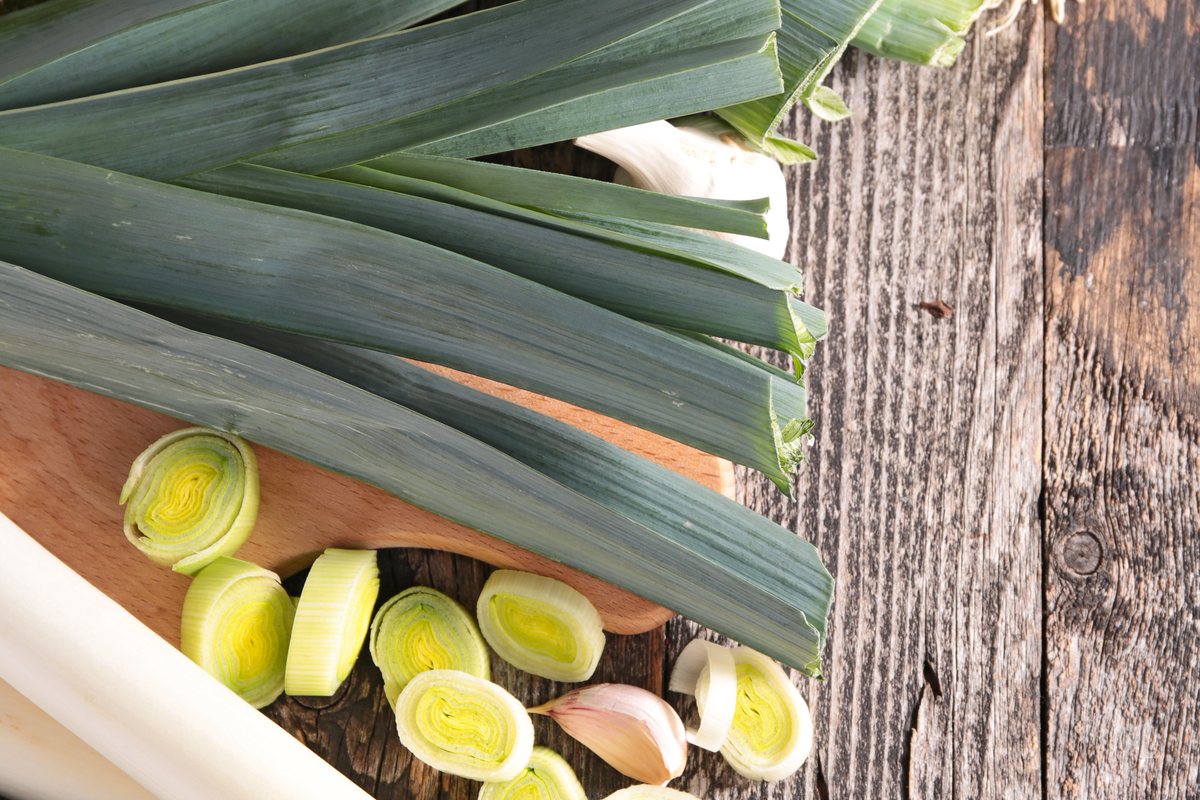
Emperor Nero is said to have eaten so much leek that he was called "Porrophagus" - the leek eater.
Leeks were cultivated in ancient Egypt; workers on the pyramids are said to have received them as a staple food, along with onions and garlic. Greeks and Romans valued them as a soup vegetable and for their ability to clear the voice. They came to Central Europe and monastery gardens via the Romans.
In Wales, leeks remain a national symbol to this day. In Germany, they are an essential ingredient in soups and are one of the few vegetables that are available fresh from the field almost year-round: summer and autumn leeks with long, light-colored stalks, and winter leeks with shorter stalks and blue-green, frost-resistant leaves.
To useWhat leeks do for you
100g of raw leeks contain only about 30 to 60 kcal and provide about 2g of protein. Dietary fiber, approximately 45 µg Vitamin K - roughly half of the daily requirement -, about 60 µg Folate as well as vitamin C, potassium, and manganese. The green leaves are significantly richer in vitamin K, carotenoids, and folate than the white stem.
Some of the carbohydrates are stored as Fructans before, namely inulin and oligofructose. These Prebiotics Undigested, they reach the large intestine and serve as food for beneficial bacteria such as bifidobacteria. This is well-studied for isolated inulin; for leeks as a vegetable, there are primarily laboratory analyses and nutritional studies with a mixed diet.
Like all members of the allium family, leeks contain sulfur compounds and flavonoids such as kaempferol. Observational studies link high consumption of allium vegetables with a slightly lower risk of stomach and intestinal cancer – whether leeks themselves are responsible for this cannot be concluded from these studies.
IngredientsThis is what's in leeks
Leeks contain water, fructans (inulin, oligofructose), other dietary fiber, vitamin K, folate, vitamin C, vitamin B6, provitamin A and lutein in the green leaves, potassium, manganese, iron, and flavonoids such as kaempferol and sulfur-containing cysteine sulfoxides, which become the typical flavorings when cut.
The sulfur compounds are milder than in onions and garlic - that's why your eyes hardly water when cutting leeks.
Enhanced combinationsWhat makes leeks stronger
Leeks are a friendly companion - they just need a little fat and a little acid.
Vitamin K and carotenoids require fat.
Classic leek and potato soup.
Leek quiche, scrambled eggs with leeks.
It highlights the sweetness.
The basis of every broth.
A classic with steamed leeks.
What contradicts itselfIt's best to avoid these combinations.
Soil sits between the leaf layers.
That's where most of the vitamins are located.
High in fructans (FODMAP).
It becomes mushy, and vitamin C is lost.
Maintain a consistent level of vitamin K.
It absorbs odors, apples too.
In the kitchenWhere he belongs
- Leek and potato soupCreamy, even without cream.
- Leek quicheWith cheese and egg.
- Steamed leeksIn butter with nutmeg.
- Leek vinaigretteA French classic, served lukewarm.
- vegetable brothCook the dark green part along with the rest.
- Cheese and leek soupHearty food for winter.
- Leek vegetables with fishWith mustard sauce.
- Gratinated LeeksTopped with ham or cheese.
- Leek risottoSauté the light rings until translucent.
- Cock-a-leekieScottish chicken soup with leeks.
As a home remedyLeek soup for tough days
Clear leek soup
- Clean 1 leek stalk, halve lengthwise, wash thoroughly and cut into rings - use the green part as well.
- Sauté the rings in 1 teaspoon of oil or butter for 3 minutes until translucent.
- Pour in 750 ml of water or vegetable stock, add 1 diced potato and simmer gently for 15 minutes.
- Season with salt, pepper and a little parsley, and eat warm in small sips.
As a light, warming meal for a cold or after a heavy meal. The soup provides fluids, salt, and some potassium. Traditionally, warm leek or onion poultices were also applied for earaches and sore throats – however, there are no reliable studies to support this.
One bowlful once or twice a day. For irritable bowel syndrome, use only the green parts of the leek. Earaches accompanied by fever or lasting more than two days should be examined by a doctor.
Ayurveda & TCMWhat the old systems say
Ayurveda
In Ayurveda, leeks are classified similarly to onions, but milder: when cooked, they are sweet, warm and light - balancing for Vata and Kapha, and in moderation for Pitta.
Traditional Chinese Medicine
In Traditional Chinese Medicine (TCM), leeks are considered warming and pungent-sweet. They are said to move Qi, warm the stomach, and dispel cold – therefore, they are often used in winter soups.
Warning noticesWhen you should be careful
Please note
- Irritable bowel syndrome: Leeks are rich in fructans and are considered high in FODMAPs; the green leaves are usually better tolerated than the white stalk.
- Blood thinners: Those taking vitamin K antagonists such as phenprocoumon (Marcumar) should not eat leeks suddenly in large quantities, but rather gradually.
- Sand: Wash thoroughly - soil between the leaves can contain germs.
- Warm-up: Cool cooked leeks quickly and do not keep them warm for days, as with all vegetables high in nitrates.
- Allergy: Cross-reactions with onion and garlic are rare.
This page provides information and does not replace medical advice. If symptoms persist, please consult a doctor.
Related to the topicRead on and cook along!
Shop links lead to our product pages; it is indicated there if a partner is involved.
SourcesWhat is this based on?
- USDA FoodData Central: Leeks, (bulb and lower leaf portion), raw.
- Van Loo J et al. On the presence of inulin and oligofructose as natural ingredients in the western diet. Critical Reviews in Food Science and Nutrition 1995; 35(6): 525–552.
- Gibson PR, Shepherd SJ. Evidence-based dietary management of functional gastrointestinal symptoms: The FODMAP approach. Journal of Gastroenterology and Hepatology 2010; 25(2): 252–258.
- Max Rubner Institute: Federal Food Code (BLS), raw leeks.
- Federal Centre for Nutrition (BZfE): How-to: Leeks.


