
Peach (Prunus persica)
OriginThe „Persian apple“ from China
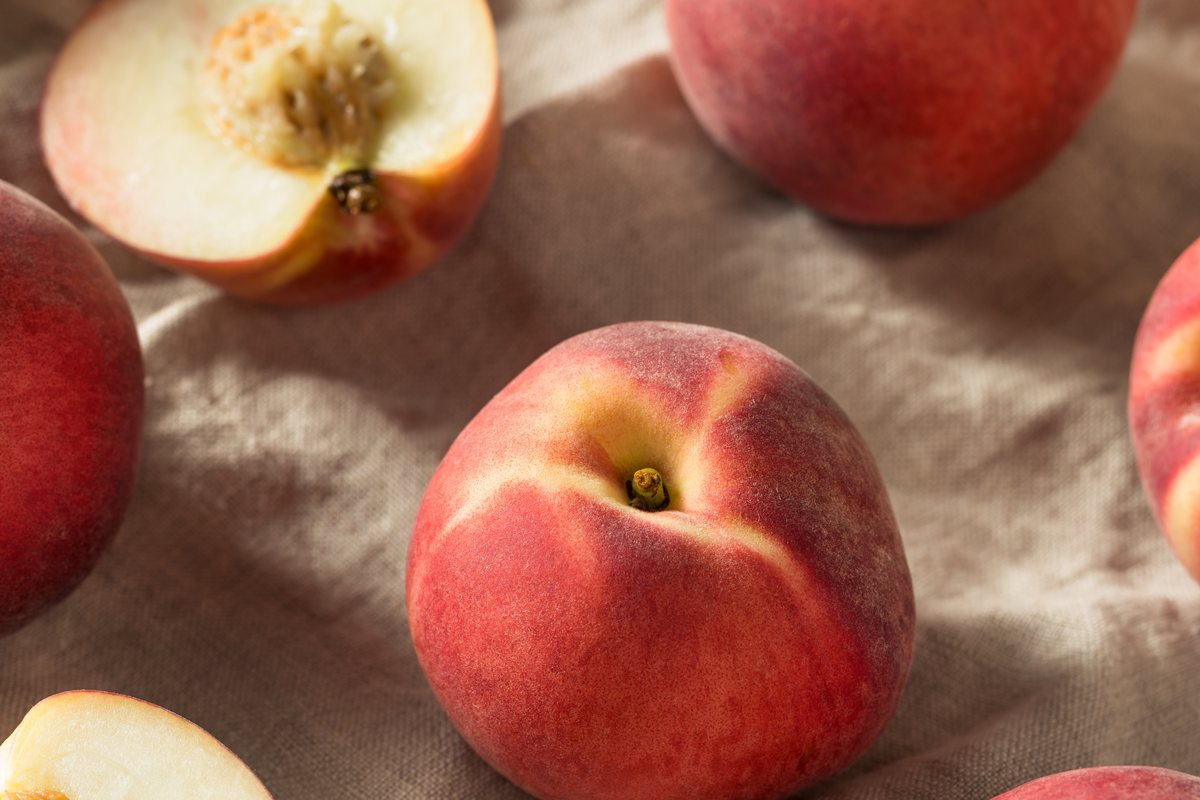
The Latin name persica This is misleading: The peach originated in China, not Persia.
In China, the peach has been cultivated for around 4,000 years and is considered a symbol of long life. It reached Persia via the Silk Road, where the Greeks and Romans became acquainted with it – hence the name "Persian apple." In the Middle Ages, monasteries also planted it north of the Alps.
The nectarine is not a hybrid, but a smooth-skinned variety of peach (Prunus persica var. nucipersica). The flat flat peach, The vineyard peach, also called the Saturn peach, is another variety. In Germany, peaches grow primarily in wine-growing regions; the majority come from Spain, Italy, and Greece.
To useWhat peaches can do for you
A medium-sized peach (about 150 g) has only around 60 kcal and provides almost 300 mg of vitamin D. potassium, approximately 10 mg Vitamin C and about 2g of fiber. Yellow-fleshed varieties also contain additional fiber. Carotenoids such as beta-carotene and beta-cryptoxanthin.
The skin and flesh contain polyphenols such as chlorogenic acid and catechins; red-skinned varieties also contain anthocyanins. Laboratory studies show antioxidant effects; however, whether peaches have any further specific health benefits in humans has not been investigated.
Its strength is simple: when ripe, it is soft, sweet, and easily digestible – cooked, it is even particularly gentle on the stomach. The peel contains more polyphenols than the flesh; those who tolerate it should wash it thoroughly and eat it.
IngredientsThis is what's in the peach
Peaches consist of almost 90 percent water. They contain sugar (mainly sucrose), fruit acids, pectin, potassium, vitamin C, some vitamin E and niacin, carotenoids (in yellow varieties), and polyphenols such as chlorogenic acid, catechins, and quercetin glycosides.
The seed in the stone contains the cyanogenic glycoside Amygdalin, from which hydrocyanic acid can be produced when chewed. The lipid transfer protein is located in the peel. Pru p 3, the main allergen of the peach.
Enhanced combinationsWhat makes peaches stronger
Peaches need little - a little fat, acid or spice is enough.
Carotenoids are absorbed better.
Turn fruit into a meal.
A classic accompaniment to compote.
In a summer salad.
In porridge.
For chutney.
What contradicts itselfIt's best to avoid these combinations.
Amygdalin releases hydrogen cyanide.
Pru p 3 can trigger severe reactions.
It ripens poorly and remains mealy.
It becomes mealy.
Lots of added sugar.
Contains sorbitol.
In the kitchenWhere he belongs
- PureMature and washed.
- peach compoteWith vanilla.
- PorridgeWith rolled oats and almonds.
- summer saladWith basil and mozzarella.
- Grilled peachWith yogurt.
- Peach crumbleWith oat crumble.
- SmoothieWith yogurt and ginger.
- ChutneyWith cheese or curry.
- Peach jamWith little sugar.
- quark dishWith diced peaches.
As a home remedyPeach compote for sensitive stomachs
peach compote
- Peel, pit, and slice 2 ripe peaches.
- Place in a pot with 100 ml of water and, if desired, a pinch of cinnamon or some vanilla.
- Cover and simmer gently for 5 to 10 minutes, until the fruit is soft.
- Eat lukewarm, plain or with porridge or rusks.
As a light, easily digestible fruit meal, especially if you have a sensitive stomach or are slowly returning to normal food after an infection. Cooked, peeled fruit is gentler than raw fruit – however, it does not have any medicinal properties.
One small bowl per meal. Cook without sugar. Consult a doctor if diarrhea is accompanied by fever, blood in the stool, or persistent symptoms.
Ayurveda & TCMWhat the old systems say
Ayurveda
In Ayurveda, the ripe peach is considered sweet, slightly sour, and rather warming. It is said to calm Vata; sparingly for Pitta, and in moderation for Kapha.
Traditional Chinese Medicine
In Traditional Chinese Medicine (TCM), the pulp is considered warm, sweet, and sour, and is said to moisten the body's fluids. The seed (Tao Ren) is a standalone drug that may only be dosed by professionals - it is unsuitable as a home remedy because of the amygdalin it contains.
Warning noticesWhen you should be careful
Please note
- Allergy: Peaches are one of the most common food allergy triggers in Southern Europe. The lipid transfer protein Pru p 3 survives cooking and can cause severe reactions, including anaphylactic shock – avoid peaches if you have a known LTP allergy and seek medical advice.
- Pollen: People with birch pollen allergies often experience a tingling sensation in the mouth; it is usually better tolerated when cooked.
- Cores: They contain amygdalin, from which hydrocyanic acid is produced - do not eat them, do not take them as "vitamin B17".
- Irritable bowel syndrome: Sorbitol and fructose can cause bloating.
- Wash: Peaches are among the fruits most frequently contaminated with pesticides - wash or peel thoroughly.
This page provides information and does not replace medical advice. If symptoms persist, please consult a doctor.
Related to the topicRead on and cook along!
Shop links lead to our product pages; it is indicated there if a partner is involved.
SourcesWhat is this based on?
- USDA FoodData Central: Peaches, yellow, raw.
- EFSA CONTAM Panel. Acute health risks related to the presence of cyanogenic glycosides in raw apricot kernels and products derived from raw apricot kernels. EFSA Journal 2016; 14(4): 4424.
- Pastorello EA et al. The major allergen of peach (Prunus persica) is a lipid transfer protein. Journal of Allergy and Clinical Immunology 1999; 103(3): 520–526.
- Federal Institute for Risk Assessment (BfR): Two bitter apricot kernels per day are the limit for adults - children should avoid them.
- Wolters T et al. Lipid transfer protein allergy: characterization and comparison with birch pollen-associated food allergy. Journal of the German Dermatological Society (JDDG) 2022; 20.


