
Celery (Apium graveolens)
OriginFrom the salt marsh to the soup pot
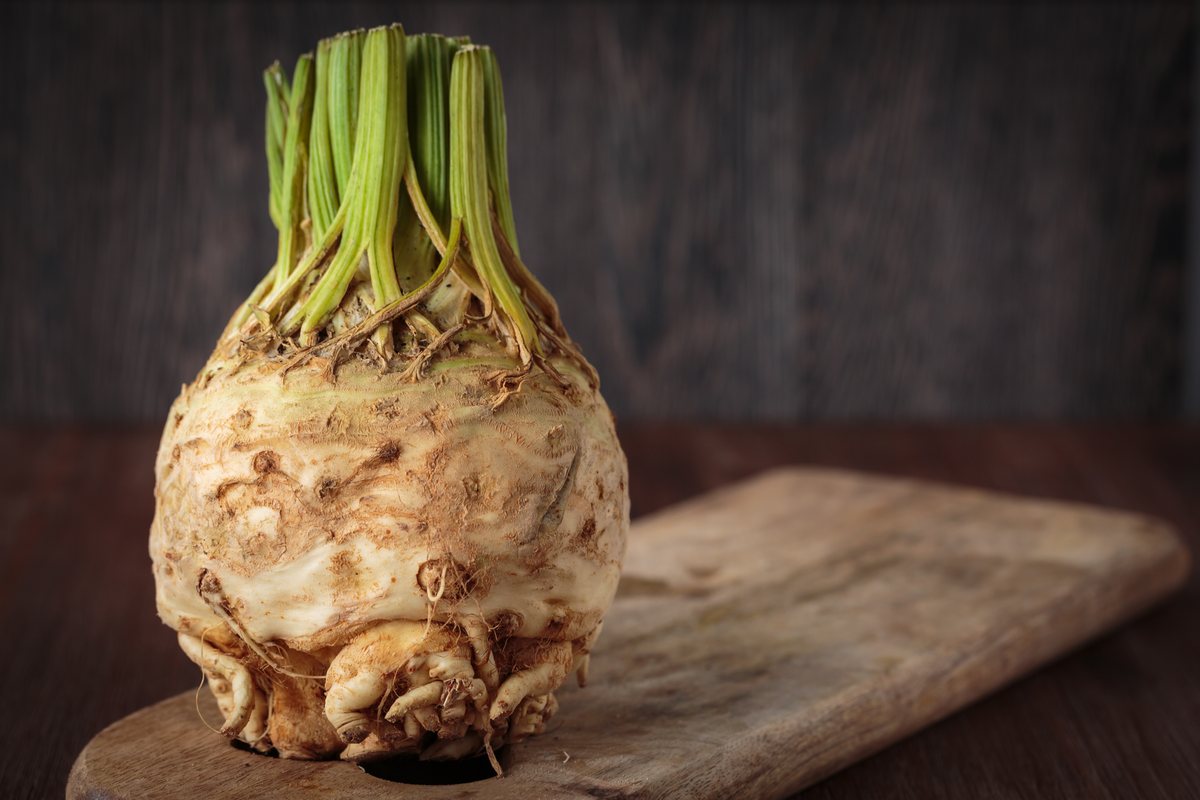
The ancient Greeks crowned victors at the Nemean Games with celery - and placed it in the graves of the dead.
Wild celery grows on coasts and salt marshes around the Mediterranean and the North Sea. Egyptians, Greeks, and Romans used it as a medicinal, culinary, and ritual plant; in Homer's epic, Achilles' horses grazed on celery meadows. It wasn't cultivated as a vegetable until the Renaissance in Italy—until then, wild celery was too bitter.
Today there are three forms of the same type: the celeriac with a thick root tuber, typical for Central Europe and the soup greens, which Celery (stalk or stalk) with fleshy leaf stalks, and the Cutting celery, which is used as an herb like parsley. The fruits are used as celery seeds and celery salt.
To useWhat celery does for you
Celery is a light, spicy vegetablesCelery stalks have only about 14 kcal per 100 g, while celeriac has around 42 kcal. It provides fiber, potassium, vitamin K, folate, and vitamin C, as well as flavonoids such as apigenin and luteolin. Its characteristic aroma comes from phthalides, especially 3-n-butylphthalide.
There is evidence from animal studies of a blood pressure-lowering effect for 3-n-butylphthalide, and celery, like beetroot, is a nitrate-rich vegetable. However, reliable human studies are lacking. Commission E has not recommended celery as a medicinal product due to a lack of evidence of efficacy.
For the Celery juice trendThe claim that 500 ml of celery juice on an empty stomach detoxifies the liver and cures chronic diseases comes from a popular book, not from studies. Juice is not harmful for healthy people, but whole celery with its fiber is the better choice.
IngredientsThis is what's in celery
Celery contains water, fiber, potassium, Sodium (slightly more than other vegetables – hence the slightly salty taste), vitamin K, folate, and vitamin C. It also contains flavonoids. Apigenin and luteolin, the phthalides for fragrance and nitrate.
Celery also contains Furocoumarins like psoralen, especially when the skin is infected with fungi. These substances make the skin sensitive to light – skin inflammation caused by sun and celery is common among vegetable farmers who work extensively with celery. This is not a concern when consuming normal amounts.
Enhanced combinationsWhat makes celery stronger
Celery is both a spice and a vegetable - it adds depth without being overpowering.
Soup vegetables: The foundation of every good broth.
The Italian base - finely diced and sautéed in olive oil.
Waldorf salad: Celeriac or stalk celery with apple, walnuts and yogurt.
Baked the whole tuber with its skin on in the oven for 2 hours - nutty and juicy like a roast.
Celery sticks as a crunchy spoon for dips.
Dried celery leaves with a little salt - seasons with less sodium.
What contradicts itselfIt's best to avoid these combinations.
Celery allergens are sometimes heat-stable and can trigger severe reactions, including shock.
The celery-mugwort-spice syndrome affects many pollen allergy sufferers - so be careful with carrots, fennel and spices as well.
Furocoumarins can cause skin reactions when large quantities are processed and exposed to sunlight.
Vitamin K - eat regularly.
Celery juice cleanses are not a substitute for treatment and have no proven detoxifying effect.
The leaves are more aromatic than the stalk - for broth, salad and celery salt.
In the kitchenWhere he belongs
- vegetable brothWith tuber, carrot, leek, onion, parsley.
- Waldorf saladCelery, apple, walnuts, yogurt mayonnaise.
- Celery pureeTuber with potato, butter and nutmeg.
- Celery schnitzelBreaded and fried slices of potato.
- Whole oven-baked potatoBaked with the skin on, with butter and thyme.
- Celery cream soupWith apple and nut butter.
- Celery sticks with dipWith hummus or peanut butter.
- SoffrittoFor Bolognese and Minestrone.
- raw celeryFinely grated with lemon and apple.
- Celery saltDry the leaves and grind them with salt.
As a home remedyHomemade vegetable broth
Rich celery and vegetable broth
- Roughly chop half a celeriac bulb with leaves, two carrots, one leek and one onion with peel.
- Roast vigorously in a little oil.
- Pour on two liters of water, add bay leaves, peppercorns and parsley stems, and simmer gently for one hour.
- Strain, lightly salt, and freeze in portions.
For colds and gastrointestinal infections: Warm broth provides fluids, salt, and potassium, warms you up, and is easily digestible. As a base for soups, it replaces bouillon cubes with additives.
Drink a cup several times a day as needed. If you have a celery allergy, cook without celery – the allergens will leach into the broth.
Ayurveda & TCMWhat the old systems say
Ayurveda
Celery (Ajmoda Celery seeds (actually the seeds of the celery plant) are considered pungent, bitter, and warming in Ayurveda. The seeds are used for bloating, joint pain, and to stimulate urination; they reduce Vata and Kapha.
Traditional Chinese Medicine
In Traditional Chinese Medicine (TCM) celery (Qin CaiIt is sweet-bitter and cooling. It is said to clear liver heat, calm wind, and promote urination – traditionally used for headaches, dizziness, and high blood pressure, for which modern research only has animal studies.
Warning noticesWhen you should be careful
Please note
- Allergy: Celery is a common and potentially severe allergen - even when cooked and in spice mixes.
- Pollen allergy: Cross-reaction with birch and mugwort (celery-carrot-mugwort spice syndrome).
- Blood thinners: Maintain a consistent intake of vitamin K while taking coumarins.
- Skin: Furocoumarins - wear gloves when handling large quantities in the sun.
- Pregnancy: Avoid celery seeds and seed oil in medicinal quantities; the vegetable itself is safe.
This page provides information and does not replace medical advice. If symptoms persist, please consult a doctor.
Related to the topicRead on and cook along!
Shop links lead to our product pages; it is indicated there if a partner is involved.
SourcesWhat is this based on?
- Regulation (EU) No 1169/2011, Annex II: Substances or products that trigger allergies or intolerances.
- Ballmer-Weber BK et al. Celery allergy confirmed by double-blind, placebo-controlled food challenge: a clinical study in 32 subjects with a history of adverse reactions to celery root. Journal of Allergy and Clinical Immunology 2000; 106(2): 373–378.
- Tsi D, Tan BK. Cardiovascular pharmacology of 3-n-butylphthalide in spontaneously hypertensive rats. Phytotherapy Research 1997; 11(8): 576–582.
- Commission E: Monograph Apium graveolens (celery), Federal Gazette.
- USDA FoodData Central: Celery, raw and Celeriac, raw.


