OriginThe mushroom that wants to be found
A fungus that grows underground has a problem: How does it spread its spores? The answer is smell.
Truffles of the genus Tuber These are ascomycete fungi that form their fruiting bodies entirely underground – usually five to thirty centimeters deep. They live in mycorrhiza with trees, especially oaks and hazel bushes, and supply them with water and minerals. The fruiting body is tuberous, warty-black on the outside, and marbled with fine white markings on the inside.
Their subterranean lifestyle presents a problem: spores that remain in the soil don't travel far. The solution is an exceptionally intense scent that attracts animals – wild boars, deer, rodents, and insects dig up the truffles, eat them, and spread the spores. Humans have simply adopted this mechanism: truffle pigs and – nowadays predominantly – truffle dogs follow the same scent.
The black Périgord truffle Tuber melanosporum It originates from southern France, northern Spain, and Italy and has been cultivated in planted truffle plantations since the 19th century by inoculating oak and hazel saplings with the fungus. The white Alba truffle Tuber magnatum The more expensive variety comes from Piedmont and cannot be cultivated to this day. In Germany, the Burgundy truffle is the most common. Tuber aestivum which is now more common than previously thought - and which is legally protected.
To useAroma, price, and widespread labeling fraud
Truffles are a delicacy with no medicinal value. Their worth lies entirely in their aroma, which arises from a complex mixture of sulfur-containing compounds, alcohols, and aldehydes. Nutritionally, they are insignificant, if only because of the small quantities consumed.
The most well-known myth concerns androstenol – a steroid also found in the saliva of wild boars and detected in truffles in the 1980s. This gave rise to the story that truffle pigs are attracted by this sex pheromone and that truffles have an aphrodisiac effect. More recent studies show that entirely different compounds are crucial for attracting truffles, most notably dimethyl sulfide. And there is absolutely no evidence for an aphrodisiac effect in humans.
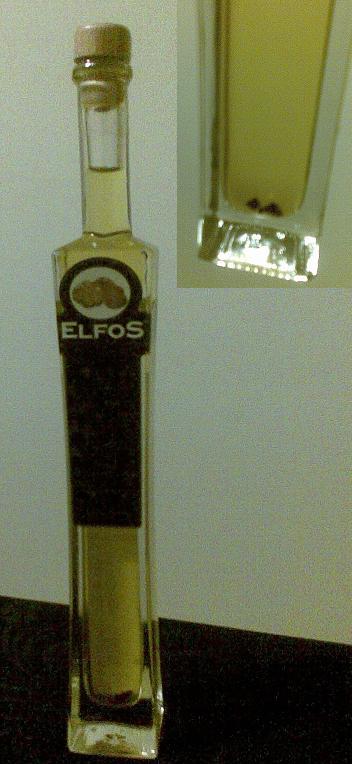
More practically speaking, something else is more important: truffle oil. The vast majority of truffle oils available commercially contain no truffle at all, but rather 2,4-dithiapentane – a synthetically produced flavoring agent that mimics a single component of the truffle aroma. The label then states "flavoring" or "truffle flavoring," sometimes accompanied by a few decorative pieces of truffle in the oil, which contribute nothing to the taste.
This is legally permissible, but largely frowned upon in fine dining. Those who want genuine truffle aroma buy fresh truffles in season or well-processed canned truffles and accept that they are expensive. Those who enjoy the taste of truffle oil can continue to use it—but should be aware that it is a single synthetic molecule and not a natural product. This isn't a moral judgment, but rather information that is often missing from the packaging.
IngredientsWhat applies in Germany - and what's in the oil bottle
All native truffle species are specially protected in Germany under the Federal Species Protection Ordinance. Collecting them is prohibited, even for personal use, and this explicitly includes Burgundy truffles. Tuber aestivum, Truffle hunting is more widespread in southern Germany than previously thought. Anyone digging with a truffle dog in a German forest is committing an administrative offense. Searching is only permitted on private property and – depending on the federal state – with a permit.
The aroma arises from dozens of volatile compounds. In black truffles, dimethyl sulfide, dimethyl disulfide, and various aldehydes define the character; in white Alba truffles, bis(methylthio)methane—specifically 2,4-dithiapentane—is indeed a major component, which explains why synthetic truffle oil tastes more like white truffles. However, the overall aroma of a fresh truffle is far more complex than any single substance.
One characteristic is crucial for cooking: the aroma is extremely volatile and heat-sensitive. Therefore, a fresh truffle is not cooked, but rather shaved over the finished, warm dish. Truffles cooked with food lose most of what you paid for.
Fresh truffles only keep for a few days. They should be stored in a sealed glass jar in the refrigerator, wrapped in kitchen paper that is changed daily. An old trick: place eggs or rice in the jar – both absorb the aroma through the shell or grains, and you can get two dishes from one expensive truffle.
Enhanced combinationsHow to handle truffles
The rules are simple, yet they are constantly broken: cold or warm, never hot, and always last.
The aroma is sensitive to heat. A fresh truffle goes on top of the warm dish, not in the pan.
Flavorings are fat-soluble. Fatty, mild dishes carry them best – scrambled eggs, risotto, pasta with butter.
Place raw eggs and truffles in a sealed jar. The aroma will permeate the shell, creating a second dish.
The same trick with uncooked rice for a truffle risotto.
Five to ten grams per person is perfectly sufficient. More is more likely to overwhelm than impress.
Those who like the taste can use it - knowing that it is a synthetic flavoring agent.
What contradicts itselfIt's best to avoid these combinations.
All truffle species are specially protected in Germany. Collecting them, even for personal use, is prohibited.
The aroma dissipates. Cooking with truffles is a waste of money.
Commercially available truffle oil generally contains no truffle, but rather 2,4-dithiapentan. This is listed as "flavoring" on the label.
They quickly lose their aroma and spoil. Use within a few days.
The androstenol myth has been debunked; there is no evidence of its effectiveness in humans.
The aroma is intense and quickly overpowering. Less is definitely more here.
In the kitchenWhere truffles belong
- scrambled eggsThe classic: eggs stored in a truffle jar, then soft-stirred and topped with freshly shaved truffles.
- pastaTagliolini with butter and Parmesan cheese, topped with shaved truffles.
- RisottoServed with rice from a truffle jar and fresh truffle at the end.
- mashed potatoesMild and high in fat - an ideal base.
- CarpaccioRaw beef with olive oil and truffle slices.
- BriocheWarm white bread with butter and truffles - the simplest way to taste them.
- PlaneA truffle slicer is worthwhile; thin slices release more aroma than cubes.
- In the glassPlace kitchen paper in a closed glass in the refrigerator, change the paper daily.
- A few gramsFive to ten grams per person is sufficient.
- Do not cookAlways add the hot dish last.
As a home remedyThe egg trick
Distribute truffle aroma between two dishes
- Clean the fresh truffle with a soft brush and dry – do not wash it, as this will accelerate spoilage.
- Take a sealable glass jar or tin, wrap the truffles in a sheet of kitchen paper and place them inside.
- Place two to four raw eggs in the jar, ensuring they don't directly touch the truffles. Seal the jar and refrigerate.
- Change the kitchen paper daily - it absorbs the moisture that would otherwise lead to mold.
- After two days, the eggs have absorbed the aroma through their porous shells. They produce scrambled eggs that taste distinctly of truffle – without containing a single gram of truffle.
- Use the truffles themselves within three to five days: shave them over the finished, warm dish, never cook them.
Making two dishes from one expensive ingredient – a classic trick in Italian and French cuisine. Truffles are purely a delicacy with no medicinal properties.
Five to ten grams of fresh truffles per person. Collecting all types of truffles is prohibited in Germany; commercially available truffles come from abroad or from approved cultivation.
Ayurveda & TCMWhat the old systems say
Ayurveda
Truffles are not used in Ayurveda. An interesting parallel can be found in the Middle East: the desert truffles of the genus [missing information]. Terfezia Truffles have been harvested in the Arab world since antiquity and used in traditional medicine for eye diseases – there is even a hadith about this. They are only distantly related to European truffles.
Traditional Chinese Medicine
In China, truffles are considered Kuai Jun known and are collected in Yunnan - the one found there Tuber indicum The Périgord truffle is outwardly similar, but significantly less aromatic and is sometimes used as an adulterant in international trade. It has hardly any traditional medicinal use; the Chinese truffle industry is a development of recent decades.
Warning noticesWhen you should be careful
Please note
- Protected in Germany: All types of truffles are under special protection. Collecting them, even for personal use, is prohibited.
- Truffle oil usually does not contain truffles: The flavoring agent 2,4-dithiapentan is synthetically produced and declared as "flavoring".
- Aroma is sensitive to heat: Fresh truffles are shaved over the finished dish, never cooked with it.
- Short shelf life: Use fresh truffles within a few days; change kitchen paper daily.
- Not an aphrodisiac: The androstenol myth has been debunked; there is no evidence of its effectiveness in humans.
- Check origin: Chinese Tuber indicum It is sometimes sold as Périgord truffle - but its aroma is significantly weaker.
This page provides information and does not replace medical advice. If symptoms persist, please consult a doctor.
Related to the topicRead on and cook along!
Shop links lead to our product pages; it is indicated there if a partner is involved.
SourcesWhat is this based on?
- Federal Species Protection Ordinance, Annex 1 - specially protected species, genus Tuber.
- Talou T. et al.: Dimethyl sulphide - the secret for black truffle hunting by animals? Mycological Research 1990.
- Splivallo R. et al.: Truffle volatiles - from chemical ecology to aroma biosynthesis. New Phytologist 2011.
- Wang S., Marcone MF: The biochemistry and biological properties of the world's most expensive underground edible mushroom. Food Research International 2011.
- Consumer advice center: Information on truffle oil and aroma declaration.