Blackberry (Rubus fruticosus)
OriginThe berry of the hedges
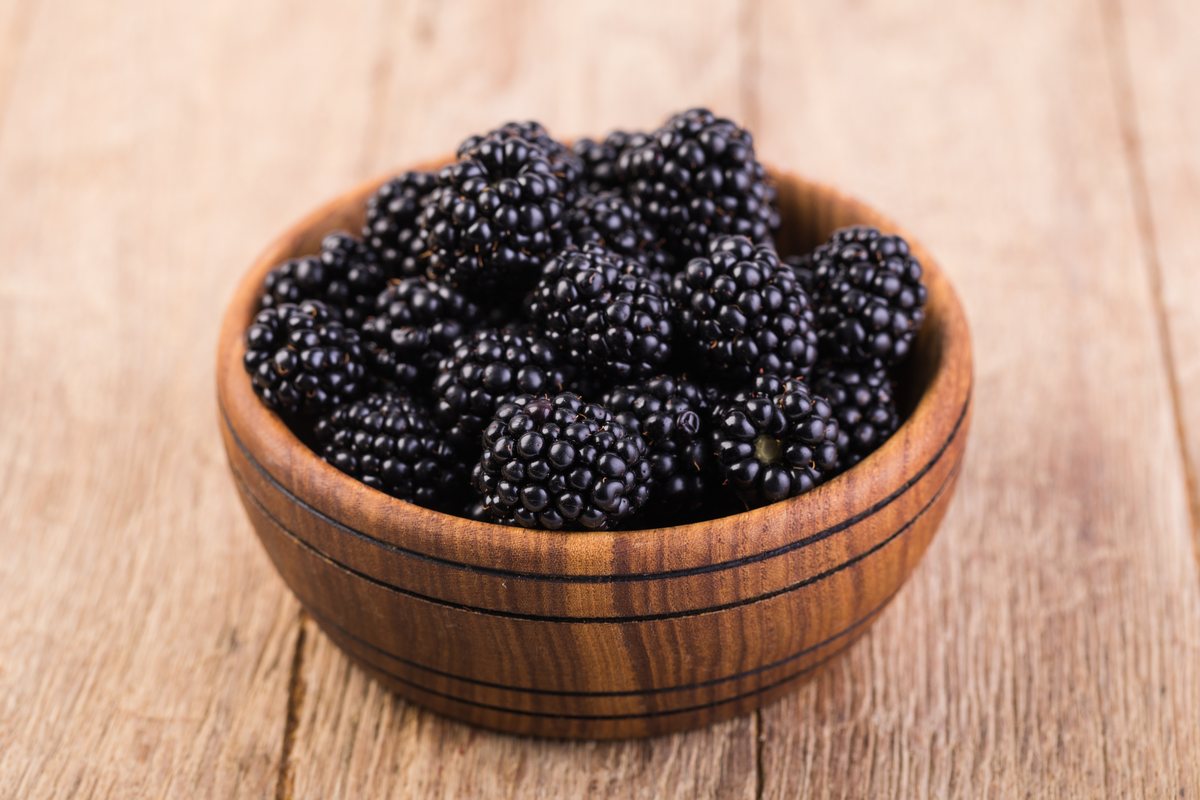
Hardly any plant is as difficult to tame and as easy to find as the blackberry - it conquers every fallow field.
The blackberry is not a single species, but a group of hundreds of closely related microspecies that often reproduce asexually – botanists refer to this as an aggregate. It grows throughout Europe on forest edges, hedgerows, and embankments; even Stone Age settlers gathered it, as evidenced by seed finds.
Garden blackberries are mostly thornless varieties from North America, with large, sweet fruits. Like the raspberry, the blackberry is an aggregate fruit; unlike the raspberry, the receptacle does not detach when picked, but remains in the fruit.
To useWhat the blackberry can do for you
Blackberries provide approximately 5 g Dietary fiber per 100 g, plus vitamin C, vitamin K, manganese and plenty Anthocyanins and ellagitannins – their dark color is their distinguishing feature. With approximately 43 kcal per 100 g, they are light and filling.
The blackberry leaves Blackberry leaves are a recognized medicinal drug: Commission E has described blackberry leaf tea for nonspecific, acute diarrhea and for mild inflammation of the oral and pharyngeal mucosa. This effect is due to the tannins, which have an astringent effect.
The same applies to these fruits as to all dark berries: they are a valuable part of a polyphenol-rich diet, and observational studies link berry consumption to better heart health. No specific medicinal properties of the fruit have been proven.
IngredientsThis is what's in the blackberry
The fruits contain water, sugar, fruit acids, Dietary fiber, Vitamin C, Vitamin K, Vitamin E, Manganese as well as Anthocyanins (especially cyanidin-3-glucoside) and ellagitannins. The small kernels contribute significantly to the dietary fiber content.
The leaves contain 8 to 14 percent tannins (Gallotannins and ellagitannins) as well as flavonoids. For tea, young leaves are collected and dried; fermented, they also serve as a substitute for black tea.
Enhanced combinationsWhat makes the blackberry stronger
Blackberries are more tart than raspberries - they like acidity, cream and apples.
Apple and blackberry crumble: The apple brings sweetness and pectin, the blackberry color and acidity.
Fiber plus protein - keeps you full for a long time.
Blackberry sauce for venison and deer.
Enhances the aroma in jam and compote.
Blackberry and raspberry leaves together as a mild house tea.
For smoothies and sauces.
What contradicts itselfIt's best to avoid these combinations.
Exhaust fumes and dog urine - best to stay away from paths and roads.
Imported frozen berries have repeatedly been contaminated with noroviruses - the BfR advises heating them.
Blackberries mold quickly - wash them only shortly before eating.
Blackberry leaf tea is intended for acute, mild diarrhea - if diarrhea lasts longer than three days, consult a doctor.
Tannins can irritate the stomach.
Tannins inhibit iron absorption.
In the kitchenWhere she belongs
- Apple and blackberry crumbleWith oat crumble.
- blackberry jamStrained through a sieve, without seeds.
- blackberry yogurtWith oats and nuts.
- blackberry sauceWith game or panna cotta.
- SmoothieWith banana and oat milk.
- Blackberry tartWith vanilla cream.
- blackberry liqueurMade with grain alcohol and rock candy.
- lettuceWith arugula, goat cheese and balsamic vinegar.
- blackberry syrupFor lemonade and tea.
- Blackberry leaf teaDried young leaves.
As a home remedyBlackberry leaf tea
Blackberry leaf tea
- Collect young, healthy blackberry leaves in early summer and dry them in the shade.
- Pour 150 ml of boiling water over 1.5 g (about one heaped teaspoon) of crushed leaves.
- Let it steep for 10 to 15 minutes, then strain.
- Drink several times a day if you have diarrhea; gargle with lukewarm water if you have mouth and throat inflammation.
Mild, acute diarrhea and mild inflammation of the oral and pharyngeal mucosa, as described by Commission E. The tannins have an astringent effect on the mucous membrane.
Up to 4.5 g of leaves per day. Consult a doctor if diarrhea lasts longer than three days, or if there is fever or blood in the stool – consult a doctor sooner for children and the elderly. Drink plenty of fluids.
Ayurveda & TCMWhat the old systems say
Ayurveda
The blackberry is not a classic Ayurvedic plant. Based on its taste – sweet-sour and strongly astringent – it is currently classified as Pitta and Kapha reducing; the leaves are used similarly to astringent herbs for diarrhea.
Traditional Chinese Medicine
In Traditional Chinese Medicine (TCM), related Rubus-Species used, especially the unripe fruit Fu Pen Zi to strengthen the kidneys. The European blackberry itself plays no role there.
Warning noticesWhen you should be careful
Please note
- Collect: not near roads, field edges treated with pesticides, or dog paths.
- Frozen berries: Heat raw desserts beforehand (norovirus risk).
- Tea: not longer than a few days in the case of diarrhea without medical investigation.
- Tannins: Do not drink tea with iron-rich meals.
- Allergy: Rare, cross-reaction with raspberry possible.
This page provides information and does not replace medical advice. If symptoms persist, please consult a doctor.
Related to the topicRead on and cook along!
Shop links lead to our product pages; it is indicated there if a partner is involved.
SourcesWhat is this based on?
- Commission E: Monograph Rubi fruticosi folium (blackberry leaves), Federal Gazette.
- Kaume L, Howard LR, Devareddy L. The blackberry fruit: a review on its composition and chemistry, metabolism and bioavailability, and health benefits. Journal of Agricultural and Food Chemistry 2012; 60(23): 5716–5727.
- Federal Institute for Risk Assessment: Heat frozen berries before eating.
- Aune D et al. Fruit and vegetable intake and the risk of cardiovascular disease, total cancer and all-cause mortality - a systematic review and dose-response meta-analysis of prospective studies. International Journal of Epidemiology 2017; 46(3): 1029–1056.
- USDA FoodData Central: Blackberries, raw.