Fig (Ficus carica)
OriginOlder than wheat
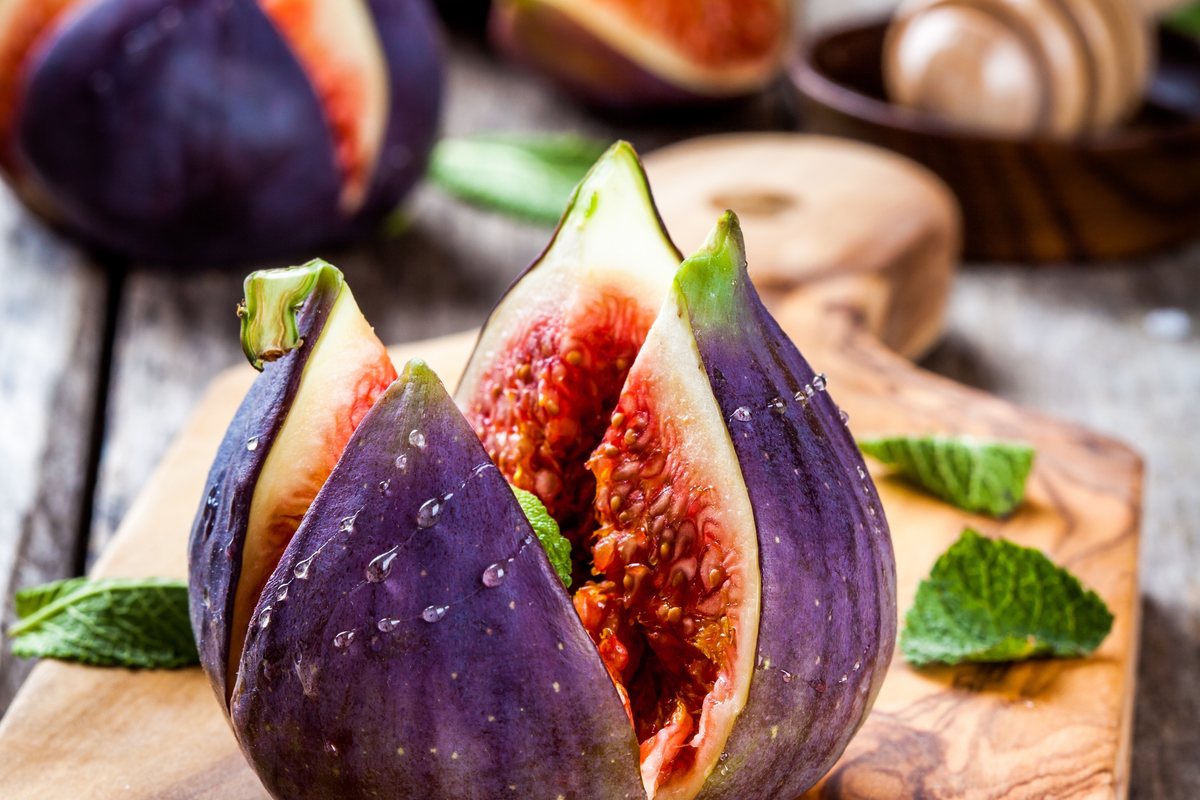
In Gilgal in the Jordan Valley, archaeologists found charred figs that are around 11,400 years old - probably the oldest known cultivated plant.
The fig tree originates from Western Asia and the eastern Mediterranean. The finds from Gilgal are from a variety that produces fruit without pollination and can only be propagated by cuttings – an indication that humans cultivated it deliberately, even before grains. In the Bible, Adam and Eve cover themselves with fig leaves.
Wild figs are pollinated by tiny fig wasps that live inside the fruit. Most commercially available edible figs are varieties that don't require wasps for pollination. In sheltered locations, such as in the Palatinate and the Upper Rhine region, figs also ripen in Germany.
To useWhat the fig does for you
Fresh figs are light (around 74 kcal per 100 g) and provide fiber, potassium and polyphenols. Dried figs Concentrate everything: approximately 10 g Dietary fiber, 160 mg Calcium, 680 mg potassium and 2 mg iron per 100 g - but also a lot of sugar.
As a remedy against constipation Soaked dried figs are a traditional home remedy in the Mediterranean and the Orient. The many small seeds, fiber, and natural sugars stimulate digestion; small studies have found an improvement in functional constipation. The data on dried plums is more robust.
For a plant-based diet, the dried fig is interesting because it contains an unusually high amount of calcium - more than most other fruits.
IngredientsThat's what's inside the fig
Figs contain sugar (glucose, fructose), Dietary fiber including pectin, Calcium, Potassium, magnesium, iron, vitamin K and polyphenols such as anthocyanins (in dark varieties), chlorogenic acid and rutin.
The white milky sap The leaves, stems, and unripe fruits contain furocoumarins (psoralen, bergapten) and protein-splitting enzymes (ficin). When ingested on the skin in combination with sunlight, it can cause burns.
Enhanced combinationsWhat makes the fig stronger
Figs love cheese, nuts and honey - and ham.
Baked figs with goat cheese and thyme honey.
Fig with air-dried ham - sweet and salty.
Figs and walnuts - fruit bread and cheese board.
Soak dried figs overnight, eat them with the water in the morning.
Figs and yogurt - double the calcium.
Fig compote for the winter.
What contradicts itselfIt's best to avoid these combinations.
Leaves and milky sap can cause phototoxic burns - wear gloves when picking.
High in sugar and laxative.
Figs contain oxalate.
Dried figs contain vitamin K.
Cross-reactions are described.
Unripe figs contain milky sap and taste bland.
In the kitchenWhere she belongs
- Baked figsWith goat cheese, honey and thyme.
- Figs with hamAs a starter.
- Fig mustardWith cheese.
- Fig jamWith lemon and vanilla.
- lettuceArugula, fig, walnut, balsamic vinegar.
- Fruit breadWith dried figs and nuts.
- PorridgeWith chopped dried figs.
- TagineWith lamb and figs.
- Fig tartWith almond cream.
- Yogurt bowlWith fresh figs and honey.
As a home remedySoaked figs for digestion
Figs overnight
- In the evening, place 3 to 4 dried figs in a glass.
- Pour about 200 ml of water over it and let it soak overnight.
- Eat the figs on an empty stomach in the morning and drink the soaking water.
- Drink plenty of fluids throughout the day.
Mild, occasional constipation – a traditional home remedy from the Mediterranean. Fiber, seeds, and sugar gently stimulate the bowels.
One serving daily for one to two weeks. Consult a doctor if constipation persists or suddenly occurs, or if you experience blood in your stool or pain. If you have diabetes, factor in your blood sugar.
Ayurveda & TCMWhat the old systems say
Ayurveda
The fig (AnjiraIn Ayurveda, figs are considered sweet, heavy, and cooling – nourishing, mildly laxative, and strengthening. Soaked figs are recommended for constipation, weakness, and dry coughs.
Traditional Chinese Medicine
In Traditional Chinese Medicine (TCM), the fig is called... Wu Hua Guo, „Fruit without flower“. It is sweet and neutral, said to strengthen the spleen, moisten the intestines, soothe the throat and reduce swelling.
Warning noticesWhen you should be careful
Please note
- Milky sap: Phototoxic - wear gloves when picking and cutting leaves, avoid sun.
- Sugar: Dried figs in moderation.
- Blood thinners: Maintain a consistent level of vitamin K.
- Oxalate: Use moderately if you have kidney stones.
- Allergy: Cross-reaction with latex and birch pollen is possible.
This page provides information and does not replace medical advice. If symptoms persist, please consult a doctor.
Related to the topicRead on and cook along!
Shop links lead to our product pages; it is indicated there if a partner is involved.
SourcesWhat is this based on?
- Kislev ME, Hartmann A, Bar-Yosef O. Early domesticated fig in the Jordan Valley. Science 2006; 312(5778): 1372–1374.
- Veberic R, Colaric M, Stampar F. Phenolic acids and flavonoids of fig fruit (Ficus carica L.) in the northern Mediterranean region. Food Chemistry 2008; 106(1): 153–157.
- Kavli G, Volden G. Phytophotodermatitis. Photodermatology 1984; 1(2): 65–75.
- Aune D et al. Fruit and vegetable intake and the risk of cardiovascular disease, total cancer and all-cause mortality - a systematic review and dose-response meta-analysis of prospective studies. International Journal of Epidemiology 2017; 46(3): 1029–1056.
- USDA FoodData Central: Figs, raw and Figs, dried, uncooked.