
Grapefruit (Citrus × paradisi)
OriginThe forbidden fruit from the Caribbean
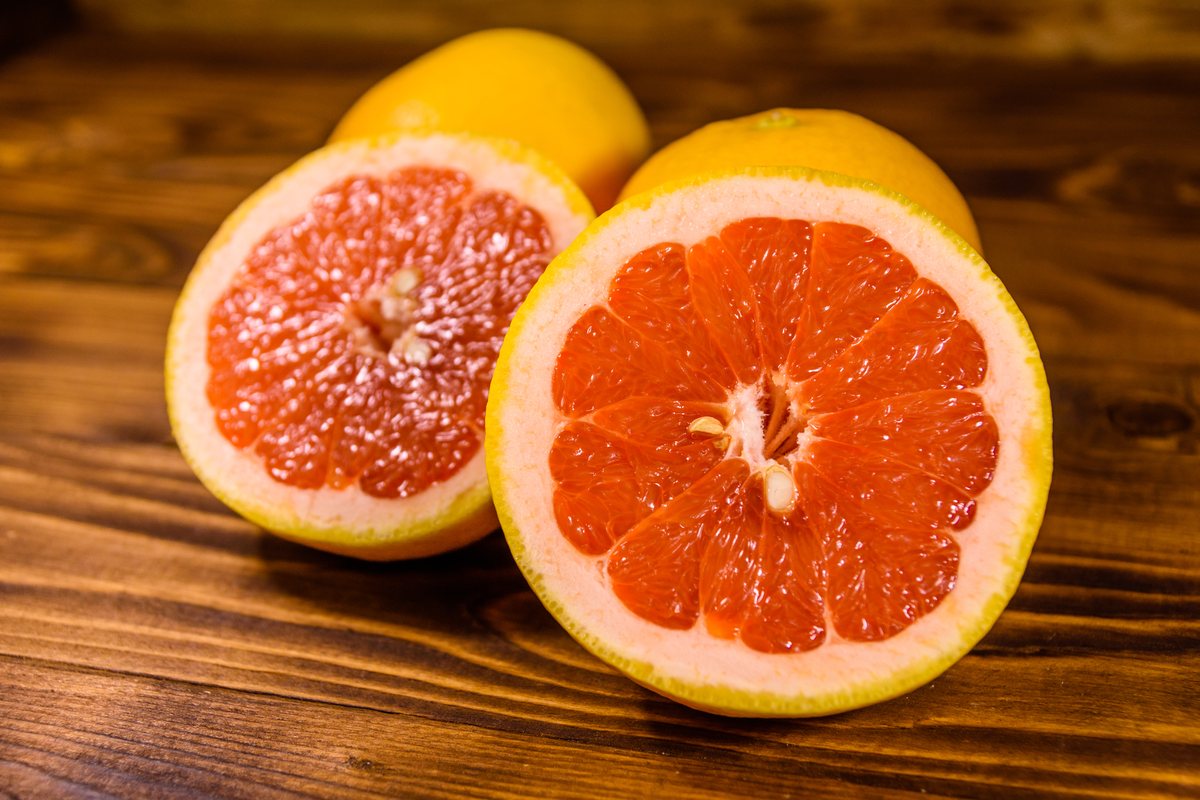
A Welsh priest described it in 1750 on Barbados as "forbidden fruit".
Unlike most citrus fruits, the grapefruit did not originate in Asia. It arose in the 18th century on Barbados as an accidental cross between the pomelo, which sailors had brought from Southeast Asia, and the sweet orange. It likely owes its English name to the fruits, which hang in clusters on the tree like grapes. The botanical name paradise It is reminiscent of the "fruit of paradise".
In the 19th century, the grapefruit arrived in Florida, where red varieties such as Ruby Red and Star Ruby also originated. In Germany, it comes primarily from Spain, Israel, Turkey, South Africa, and the USA. The Sweetie is a cross between a grapefruit and a pomelo – milder, but with the same interactions.
To useWhat grapefruit does for you
One red grapefruit provides approximately 31 mg per 100 g. Vitamin C, It contains approximately 1.6 g of fiber, 135 mg of potassium, and only about 42 kcal. Half a fruit thus covers a good third of the daily requirement for vitamin C. Red and pink varieties contain additional nutrients. Beta-carotene and Lycopene, white ones contain more bitter substances.
The bitter substance Naringin It provides the typical tart flavor and stimulates saliva and digestive juices. Its reputation as a slimming aid also stems primarily from diet books: In a small study, overweight participants who ate half a grapefruit before each meal lost about 1.6 kg over twelve weeks, while the placebo group lost 0.3 kg. This suggests it's a filling appetizer, not a "fat burner.".
But the most important characteristic is a delicate one: Furanocoumarins Bergamottin permanently inhibits the enzyme in the intestine CYP3A4, The vasculature, which breaks down many medications before they enter the bloodstream, is affected. If it fails, the amount of the active ingredient in the blood increases—in the case of simvastatin, by several times in studies. According to a review from Canada, this affects over 85 medications, 43 of which have potentially serious consequences. Even a whole fruit or a glass of juice (200 ml) can be enough to trigger an adverse reaction, and the effect can last for up to three days.
IngredientsThis is what's in the grapefruit
Grapefruits consist of approximately 88% water and contain fructose, citric acid, vitamin C, folate, potassium, pectin, and flavonoids such as naringin, naringenin, and hesperidin. Red varieties provide lycopene and beta-carotene. The pulp, juice, and especially the peel contain furanocoumarins such as bergamottin and 6′,7′-dihydroxybergamottin; nootkatone in the peel oil is responsible for the characteristic aroma.
That furanocoumarins, and not flavonoids, trigger the interaction was demonstrated in 2006 by a grapefruit juice from which they had been removed: it no longer altered the blood levels of the blood pressure reducer felodipine.
Enhanced combinationsWhat makes grapefruit stronger
The bitterness of grapefruit needs partners to round it off - and distance from anything that comes in tablet form.
Fat reduces the bitterness, and carotenoids are absorbed better.
Add protein, less acid in the stomach.
It softens the bitterness without much sugar.
Freshness and anise notes.
Vitamin C helps with the absorption of plant-based iron.
Classic salad with Omega-3.
What contradicts itselfIt's best to avoid these combinations.
More active ingredient in the blood, risk of muscle damage.
Blood pressure can drop too low.
Levels rise, kidneys are at risk.
Speak to the treatment team beforehand.
The inhibition lasts up to three days.
The acid is irritating.
In the kitchenWhere she belongs
- Half a grapefruitEaten straight from the spoon for breakfast.
- Grapefruit and avocado saladWith lamb's lettuce and nuts.
- Fennel saladWith grapefruit segments and olive oil.
- Shrimp saladAsian style with coriander.
- Gratinated grapefruitBriefly place under the grill with a little brown sugar.
- Grapefruit yogurtWith fillets and mint.
- dressingJuice, mustard and oil for winter salads.
- jamMade with the peel of organic fruit.
- SplashesFresh juice with mineral water.
- PalomaMexican long drink, non-alcoholic with soda.
As a home remedyGrapefruit as a bitter appetizer
Grapefruit appetizer
- Cut half a grapefruit in half crosswise and separate the segments with a small knife.
- Sprinkle with a pinch of cinnamon if desired - without sugar.
- Spoon it out slowly about 15 minutes before eating.
- Drink a glass of water with it.
As a low-calorie, bitter appetizer that curbs the appetite and stimulates digestion - like a salad before the main course.
Half a fruit before a meal. Only if you are not taking any medication that may affect it – if in doubt, ask your doctor or pharmacist.
Ayurveda & TCMWhat the old systems say
Ayurveda
Grapefruit is not described in classical Ayurveda. According to modern classification, it is considered sour and bitter, cooling and light – balancing for Kapha, but only moderately suitable for Pitta and not to be consumed on an empty stomach.
Traditional Chinese Medicine
In Traditional Chinese Medicine (TCM), grapefruit is classified as a pomelo (You Zi): cool, sweet-sour, and associated with the stomach and lungs. It is said to resolve food stagnation and refresh in hot weather; the peel is considered to move Qi.
Warning noticesWhen you should be careful
Please note
- Medications: Grapefruit and its juice can significantly increase the effects of many medications—for example, some statins, calcium channel blockers, immunosuppressants, and cancer drugs. Read the package insert or ask at the pharmacy.
- Related: Pomelo, Sweetie, bitter orange (Seville orange) and limes also contain furanocoumarins.
- No distance: The enzyme inhibition lasts up to three days - a time interval between taking the tablet and the medication does not provide reliable protection.
- Stomach and teeth: The acid can cause discomfort in cases of reflux and sensitive tooth enamel; rinse with water after eating.
This page provides information and does not replace medical advice. If symptoms persist, please consult a doctor.
Related to the topicRead on and cook along!
Shop links lead to our product pages; it is indicated there if a partner is involved.
SourcesWhat is this based on?
- Bailey DG, Dresser G, Arnold JMO. Grapefruit–medication interactions: forbidden fruit or avoidable consequences? CMAJ 2013; 185(4): 309–316.
- Bailey DG, Spence JD, Munoz C, Arnold JM. Interaction of citrus juices with felodipine and nifedipine. Lancet 1991; 337: 268–269.
- Paine MF et al. A furanocoumarin-free grapefruit juice establishes furanocoumarins as the mediators of the grapefruit juice–felodipine interaction. American Journal of Clinical Nutrition 2006; 83(5): 1097–1105.
- Fujioka K, Greenway F, Sheard J, Ying Y. The effects of grapefruit on weight and insulin resistance: relationship to the metabolic syndrome. Journal of Medicinal Food 2006; 9(1): 49–54.
- Cancer Information Service, German Cancer Research Center: Citrus fruits and interactions with cancer medications. 2025.
- USDA FoodData Central: Grapefruit, raw, pink and red.


