Persimmon (Diospyros kaki)
OriginThe fruit of the gods from East Asia
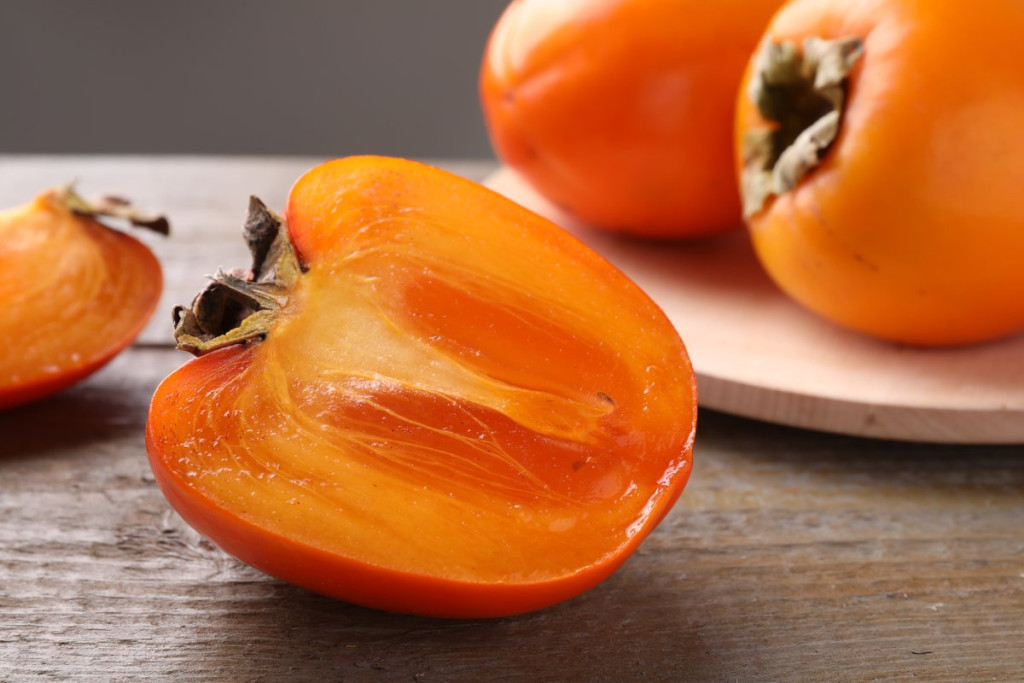
The genus name Diospyros is Greek and means "food of Zeus" or "fruit of the gods".
The persimmon originated in China, where it has been cultivated for over 2,000 years. It spread to Japan via Korea, where it became the national fruit – dried persimmons, called hoshigaki, remain a New Year's specialty there to this day. In the 19th century, travelers brought the trees to Europe and America. Incidentally, the persimmon is closely related to the ebony tree.
Today, most of the fruit in our stores comes from Spain and Italy, and in summer also from South America or South Africa. In Valencia, the Rojo Brillante variety, sold as "Persimmon," grows, while in Israel, the seedless Sharon fruit is cultivated. Both are treated with carbon dioxide after harvesting, which renders the tannins insoluble—that's why they can be eaten firm like an apple. The classic persimmon, on the other hand, needs to ripen until soft, like jelly. In milder regions of Germany, individual trees bear fruit in gardens, but commercial cultivation is rare.
To useWhat the persimmon does for you
100g of persimmon provide around 70 kcal, about 3.5g. Dietary fiber and lots of fructose. It owes its orange color to this. Carotenoids, especially beta-cryptoxanthin, beta-carotene, lutein and zeaxanthin. The body can convert beta-carotene and beta-cryptoxanthin into vitamin A, which is needed by the eyes, skin and mucous membranes.
At the Vitamin C Values vary greatly depending on the variety and ripeness: The US nutrient database lists approximately 7.5 mg per 100 g, while other analyses indicate significantly higher values. A large fruit of 200 g therefore covers a small to medium portion of the daily requirement. It also contains potassium, manganese, and polyphenols.
The harsh tannins Tannins have been shown to have antioxidant properties in laboratory tests, and persimmon extracts have been shown to lower blood lipids in animal studies. However, there are hardly any conclusive studies on this in humans. Therefore, the persimmon is primarily one thing: a sweet, fiber-rich fruit for the darker months when local fruit is scarce.
IngredientsThis is what's in the persimmon
Persimmons contain fructose, glucose and sucrose, dietary fiber (pectin, cellulose), carotenoids (beta-cryptoxanthin, beta-carotene, lycopene, lutein, zeaxanthin), vitamin C, potassium, manganese, copper, tannins (proanthocyanidins, called "shibuol" by the Japanese) and other polyphenols.
The tannins in unripe fruits are in soluble form and cause a puckering sensation in the mouth. During ripening or treatment with carbon dioxide, they become insoluble – the taste becomes milder, but the tannins are still present.
Enhanced combinationsWhat makes the persimmon stronger
Persimmons like acidity, spice and a little fat - and lots of patience when ripening.
Carotenoids are better absorbed with fat.
It enhances sweetness and provides vitamin C.
Wintery in porridge.
Sweet meets tart.
Persimmon puree instead of sugar.
Their ethylene makes persimmons ripen faster.
What contradicts itselfIt's best to avoid these combinations.
Tannins - furry and bezoar risk.
Especially for stomach problems.
Higher risk of bezoar formation.
Tannins can reduce absorption.
The peel is edible, but wash it first.
Lots of fructose.
In the kitchenWhere she belongs
- Eaten straight from the spoonHalve the soft persimmon and scoop out the flesh.
- Winter saladWith lamb's lettuce, walnuts and goat's cheese.
- Persimmon porridgeWith cinnamon and cardamom.
- SmoothieWith banana and orange.
- Persimmon pureeAs a natural sweetener.
- ChutneyAdd ginger and vinegar to cheese.
- HoshigakiJapanese dried persimmon.
- CarpaccioThin slices with lime.
- Persimmon cakeLike apple pie, with Sharon.
- SorbetPuree frozen ripe persimmons.
As a home remedyAllow the persimmon to ripen safely.
Persimmons need to ripen
- Place firm, tart persimmons in a bowl with the leaf crown facing down.
- Add a ripe apple or a banana and loosely cover everything with a paper bag.
- Leave at room temperature for a few days and check daily whether the fruit softens.
- Alternatively, freeze the fruit overnight and then thaw it again - this also reduces the bitterness.
To ensure the tannins become insoluble: Ripe persimmons taste sweet instead of fuzzy and are easier on the stomach. This also helps avoid the rare risk of bezoars caused by unripe fruit.
Store ripe persimmons in the refrigerator for only one to two days. Firm persimmons will keep for about a month when refrigerated.
Ayurveda & TCMWhat the old systems say
Ayurveda
The persimmon is not described in classical Ayurveda. According to modern understanding, the ripe fruit is considered sweet, cooling, and slightly astringent – balancing for Pitta, and for Vata when well-ripened and spiced.
Traditional Chinese Medicine
In Traditional Chinese Medicine (TCM), the persimmon (Shi Zi) is considered cold and sweet-tart. It is said to clear heat and moisten the lungs. The chalice (Shi Di) is a classic remedy for hiccups.
Warning noticesWhen you should be careful
Please note
- Bezoar: Large quantities of unripe, tart persimmons can form hard lumps (diospyrobezoars) in the stomach - especially after stomach surgery, in cases of diabetes with gastric paralysis, or poor chewing.
- Symptoms: If you experience persistent bloating, vomiting or abdominal pain after eating a lot of persimmons, consult a doctor.
- Sugar: Keep an eye on portion sizes if you have diabetes.
- Allergy: Rare, cross-reactions with pollen are possible.
- Medications: Tannins can reduce the absorption of iron supplements - take them with some distance.
This page provides information and does not replace medical advice. If symptoms persist, please consult a doctor.
Related to the topicRead on and cook along!
Shop links lead to our product pages; it is indicated there if a partner is involved.
SourcesWhat is this based on?
- Butt MS et al. Persimmon (Diospyros kaki) fruit: hidden phytochemicals and health claims. EXCLI Journal 2015; 14.
- Iwamuro M et al. Review of the diagnosis and management of gastrointestinal bezoars. World Journal of Gastrointestinal Endoscopy 2015; 7(4): 336–345.
- Consumer Advice Center: Persimmons: Why are they mainly available in winter?
- USDA FoodData Central: Japanese persimmons, raw.