OriginThe Silver Candle from the Appalachians
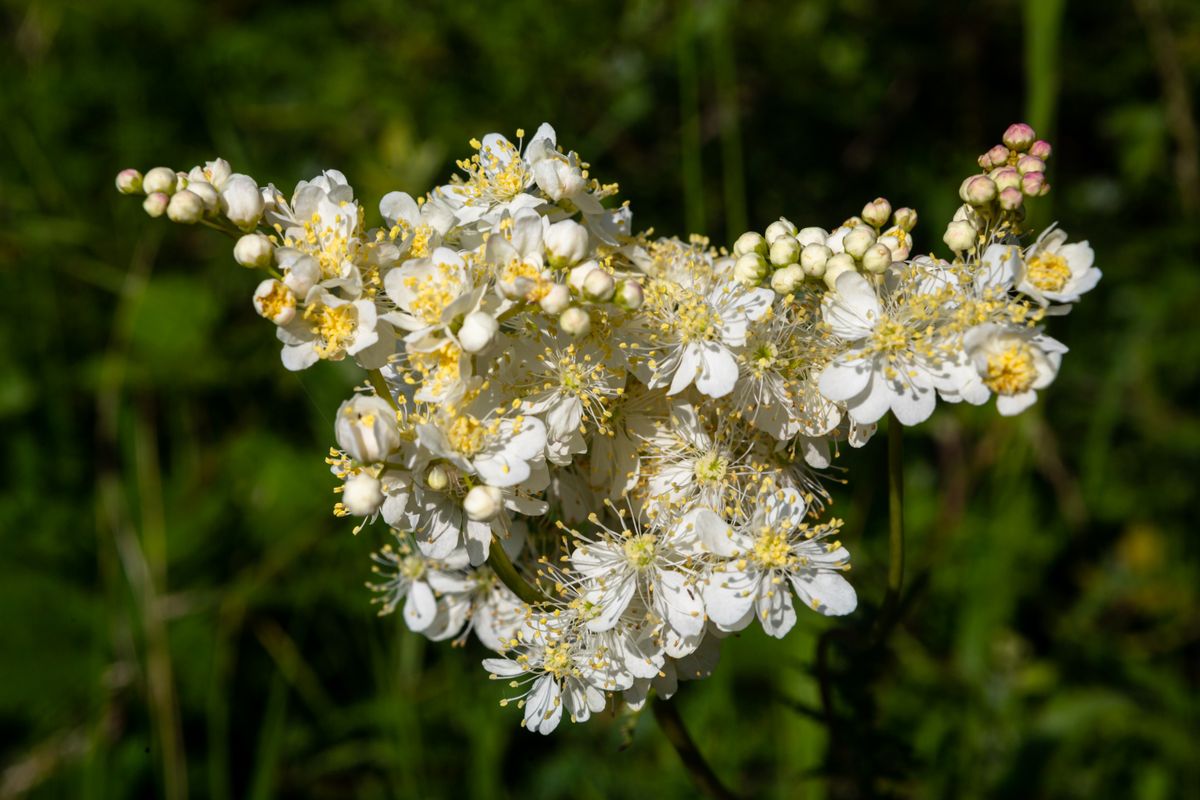
Cimicifuga It is called "bug scarecrow" - the plant was hung up in the past to drive away vermin, and the smell of the fresh rootstock explains why.
Black cohosh grows in the deciduous forests of eastern North America, especially in the Appalachian Mountains. It reaches a height of up to two meters and in summer bears long, slender, creamy-white flower spikes that seem to float above the undergrowth – hence its German name, black cohosh. Botanically, it belongs to the buttercup family and is thus related to pasqueflower, monkshood, and Christmas rose. Its scientific name has changed: for a long time it was called black cohosh. Cimicifuga racemosa, according to the modern system Actaea racemosa - both names are still encountered today.
Among the indigenous peoples of North America, especially the Cherokee and Algonquian tribes, the rhizome was an important remedy for women's ailments, joint pain, and in obstetrics. In the 19th century, it was adopted by the American Eclectics, a school of medicine that worked extensively with native plants, and through them the plant came to Europe. In Germany, standardized extracts were developed starting in the 1950s, which remain among the best-selling herbal remedies for menopause.
A note about potential confusion: The name "silver candle" is also used for the Asian Actaea-Species used that are found in gardens and in Chinese medicine - Sheng Ma It's a separate drug with a different profile. And for years, a quality problem was widespread in dietary supplements: tests were conducted on a portion of the products. Actaea racemosa Asian species. Therefore, for a preparation that is taken over several months, the origin is not a trivial matter.
To useWhat black cohosh does for you
The European Medicines Agency lists standardized extracts from the rhizome in the category well-established use to Relief from menopausal symptoms, in particular Hot flashes and night sweats. Commission E had given it a correspondingly positive assessment. This makes it one of the few herbal remedies in gynecology for which there is more than just tradition: several placebo-controlled studies with standardized extracts show a reduction in symptoms that goes beyond the placebo effect – although the placebo effect is known to be significant in hot flashes, which complicates the assessment. The effects are moderate, not dramatic, and there are also studies without a significant difference.
A persistent misunderstanding needs to be cleared up: Black cohosh is not a phytoestrogen. It contains no substances that bind to the classic estrogen receptor like estrogen – unlike, for example, soy or red clover. Its mechanism of action is not fully understood; its effects on the serotonin and dopamine systems, as well as on temperature regulation in the brain, are being discussed. This has an important practical significance: the concern that it might stimulate hormone-dependent tissue cannot simply be transferred from phytoestrogens. Nevertheless, there is still insufficient reliable data for women after breast cancer – therefore, this question should definitely be discussed with your doctor.
And then there's the limitation that led to a Europe-wide warning in 2007: There are rare case reports of liver damage Side effects of black cohosh-containing preparations have ranged from elevated liver enzymes to severe liver failure. A causal link could not be established in all cases, and given the very large number of users, the risk is small. However, it is serious enough that a warning has since been included on every package. In practical terms, this means: If you experience yellowing of the skin or eyes, dark urine, pale stools, persistent nausea or severe fatigue, discontinue use of the product and consult a doctor. Do not use if you have a known liver disease.
How does this all fit together? For women with debilitating hot flashes who don't want or can't undergo hormone therapy, black cohosh is a justifiable option with moderate efficacy and an overall good, though not flawless, safety profile. It doesn't work immediately—four to twelve weeks is realistic—and it shouldn't be taken for longer than about six months without medical supervision.
IngredientsThat's what's in the rootstock
The characteristic ingredients are Triterpene glycosides of the cycloartane type - especially Actein, Cimicifugoside and 27-deoxyactein. They are used to standardize the extracts. In addition, the following are found: Cinnamic acid derivatives such as fukinoleic acid and cimicifugic acids, flavonoids and resins.
What the rootstock not What it contains is at least as important: no isoflavones, no lignans, no other classic phytoestrogens. Earlier studies suggesting an estrogen-like effect could not be confirmed in more rigorous trials. The targets discussed today lie in the central nervous system—serotonin receptors, dopamine receptors, opioid receptors—which fits the symptom picture: hot flashes arise from a disruption in temperature regulation in the hypothalamus, not in the skin.
This leads to a clear rule for its application: Only standardized, ready-made preparations. A homemade tea or tincture made from purchased rhizome in no way corresponds to what was tested – neither in dosage nor in extraction method. And because other substances have repeatedly been found in dietary supplements in the past... ActaeaSince certain types of parasites have been found, a tested medicine from a pharmacy is clearly preferable to any online product.
Enhanced combinationsWhat factors interact during menopause
The black cohosh is one building block - and the other building blocks are in some cases better documented than it is itself.
Only this corresponds to what was tested - not tea or home tincture.
The effect builds up slowly; nothing can be judged beforehand.
Sage is recognized as a useful remedy for excessive sweating – a worthwhile addition.
If night sweats disrupt sleep, the evening combination can help.
Studies have shown that both are associated with fewer symptoms and better sleep - and protect the bones.
Not every bleeding episode and not every complaint during this phase of life is "simply menopause".
What contradicts itselfIt's best to avoid these combinations.
Use is contraindicated in cases of known liver damage.
Without medical supervision, this is the usual upper limit.
Neither the dose nor the extraction method then corresponds to the preparations being examined.
The data is insufficient to give the all-clear – this needs to be addressed in clinical practice.
It does not act like estrogen and, in particular, does not protect the bones.
Other substances have repeatedly been found in dietary supplements. Actaea-Species found.
ApplicationHow it is used
- Standardized extractAs a finished medicinal product from the pharmacy - the only sensible form.
- During hot flashesThe main indication for which there is a recognized effect.
- In case of sweating attacksAlso recognized - especially when they disturb sleep at night.
- Four to twelve weeksThe realistic timeframe until it can be assessed whether it works.
- Maximum six monthsThe usual duration of use without medical supervision.
- Combined with sageA useful addition for those who sweat heavily, and one that receives personal recognition.
- Keeping an eye on liver functionDiscontinue use immediately if jaundice, dark urine, or persistent nausea occurs.
- Not suitable for liver diseaseA clear counter-argument.
- Not as teaHomemade preparations do not match the tested preparations.
- garden perennialA beautiful, shade-tolerant woodland perennial for the garden.
As a home remedyWhat else helps during menopause
The measures in addition to the preparation
- Movement: Studies have shown that regular endurance exercise is associated with fewer hot flashes, better sleep and better mood - and strength training protects bones, which is especially important at this stage of life.
- Sage for sweating: Two teaspoons in 250 ml, covered for ten minutes, and drunk cooled throughout the day. Sage is recognized as a remedy for excessive sweating – but only as a course of treatment over a few weeks, not continuously.
- Protect your sleep: When night sweats disrupt sleep, practical solutions often help the most - a light duvet, a cool bedroom, cotton instead of synthetic fibers, and a glass of water within easy reach.
- Keep an eye on the bones: Black cohosh does not protect against bone loss. Sufficient calcium, vitamin D, and strength training are enough – and if you have risk factors, it's worth discussing a bone density measurement.
For those times when hot flashes, sleep disturbances, and mood swings dominate daily life. Black cohosh can help, and it is recognized for this purpose—but it is one component among several, and some of the others are better documented than black cohosh. Exercise addresses all three areas of discomfort simultaneously and also protects the heart and bones; no medication can do that.
Continuous use, not short-term – with the exception of sage, which is used for a few weeks. If you are also taking a black cohosh preparation: use a standardized one, from a pharmacy, for four to twelve weeks before evaluation, and for a maximum of six months without medical supervision. Stop immediately if you experience signs of liver involvement. Unusual bleeding, bleeding after menopause, severe symptoms, or a persistently low mood should be investigated by a gynecologist or doctor – not everything during this phase of life is "simply menopause.".
Ayurveda & TCMWhat the old systems say
Ayurveda
Black cohosh is a North American plant and not used in Ayurveda. The Ayurvedic plant with a comparable role in women's health is... Shatavari (Asparagus racemosus), which is considered sweet, cooling, and restorative and is traditionally used in all phases of a woman's life. In contrast, black cohosh would be described as bitter, pungent, and cooling based on its properties. Pitta lowering. A classification based on principle, not tradition.
Traditional Chinese Medicine
A related species is firmly established in the Chinese Materia Medica: Sheng Ma, the rootstock of Asian CimicifugaThe [species] are considered pungent, sweet, and slightly cooling, and are associated with the lungs, spleen, stomach, and large intestine. They are used to clear heat, help eruptions "break through," and—its best-known function—raise Yang-Qi, for example, in cases of prolapse. This has nothing to do with its European use for menopausal symptoms: different species, different indication.
Warning noticesWhen you should be careful
Please note
- Liver: Rare cases of liver damage have been described - if jaundice, dark urine, pale stools, nausea or severe fatigue occur, stop use immediately and seek medical advice.
- Liver diseases: Do not use if liver damage is known.
- Duration of use: not longer than about six months without medical supervision.
- After breast cancer: The data is insufficient to give the all-clear – the application should be discussed in the treating practice.
- No hormone replacement: It does not act like estrogen and, in particular, does not protect against bone loss.
- Product quality: Other substances have repeatedly been found in dietary supplements Actaea-Species detected - prefer tested medicinal product.
This page provides information and does not replace medical advice. If symptoms persist, please consult a doctor.
Related to the topicRead on and cook along!
Shop links lead to our product pages; it is indicated there if a partner is involved.
SourcesWhat is this based on?
- EMA/HMPC: European Union herbal monograph on Cimicifuga racemosa (L.) Nutt., rhizoma - well-established use for menopausal symptoms.
- EMA: Assessment of case reports connected to herbal medicinal products containing cimicifugae racemosae rhizoma, 2007 - Basis of the liver warning.
- Leach MJ, Moore V. Black cohosh (Cimicifuga spp.) for menopausal symptoms. Cochrane Database of Systematic Reviews 2012; CD007244.
- Commission E: Monograph Cimicifugae racemosae rhizoma, Federal Gazette 1989.
- Blaschek W (ed.): Wichtl - Herbal drugs and phytopharmaceuticals. 6th edition 2016, monograph Cimicifugae rhizoma.