OriginThe pepper of the monasteries
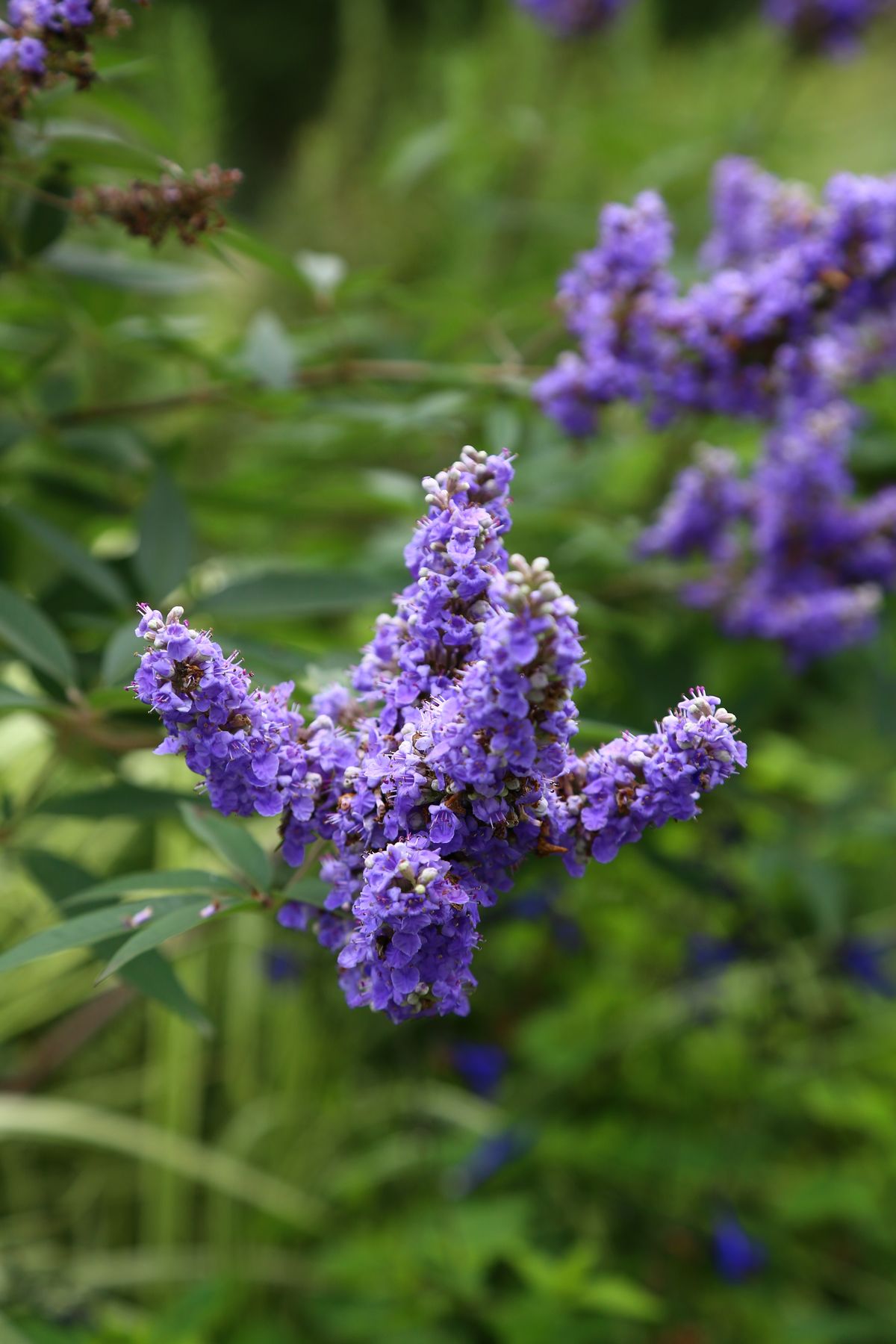
Agnus castus It means "chaste lamb" - it was believed that the fruit suppressed desire and was sprinkled over food in monasteries. Hence the names monk's pepper and chaste lamb.
Chaste tree (Vitex agnus-castus) is a deciduous shrub native to the Mediterranean region, growing along riverbanks, streams, and coastlines, reaching up to five meters in height. Its palmate leaves resemble hemp, and its fragrant, blue-violet flower spikes appear in late summer. In our climate, it is cultivated as an ornamental shrub and is winter-hardy in mild climates. The following parts of the plant are used: ripe, dried fruits - small, dark, peppercorn-sized stone fruits that actually taste hot and aromatic.
The name's history is ancient and persistent. Dioscorides and Pliny already described how the fruit suppressed sexual desire; Greek women scattered branches on their beds during the Demeter festival. In the Middle Ages, monasteries adopted this idea – hence Chaste tree, Chaste Lamb and in English chaste tree. Whether the effect ever existed is doubtful; what has been confirmed is something else: The plant does indeed influence the hormonal balance, only in a way that was unknown at the time.
It's interesting to see how the modern application came about. In the 1950s, people in Germany began using chaste tree extracts to treat menstrual irregularities – initially based on traditional knowledge. Only later was the mechanism elucidated: The berries contain substances that bind to dopamine receptors in the pituitary gland, thereby stimulating the release of... Prolactin lower. Thus, a monastic tradition had become a pharmacologically understandable application.
To useWhat chaste tree berry can do for you
The European Medicines Agency lists standardized extracts from chaste tree fruit in the category well-established use to alleviate discomfort during premenstrual syndrome. Furthermore, Commission E had him at Regulating speed anomalies - i.e., irregular or too short cycles - and in the case of Mastodynia, It has been positively evaluated for its effectiveness in treating cycle-related breast tenderness. This places it among the herbal medicines with the strongest evidence in gynecology: several placebo-controlled studies have shown that symptoms decreased significantly more than with a placebo.
The mechanism is well understood and simultaneously explains all the necessary precautions. Certain ingredients – especially diterpenes – bind to Dopamine D2 receptors in the pituitary gland. Dopamine is the natural inhibitor of prolactin release there; by strengthening this inhibitor, chasteberry, It lowers prolactin levels. Slightly elevated prolactin levels are associated with menstrual irregularities, breast tenderness, and a shortened second half of the menstrual cycle in many women - this is precisely where the plant comes into play.
The rules for application follow from this automatically. It takes time.Three menstrual cycles are the usual minimum duration before one can assess whether it works; many women notice something from the second cycle onwards. Standardization is needed.The studies were conducted using commercially available preparations, not with home-brewed tea, and the fruits do not release their active ingredients well in infusions. There are clear contraindications., because interfering with prolactin regulation is not a minor procedure.
The most important ones are: Not during breastfeeding Prolactin is the hormone responsible for milk production, and a decrease in this level is the last thing anyone wants. Not during pregnancy, due to lack of data. Not without consulting a doctor if medications affect the dopamine system. This includes medications for Parkinson's disease as well as certain psychotropic drugs. And not if a prolactinoma is suspected, i.e., a hormone-producing tumor of the pituitary gland: Chasteberry can lower the levels and thus mask a diagnosis. Anyone with significantly elevated prolactin, milk flow outside of breastfeeding, or absent menstrual periods should therefore be examined first.
IngredientsThis is what's in the fruit
The pharmacologically crucial group are the Diterpenes - especially clerodadienols and related compounds. These are responsible for binding to dopamine D2 receptors and thus for the prolactin-lowering effect. They are the reason why standardized extracts are used: their content varies considerably in the drug, and they are poorly transferred to aqueous extracts.
In addition, the fruits contain Iridoid glycosides such as agnuside and aucubin, Flavonoids such as casticin and vitexin, as well as a essential oil with cineole, sabinene, and pinene – the latter explains the peppery-aromatic taste. Agnuside and casticin are also used for standardization.
A persistent misconception: Chaste tree contains no phytoestrogens and does not act like a hormone. It intervenes at a higher level, namely in the regulation of the pituitary gland. This is an important difference – among other reasons, because it necessitates different precautions than with estrogen-like plants. In practical terms, this also means: Chasteberry tea is not a sensible form of application. Anyone wanting the investigated effect needs a standardized finished product.
Enhanced combinationsWhat makes chaste tree berry stronger
A plant with real effects that requires patience, the right shape, and honest clarification.
Only the finished product corresponds to the studies - tea hardly releases the diterpenes.
The usual minimum duration; many notice something from the second cycle onwards.
It is taken continuously, not just in the second half of the cycle.
Absence of bleeding, milk flow, or severe discomfort should be investigated first.
Heat is the most well-documented remedy for the cramping pain itself.
When sleep disturbances and irritability are part of the symptom profile.
What contradicts itselfIt's best to avoid these combinations.
It lowers prolactin – precisely the hormone that promotes milk production.
Due to a lack of data and because of the interference with hormone regulation.
Parkinson's medication and certain psychotropic drugs act on the same system.
It can lower the values and mask a diagnosis.
The diterpenes hardly pass through in the infusion - the form studied is the extract.
It regulates ailments; it is neither a contraceptive nor a fertility treatment.
ApplicationHow it is used
- Standardized extractAs a tablet or drops from the pharmacy - the form examined.
- PMSThe main indication: irritability, tension, mood swings before menstruation.
- In mastodyniaCycle-related breast tenderness and pain.
- In case of irregular cyclesMenstrual rhythm abnormalities - after gynecological examination.
- Endure three cyclesThe minimum duration before the effect can be assessed.
- Daily, not just cyclicallyIt is taken continuously, usually in the morning.
- Combined with warmthLocal heat is the best-documented method for relieving period pain.
- Not during breastfeedingThe clearest contraindication for this plant.
- As an ornamental shrubHardy in mild climates, late-flowering and a good source of nectar for bees.
- As a spiceHistorically used as a pepper substitute - rare today.
As a home remedyWhat is proven in cases of period pain
Heat, movement and the right plant
- Warmth: Apply a hot water bottle or heat patch to your lower abdomen. In controlled studies, local heat is just as effective as mild painkillers for menstrual cramps – and this is the single best-documented treatment of all.
- Movement: Regular, moderate exercise is associated with significantly less menstrual pain in comprehensive studies. Even on the days of menstruation itself, walking is usually more helpful than lying down.
- Yarrow tea: Two teaspoons to 250 ml, covered for ten minutes, two cups daily in the days before and during menstruation - antispasmodic and traditionally used for exactly this purpose.
- Chasteberry, if PMS is the issue: For breast tenderness, irritability and mood swings before menstruation, as a standardized preparation over three cycles - not against the cramps themselves, it is not intended for that.
For the days before and during menstruation. The distinction is important: Chasteberry has an effect on premenstrual symptoms. Feelings of tension, irritability, mood swings – not the cramping pains during menstruation. For those, warmth, movement, and antispasmodic herbs are effective. Those experiencing both should combine them; those with only cramps don't need chasteberry.
Heat and movement as needed, yarrow tea two cups daily on the relevant days, chasteberry according to package instructions for at least three cycles. Chasteberry should not be used during pregnancy and breastfeeding., Do not use medications that inhibit dopamine, and do not seek medical advice if menstruation is absent or milk is not produced. Very severe, increasing, or newly occurring menstrual pain should be evaluated by a gynecologist – it could be a sign of endometriosis, which is often diagnosed far too late.
Ayurveda & TCMWhat the old systems say
Ayurveda
Chaste tree (Vitex agnus-castus) is not a classic ingredient in Ayurveda, but related plants are. Vitex-Types: Vitex negundo is there as Nirgundi A well-known drug, albeit with a completely different focus – for pain, swelling, and rheumatic complaints, usually applied externally as an oil. Based on its properties, chaste tree berry is described as pungent, bitter, and slightly warming., Kapha and Vata lowering.
Traditional Chinese Medicine
In the Chinese Materia Medica Man Jing Zi led - the fruits of Vitex trifolia and Vitex rotundifolia, also a close relative. They are considered pungent, bitter, and slightly cooling, associated with the bladder, liver, and stomach, and are used to clear wind-heat – classically for headaches, red eyes, and dizziness. Their use in European gynecology is not documented: same genus, different focus.
Warning noticesWhen you should be careful
Please note
- Breastfeeding period: Chasteberry lowers prolactin and thus the hormone responsible for milk production - do not use while breastfeeding.
- Pregnancy: Do not use due to lack of data and because of the interference with hormone regulation.
- Dopamine-active medications: Parkinson's medication and certain psychotropic drugs act on the same receptor system - consult a doctor.
- Pituitary disorders: If a prolactinoma is suspected, it can lower values and mask the diagnosis.
- Clarification first: Absence of bleeding, milk flow outside of breastfeeding, or severe discomfort should be investigated.
- Side effects: Headaches, nausea, skin reactions and spotting are possible, usually mild.
This page provides information and does not replace medical advice. If symptoms persist, please consult a doctor.
Related to the topicRead on and cook along!
Shop links lead to our product pages; it is indicated there if a partner is involved.
SourcesWhat is this based on?
- EMA/HMPC: European Union herbal monograph on Vitex agnus-castus L., fructus - well-established use in premenstrual syndrome.
- Commission E: Monograph Agni casti fructus (chaste mud fruits), Federal Gazette 1992 - Menstrual cycle abnormalities, mastodynia, premenstrual symptoms.
- Schellenberg R. Treatment for the premenstrual syndrome with agnus castus fruit extract: prospective, randomized, placebo controlled study. BMJ 2001; 322(7279): 134–137.
- Wuttke W et al. Chaste tree (Vitex agnus-castus) - pharmacology and clinical indications. Phytomedicine 2003; 10(4): 348–357.
- Akin MD et al. Continuous low-level topical heat in the treatment of dysmenorrhea. Obstetrics & Gynecology 2001; 97(3): 343–349.