OriginThe dew of the sea, which became sage
Ros marinus It is called "Dew of the Sea" - after the coastal slopes where it grows.
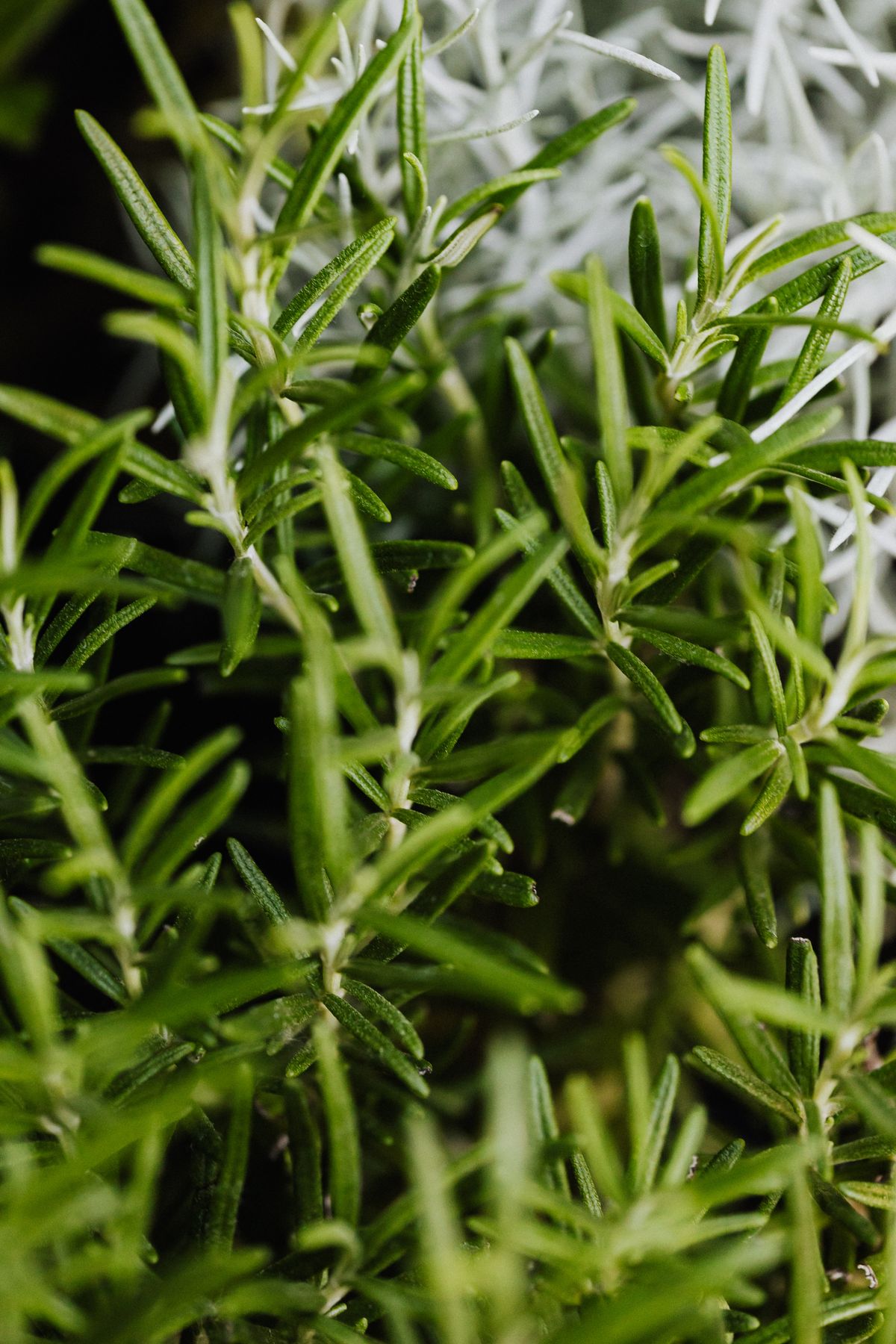
Rosemary is an evergreen, densely branched shrub from the Mediterranean region, growing up to two meters tall. It has narrow, needle-like leaves with rolled edges and a white, felt-like underside. This leaf shape is an adaptation to dry conditions: small surface area and protected stomata. Its natural habitat is sunny limestone slopes and maquis shrubland, often near the sea – hence its name. ros marinus, Dew of the sea.
Since 2017, its botanical name has been Salvia rosmarinus. Molecular genetic studies have shown that the genus Rosemary within the sage genus – a sage that simply doesn't look like one. The old name Rosmarinus officinalis Both terms are still in widespread use, including in pharmacopoeias and monographs, and both refer to the same plant. To test their relationship, rub a rosemary leaf and a sage leaf side by side: the resinous base note is indeed the same.
In cultural history, rosemary is the herb of memory and fidelity. In antiquity, students wore rosemary wreaths during exams because it was believed to strengthen memory; it was used at weddings and funerals alike—as a symbol of enduring connection across time. Shakespeare has Ophelia say that rosemary is for remembering. And from this has grown a modern branch of research: there are indeed small studies on the scent of rosemary and cognitive performance, with effects of the magnitude one would expect from scent studies—namely, small and difficult to interpret.
To useThree recognized applications - one indoors, two outdoors
The European Medicines Agency lists rosemary leaves as traditional use With three areas of application: internally for the relief of mild dyspeptic symptoms; externally for the relief of mild muscle and joint pain; and externally for mild circulatory disorders. Commission E gave it a positive assessment in 1985 for internal use in dyspeptic symptoms and for external use in rheumatic diseases and circulatory problems.
Internally, rosemary is a classic aromatic herb with a bitter note: The essential oil and bitter compounds stimulate the secretion of saliva, gastric juices, and bile, and have a mild antispasmodic effect. This is the basis for its use with fatty, heavy foods—roast lamb and rosemary are not merely a flavor combination. Controlled human studies on the effects of rosemary as a single herb do not exist; its classification is based on tradition and plausibility.
The principle is different on the surface and easy to understand. The essential oil with camphor and cineole has a hyperemic effect on the skin – it dilates the superficial blood vessels, the skin reddens and becomes warm. This increased local blood flow is the reason for its use in treating muscle tension and for Kneipp's rosemary bath additive. The old Kneipp rule is: rosemary in the morning, lavender in the evening – one stimulates, the other calms. A rosemary bath at 10 p.m. is not a good idea.
Regarding cognition, since the question often comes up: There are small studies in which the scent of rosemary slightly improved performance in memory tests, and laboratory studies on carnosic acid and acetylcholinesterase. This is interesting basic research and has nothing to do with its use as a dietary supplement against forgetfulness. Anyone concerned about their memory should see a doctor, not reach for an aromatherapy diffuser.
IngredientsEssential oil on the outside, rosmarinic acid on the inside
Rosemary contains two completely different groups of active ingredients, each responsible for different applications. The essential oil, at a concentration of one to two and a half percent, contains 1,8-cineole, camphor, α-pinene, and borneol. These substances are volatile, fat-soluble, and readily absorbed through the skin—they are the active component in any external application. Several chemotypes exist: the cineole type is milder and primarily used for respiratory applications, the camphor type is typical for muscle applications, and the verbenone type is rare and expensive.
The second group consists of phenolic acids and diterpenes: rosmarinic acid, carnosic acid, and carnosol. Rosmarinic acid is named after rosemary but occurs in many members of the mint family (Lamiaceae) – including significant amounts in lemon balm and sage. It is water-soluble, a strong antioxidant, and the reason why rosemary extract is approved as an antioxidant in the food industry: it delays the rancidification of fats and is listed as E 392 in ingredient lists.
Carnosic acid and carnosol are the bitter compounds and, at the same time, the strongest antioxidants in the plant. They are fat-soluble, not very heat-stable, and are the subject of intensive basic research. As with so many plants, this research concerns isolated substances in cell culture experiments and does not establish any practical applications.
Practical for the kitchen: Dried rosemary is one of the few herbs that are almost as good dried as fresh – the leathery leaves retain their oil well. However, the tough needles in the finished dish can be bothersome. The solution is to cook whole sprigs along with the dish and remove them before serving, or to chop the needles very finely beforehand. In marinades and oils, rosemary releases its oils over several hours, ensuring they are evenly distributed.
Enhanced combinationsRosemary indoors and outdoors
Rosemary is strong and assertive. In the kitchen as well as in the bathroom, it needs the right dosage and the right time.
The Kneipp rule: rosemary in the morning, lavender in the evening. The bath warms and stimulates circulation – taken in the evening, it keeps you awake.
Two to three percent rosemary oil in a neutral oil, vigorously massaged into tense shoulders and neck. The warmth comes from increased blood circulation.
The most classic Mediterranean combination. Cook whole sprigs along with the other ingredients and remove them before serving.
An herbal oil infused with rosemary keeps for a long time – the rosmarinic acid delays rancidity. This isn't folklore, but the same effect that the food industry utilizes as E 392.
The triple combination of the best-known German bladder preparation - the combination with the best data in this area.
For internal use: a tea after a heavy meal, or the rosemary sprig directly in the roast.
What contradicts itselfIt's best to avoid these combinations.
It's stimulating. Those who bathe in the evening lie awake afterwards – that's not a side effect, but rather the effect occurring at the wrong time.
Commission E lists large-area skin injuries, acute skin diseases and feverish conditions as contraindications for full baths with rosemary.
Hot, circulatory-stimulating full baths are not recommended for severe heart failure or high blood pressure without consulting a doctor.
Essential oil should be diluted. Undiluted, it irritates the skin, and for the same reason as other oils containing camphor and cineole, it is problematic for children.
Cineole and camphor should not be placed near the nose and mouth of small children - risk of laryngospasm.
It's safe to use as a culinary spice. However, due to a lack of data, medicinal amounts and essential oil should be avoided during pregnancy and breastfeeding.
To which courtWhere rosemary belongs
- Roast lambWhole sprigs placed under and on top of the meat, with garlic. The fundamental ingredient of Mediterranean cuisine.
- Rosemary potatoesBake in the oven with olive oil and coarse salt; finely chop the needles so they don't get in the way.
- FocacciaRosemary sprigs and coarse salt pressed into the dough - one of the best rosemary dishes ever.
- Herb oilTwigs in olive oil; keeps particularly well thanks to the rosmarinic acid.
- marinadeAdd lemon and garlic for poultry and lamb, overnight.
- Oven-roasted vegetablesUse sparingly with zucchini, peppers and eggplants, as it quickly becomes overpowering.
- Braised dishesOne whole branch for the whole pot, treated like a bay leaf.
- Digestive tea1 to 2 g of leaves per cup, cover and let steep, after meals.
- Morning bath50g of the herb as a decoction in a full bath - the Kneipp treatment.
- Rubbing2 to 3 % rosemary oil in carrier oil for tense muscles.
As a home remedyThe Kneipp morning bath
Rosemary full bath
- Check beforehand: no extensive skin injuries, no acute skin disease, no fever, no severe heart failure, and no untreated high blood pressure. Kneipp full baths are circulatory treatments.
- Boil 50g of dried rosemary herb with one liter of water, remove from heat and let steep, covered, for twenty minutes.
- Strain and add the decoction to the bathwater. The bath temperature should be around 37 degrees Celsius – no hotter.
- Bathe for ten to twenty minutes. No longer; circulation-boosting baths are not a spa treatment.
- Afterwards, take a short cold shower or brush and dress warmly - this is part of the Kneipp method and completes the stimulating effect.
- The right time is in the morning. Taking it in the evening will keep you awake; that's what lavender is for.
For external use in cases of muscle tension, minor joint pain, and to stimulate circulation in the morning. For internal use as a tea in cases of mild digestive problems after fatty meals.
Bath: 50 g of herb per full bath. Tea: 4 to 6 g of leaves daily according to Commission E. Rub: 2 to 3 times the amount of essential oil in a carrier oil. Do not use in medicinal quantities during pregnancy or breastfeeding; do not apply essential oil to the face of infants or small children.
Ayurveda & TCMWhat the old systems say
Ayurveda
Rosemary is a Mediterranean plant and not included in classical Ayurveda. In modern Indian practice, it is classified as pungent, bitter, and warming., Kapha- and vata-lowering, and associated with digestion and circulation - a later classification that fits its effects, but does not originate from the ancient texts. The classic plant for memory and mind is listed there. Brahmi.
Traditional Chinese Medicine
In the Chinese materia medica, rosemary appears as Mi The Xiang - an onomatopoeic rendering of the Western name, which reveals its late introduction. It is described as sharp and warm, relating to the spleen, stomach, and lungs, with the functions of dispelling cold and moving Qi. In the clinical practice of TCM, it plays hardly any role; its corresponding functions are taken over by established indigenous herbs.
Warning noticesWhen you should be careful
Please note
- Full baths are circulatory applications: They are not indicated in cases of severe heart failure, untreated high blood pressure, fever, or acute skin diseases.
- Not suitable for large-area skin injuries: Commission E explicitly cites this as a contraindication for rosemary baths.
- Use essential oil only when diluted: Two to three percent in a carrier oil. Undiluted, it irritates the skin.
- Not in the face of small children: Cineole and camphor can trigger laryngospasm in infants and young children.
- Pregnancy and breastfeeding: It is unproblematic as a culinary spice; medicinal quantities and essential oil should be avoided due to a lack of data.
- In the morning, not in the evening: Bathing is stimulating. Those who bathe in the evening lie awake – lavender is the perfect plant for evening bathing.
This page provides information and does not replace medical advice. If symptoms persist, please consult a doctor.
Related to the topicRead on and cook along!
Shop links lead to our product pages; it is indicated there if a partner is involved.
SourcesWhat is this based on?
- European Medicines Agency, HMPC: European Union herbal monograph on Rosmarinus officinalis L., folium and aetheroleum - traditional use.
- Commission E, Monograph „Rosmarini folium“, Federal Gazette No. 223 of 30.11.1985.
- Drew BT et al.: Salvia united: the greatest good for the greatest number. Taxon 2017 - on the integration of Rosemary in Salvia.
- EFSA: Extracts of rosemary as food additive E 392 - Assessment as an antioxidant.
- Study Group on the Developmental History of Medicinal Plant Science, University of Würzburg: Medicinal Plant of the Year 2011 - Rosemary.