
Pineapple (Ananas comosus)
OriginThe fruit that was rented
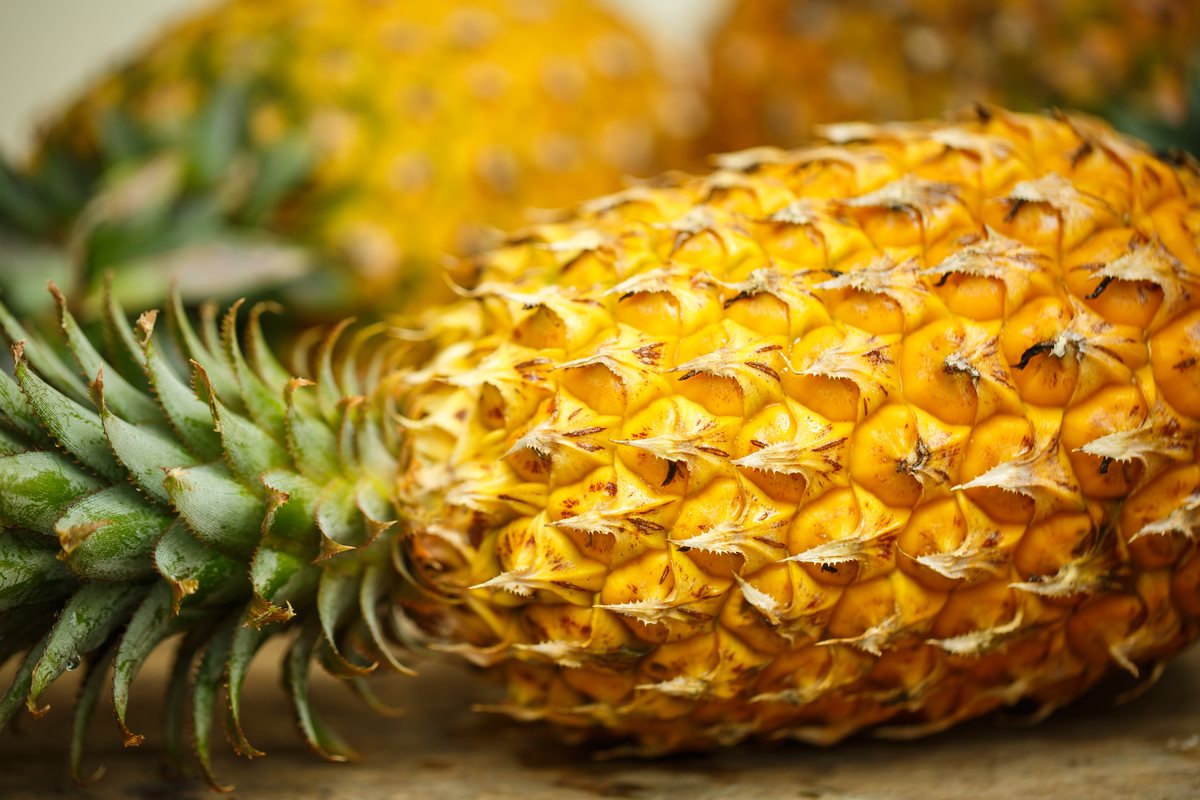
In 18th-century England, pineapples were so expensive that they were rented for dinner parties – just for show.
The pineapple originated in South America, in the region of Paraguay and southern Brazil; indigenous peoples spread it to the Caribbean. Columbus found it on Guadeloupe in 1493 and brought it to Spain. In Europe, it became a status symbol of the nobility, grown in heated greenhouses called "pineries".
Today, most pineapples come from Costa Rica, the Philippines, and Brazil. The plant is a bromeliad; each pineapple is an aggregate fruit made up of over a hundred fused individual fruits arranged spirally around the stem.
To useWhat the pineapple does for you
Fresh pineapple provides approximately 48 mg Vitamin C per 100g, a lot manganese, plus fiber, potassium and the enzyme Bromelain - a mixture of protein-splitting enzymes, which is mainly located in the stem.
Bromelain It is approved as a medicine, for example, for treating swelling after injuries and surgeries. Studies have used it in doses of several hundred milligrams; a serving of fresh pineapple contains only a fraction of that amount, and some is destroyed in the stomach. Fresh pineapple may seem like a digestive aid after protein-rich meals, but this is not well-documented.
Canned pineapple is heated: the bromelain is destroyed, some vitamin C is lost, and there's often sugar in the syrup. Fresh pineapple is what matters for nutrients and enzymes.
IngredientsThis is what's in the pineapple
Pineapple contains sugar, fruit acids (citric and malic acid), Vitamin C, a lot manganese, Vitamin B1, potassium, fiber and Bromelain. The aroma is created from over a hundred volatile substances.
Bromelain breaks down proteins – including those in the oral mucosa. This explains the burning and tingling sensation after eating a lot of fresh pineapple. It also prevents gelatin from setting and makes quark bitter if left to stand for too long.
Enhanced combinationsWhat makes pineapple stronger
Pineapple loves chili, coconut and grilling - and its enzyme is something you need to know in the kitchen.
Fresh pineapple in the marinade tenderizes meat - in no more than 30 to 60 minutes.
Grilled pineapple slices with cinnamon - caramelized and juicy.
Piña colada flavors in fruit salad or smoothie.
Pineapple salsa with fish and tacos.
The finely cut stalk contains the most bromelain - mix it into smoothies.
Red curry with pineapple and coconut milk.
What contradicts itselfIt's best to avoid these combinations.
Bromelain prevents hardening - use agar-agar or heat the pineapple.
It will turn bitter - mix fresh.
Bromelain irritates the oral mucosa.
High doses of bromelain can affect blood clotting - consult your doctor.
No enzyme, less vitamin C, often sugar.
Pineapples do not ripen further after harvesting - buy them when they have a sweet fragrance and easily plucked leaves.
In the kitchenWhere she belongs
- Grilled pineappleWith cinnamon and yogurt.
- Pineapple salsaWith chili, onion, and coriander.
- Thai curryWith coconut milk and vegetables.
- fruit saladWith mango, kiwi, and lime.
- SmoothieWith spinach and banana.
- Tacos al pastorMexican with pineapple.
- Pineapple Fried RiceThai style, served in a pineapple.
- meat marinadeWith soy sauce and ginger.
- SorbetMade from fresh pineapple.
- Coconut-pineapple cakeJuicy and tropical.
As a home remedyFresh pineapple after a heavy meal
Pineapple for dessert
- Peel half a fresh, ripe pineapple and cut it into pieces.
- Finely chop the stem and add it in.
- Eat a portion (about 150g) after a protein-rich meal.
- Do not mix with cream or quark if it is going to stand for a longer period of time.
As a light, refreshing dessert after heavy, protein-rich meals. The bromelain may aid protein digestion – this hasn't been proven for fresh pineapple, but it's certainly a vitamin-rich way to finish.
One serving. Less for sensitive oral mucosa. Bromelain preparations for swelling should only be used after consulting a doctor, especially if you are taking blood thinners.
Ayurveda & TCMWhat the old systems say
Ayurveda
Pineapple is not part of classical Ayurveda. Today it is considered sweet and sour, warming and heavy: it stimulates the digestive fire and calms Vata, but can aggravate Pitta - therefore, it should be ripe and consumed in moderation.
Traditional Chinese Medicine
In Traditional Chinese Medicine (TCM), the pineapple (Bo Luo) sweet-slightly sour and neutral. It is said to quench thirst, relieve heat, stimulate digestion and promote urination.
Warning noticesWhen you should be careful
Please note
- Mouth irritation: Bromelain can irritate the tongue and lips.
- Bromelain supplements: Discuss with blood thinners and before operations.
- Allergy: Cross-reaction with latex, papaya and kiwi is possible.
- Can: often sweetened, without active enzyme.
- Season: always imported.
This page provides information and does not replace medical advice. If symptoms persist, please consult a doctor.
Related to the topicRead on and cook along!
Shop links lead to our product pages; it is indicated there if a partner is involved.
SourcesWhat is this based on?
- Maurer HR. Bromelain: biochemistry, pharmacology and medical use. Cellular and Molecular Life Sciences 2001; 58(9): 1234–1245.
- Pavan R et al. Properties and therapeutic application of bromelain: a review. Biotechnology Research International 2012; 2012: 976203.
- Beauman F. The Pineapple: King of Fruits. Chatto & Windus, London 2005.
- Aune D et al. Fruit and vegetable intake and the risk of cardiovascular disease, total cancer and all-cause mortality - a systematic review and dose-response meta-analysis of prospective studies. International Journal of Epidemiology 2017; 46(3): 1029–1056.
- USDA FoodData Central: Pineapple, raw, all varieties.


