Cauliflower (Brassica oleracea var. botrytis)
OriginKohl with a university education
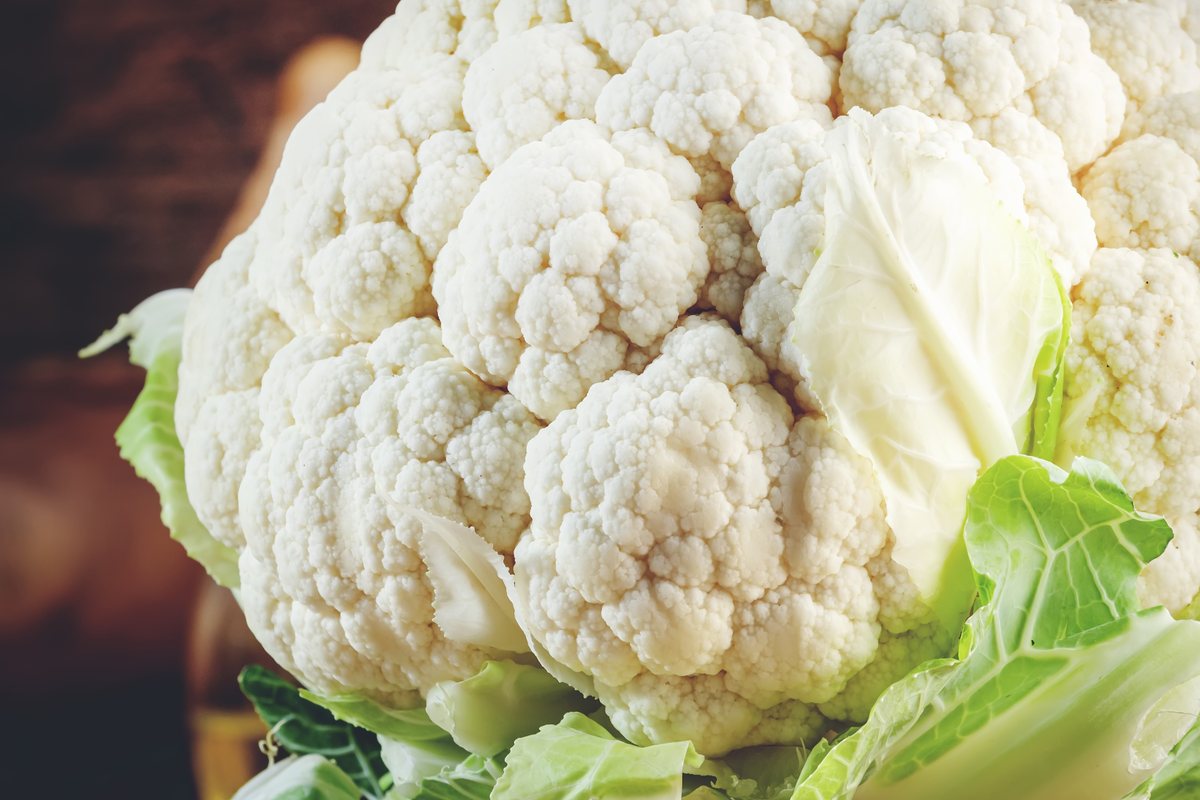
„Cauliflower is nothing more than cabbage with a college education,“ Mark Twain quipped.
Cauliflower is a cultivated variety of wild cabbage. Brassica oleracea, It grows on the coasts of Europe – just like broccoli, kale, Brussels sprouts, white cabbage, and kohlrabi. The flower heads were bred for size and tenderness in the eastern Mediterranean, probably in Cyprus and the Levant. Arab scholars described it in the 12th century, and it arrived in France and Germany via Italy in the 16th century.
For a long time, it was considered a fine vegetable for upscale dining. The head remains white only because the leaves protect it from the sun – in sunlight, it produces chlorophyll and turns greenish. Besides white varieties, there are purple (anthocyanins), orange (beta-carotene), and green varieties, as well as Romanesco with its fractal spirals.
To useWhat cauliflower does for you
Cauliflower is a light and nutrient-rich vegetablesWith approximately 25 kcal per 100 g, it provides about 48 mg of vitamin C, as well as folate, vitamin K, potassium, choline, and fiber. Because it is so low in carbohydrates, it is a popular substitute for rice or mashed potatoes.
Like all cabbage vegetables, it contains Glucosinolate. When cruciferous vegetables are cut and chewed, the enzyme myrosinase converts them into isothiocyanates such as sulforaphane, which, in laboratory and animal studies, activate the body's own detoxification enzymes. Observational studies link a high consumption of cruciferous vegetables with a slightly lower risk of some types of cancer—a correlation, not proof.
For the kitchen, this means: cut cauliflower into small pieces and let it sit for a few minutes before cooking – this gives the enzymes time to do their work. And don't overcook it: prolonged cooking in lots of water washes away vitamin C and glucosinolates.
IngredientsThis is what's in cauliflower
Cauliflower contains Vitamin C, Folate, vitamin K, vitamin B6, potassium, choline, and fiber. Among the secondary plant compounds are... Glucosinolate Glucobrassicin and glucoraphanin are the primary active compounds; colored varieties also contain anthocyanins or carotenoids.
The sulfur-containing breakdown products of glucosinolates are responsible for the typical cabbage smell when cooked – the longer it cooks, the stronger the smell. Cauliflower also contains the sugar alcohol mannitol, which can cause flatulence in sensitive individuals.
Enhanced combinationsWhat makes cauliflower stronger
Cauliflower is a flavor carrier: mild enough for butter, strong enough for turmeric and roasted aromas.
Chop into small pieces and leave to stand for 10 minutes - this will allow more sulforaphane to form before the heat stops the enzyme.
If the cabbage is cooked thoroughly, mustard or raw cruciferous vegetables can provide the missing myrosinase.
Roasting cauliflower at 220 °C makes it nutty and sweet instead of cabbage-like.
Aloo Gobi, cauliflower curry - Indian spices love the mild cabbage.
The classic remedies for bloating - add it to the cooking water or sprinkle it over roasted cabbage.
Polish cauliflower: with butter and toasted breadcrumbs.
What contradicts itselfIt's best to avoid these combinations.
Prolonged cooking makes it mushy, smelly and low in nutrients - steam or roast it until al dente.
Mannitol and fiber cause bloating - small portions, well cooked.
Glucosinolates can inhibit the thyroid gland's iodine uptake in very large quantities - this is not a problem with a normal diet and iodized salt.
Cabbage contains vitamin K - eat it regularly instead of avoiding it.
Brown spots and odor indicate age - consume within a few days.
The tender inner leaves and the peeled stem are edible and taste excellent roasted.
In the kitchenWhere he belongs
- Polish cauliflowerSteamed with butter, breadcrumbs and chopped egg.
- Oven-baked cauliflowerWhole head roasted with spiced oil and tahini.
- Aloo GobiIndian dish with potatoes, turmeric and cumin.
- Cauliflower riceFinely chopped raw, briefly fried - rice substitute.
- Cauliflower pureeWith a little butter and nutmeg instead of mashed potatoes.
- Cauliflower soupWith nutmeg and roasted hazelnuts.
- GratinTopped with cheese.
- Cauliflower wingsBaked crispy in dough and spices.
- raw foodThinly sliced with lemon, parsley and pomegranate.
- InsertedAs mixed pickles with mustard seeds.
As a home remedyTea for cabbage bloating
Caraway-fennel-anise tea
- Lightly crush half a teaspoon each of caraway, fennel and anise in a mortar.
- Pour 250 ml of boiling water over it.
- Cover and let steep for 10 minutes to prevent the essential oil from evaporating.
- Strain and drink warm after the cabbage dish.
Bloating and a feeling of fullness after eating cabbage dishes. The three seeds are recognized by Commission E for digestive problems with bloating; crushing the seeds opens them so that the oil gets into the tea.
One to three cups a day. For infants, only after consulting a pediatrician. Consult a doctor if you experience persistent, severe bloating.
Ayurveda & TCMWhat the old systems say
Ayurveda
In Ayurveda, cauliflower is considered cooling, dry, and difficult to digest – it increases Vata and is therefore almost always cooked and prepared with cumin, ginger, asafoetida, and ghee, as in the Gobi Sabzi.
Traditional Chinese Medicine
In Traditional Chinese Medicine (TCM), cauliflower is considered sweet and neutral. It is said to strengthen the spleen and stomach, fortify the kidneys, and strengthen the bones; as a mild cabbage, it is also recommended for weak digestion.
Warning noticesWhen you should be careful
Please note
- Flatulence: For irritable bowel syndrome, small, well-cooked portions are recommended.
- Blood thinners: Maintain a consistent intake of vitamin K while taking coumarins.
- Thyroid: Only very large quantities of raw ingredients are problematic in cases of iodine deficiency.
- Purines: Moderately - usually unproblematic in normal amounts for people with gout.
- Allergy: Rare; cross-reaction with other cruciferous plants and mustard is possible.
This page provides information and does not replace medical advice. If symptoms persist, please consult a doctor.
Related to the topicRead on and cook along!
Shop links lead to our product pages; it is indicated there if a partner is involved.
SourcesWhat is this based on?
- Higdon JV et al. Cruciferous vegetables and human cancer risk: epidemiological evidence and mechanistic basis. Pharmacological Research 2007; 55(3): 224–236.
- Traka M, Mithen R. Glucosinolates, isothiocyanates and human health. Phytochemistry Reviews 2009; 8:269–282.
- Commission E: Monographs Carvi fructus, Foeniculi fructus, Anise fruit, Federal Gazette.
- Twain M. Pudd'nhead Wilson. 1894.
- USDA FoodData Central: Cauliflower, raw.