OriginFive thousand years in the same pots
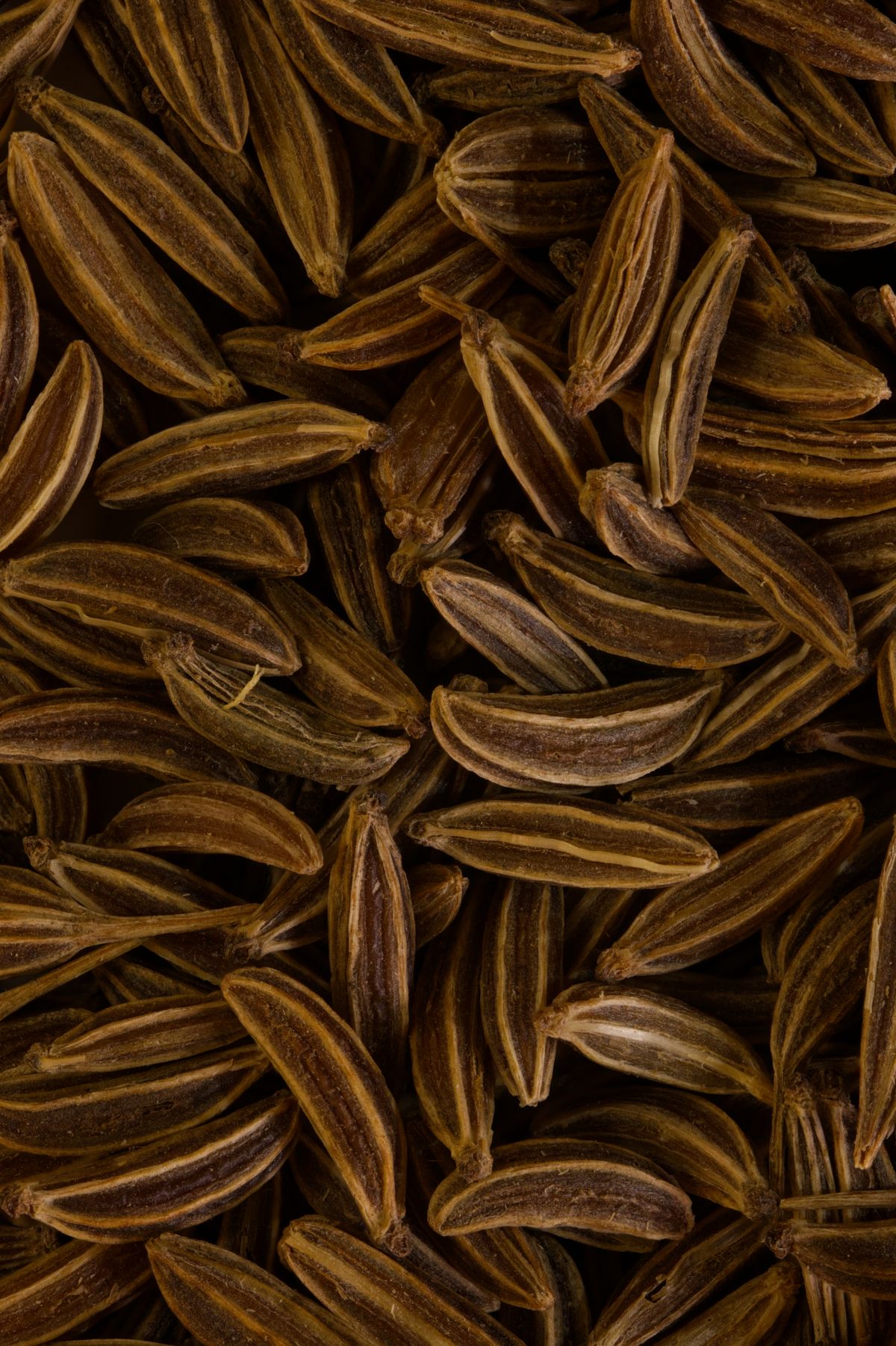
Caraway seeds have been found in Neolithic settlements - it is one of the oldest documented spices in Europe.
Carum carvi Caraway is a biennial umbellifer that grows wild from Europe to Central Asia and has been used for millennia. Caraway seeds have been found in Neolithic pile dwellings and in Egyptian grave goods, making it one of the longest-documented spices in existence. It has remained essentially the same throughout: not a trendy spice, not a new discovery, but a fundamental ingredient of Central European cuisine that has endured for over five thousand years because it works.
In its first year, the plant forms only a rosette of finely divided leaves, which looks deceptively similar to a carrot. It is only in the second year that it produces its flowering stalk, blooming white in typical umbels and developing the sickle-shaped, ribbed fruits. Botanically, these are not seeds, but schizocarps that split into two halves when ripe – the same structure as fennel, anise, and coriander. Harvesting is delicate: if the umbel ripens for too long, the fruits fall off. Traditionally, they are cut in the morning while still dew-covered and then dried further.
The confusion surrounding the name is persistent and warrants a clear explanation. Caraway is Carum carvi. Cumin is Cuminum cyminum, a different genus, significantly spicier, earthier, the key spice of oriental and Mexican cuisine. Black cumin is Nigella sativa and it doesn't even belong to the Apiaceae family. If you read "cumin" in an Indian recipe and use caraway seeds, you'll end up with a completely different dish – this is one of the most common mistakes when cooking from other cuisines.
To useOne of the best-documented digestive plants ever
Regarding caraway, we can write something that is rare in this archive: its effects are well documented. The European Medicines Agency classifies caraway fruit and caraway oil as well-established use a - for the symptomatic treatment of bloating, fullness and mild spasmodic gastrointestinal discomfort. Well-established use This is the higher of the two EMA categories and requires that efficacy is sufficiently demonstrated by scientific literature, not just by tradition. Commission E had already issued a positive monograph in 1990.
The mechanism is essentially understood. Carvone, the main component of the essential oil, relaxes the smooth muscles of the gastrointestinal tract – this is the antispasmodic effect. At the same time, carvone and limonene inhibit the growth of several gas-producing intestinal bacteria and some fungi in laboratory tests. Less gas production plus a relaxed intestinal wall results in precisely what is observed with carminatives: the abdomen becomes softer, the feeling of tension subsides, and the gas is released instead of causing pressure.
The strongest evidence base is not for caraway alone, but for a combination: peppermint oil plus caraway oil. This two-component combination has been investigated in several randomized, placebo-controlled trials for functional dyspepsia – irritable stomach – and it consistently performed better than placebo, in some comparisons even on par with a common prokinetic agent. This is a strong result for a herbal preparation, and it is the reason why such preparations are even mentioned in German guidelines for functional dyspepsia.
The second well-founded application is abdominal massage with diluted caraway oil for infant colic and childhood gas. Here, the oil works through the skin and through warmth; controlled studies are scarce, but the practice is old, widespread, and very low-risk – provided the oil is sufficiently diluted. Undiluted essential oil should never be applied to children's skin. What caraway is not: a remedy for irritable bowel syndrome (IBS) in the sense of treating the underlying cause, for heartburn, or for persistent abdominal pain of unclear origin. These should be investigated.
IngredientsCarvone - the same molecule, two smells
Caraway contains a surprisingly high amount of essential oil, between three and seven percent – significantly more than fennel or anise. Almost all of the oil consists of just two substances: carvone and limonene. Carvone is responsible for the aroma, while limonene provides the fresh, citrusy undertone. This simplicity is an advantage: caraway oil is a very well-characterized product, and its quality can be clearly determined by its carvone content.
Carvone is a fascinating chemical lesson. It exists in two mirror-image forms, like a left and right hand. One, (S)-carvone, smells like caraway. The other, (R)-carvone, smells like spearmint. It's the same molecule with the same composition—just reversed—and our olfactory receptors easily distinguish between the two. Anyone who has ever marveled at how different caraway and mint smell will recognize the difference between left and right.
Besides the essential oil, the fruits contain about ten to twenty percent fatty oil, proteins, and flavonoids. The leaves and root are also edible—the root was formerly cooked like parsnip—but no longer play a role in either cooking or medicine. Unlike many members of the Apiaceae family, caraway is low in furanocoumarins; it does not suffer from the phototoxicity problems of lovage, parsnip, and hogweed.
Proper storage is crucial. The essential oil is contained in oil ducts within the fruit and is well protected there – whole caraway seeds retain their aroma for two to three years. Ground caraway loses it within a few weeks. Therefore, for tea, the seeds are only crushed immediately before preparation, not ground in advance. This isn't a minor detail, but rather the difference between an effective and a tasteless tea.
Enhanced combinationsKümmel and his partners
Caraway is a team player. In the kitchen as in tea blends, it rarely stands alone – and the classic three-combination teas all originated for the same reason.
A classic among digestive teas, and one of the few where each component has a purpose: fennel loosens and tastes sweet, anise soothes, and caraway provides antispasmodic properties. Use equal parts of the tea and fruit, crushing them before brewing.
The best-researched herbal combination for functional dyspepsia. In enteric-coated capsules to ensure the oil reaches the small intestine and is not regurgitated. Ready-made preparations are the most practical form here.
The reason caraway found its way into Central European cuisine in the first place. The complex sugars in cabbage, which are difficult to digest, cause bloating; caraway alleviates this. Cook whole caraway seeds along with the cabbage, do not add any extra seasoning.
Caraway is a key ingredient in hearty rye bread, both in terms of flavor and functionality – wholegrain bread is just as much of a bloating problem for many people as cabbage.
Handkäse mit Musik (a type of German cheese) would be a different cheese without caraway seeds. Caraway is also traditionally baked into Tilsiter and Gouda cheeses.
One to two percent caraway oil in a neutral vegetable oil, lukewarm, massaged clockwise around the navel – the classic remedy for bloating. Never undiluted, never on the face or mucous membranes.
What contradicts itselfIt's best to avoid these combinations.
The two are not interchangeable. Cumin is spicier, earthier, and more dominant; it tastes wrong in sauerkraut, and caraway is out of place in a curry. The same applies to black cumin, which has nothing to do with either.
Essential oils should be diluted. Undiluted, they can irritate and sensitize, especially in children. One to two percent in a carrier oil is perfectly sufficient.
As with eucalyptus and mint, the same precautionary rule applies here: essential oils should not be applied to the face or near the nose of infants and small children. This does not affect abdominal massage with highly diluted oil.
Ground caraway seeds lose their oil over several weeks. If you grind them in advance, you'll soon have a tasteless, ineffective powder. Always store them whole and grind them fresh.
A carminative is for bloating and a feeling of fullness. Persistent pain, blood in the stool, unintentional weight loss, or sudden changes in digestion are reasons to seek medical help, not to drink more tea.
Preparations containing essential oils can trigger colic in people with gallstones. If gallstones are known, the use of oil capsules should be discussed beforehand.
To which courtWhere caraway is at home
- sauerkrautThe original combination. Cook whole fruits along with the other ingredients – they release their nutrients evenly over the long cooking time and reduce the bloating effect of the cabbage.
- Rye breadIn the dough and on the crust. The aroma develops much more intensely in the oven than in a pot.
- Roast porkGrated into the crust along with salt and garlic - the standard Austro-Bohemian seasoning.
- potatoesBoiled potatoes cooked with whole caraway seeds in water, or as caraway potatoes baked in the oven with coarse salt.
- Cabbage vegetablesSavoy cabbage, Brussels sprouts, white cabbage - the same logic applies everywhere: cook the caraway seeds with the cabbage, don't sprinkle them on afterwards.
- Hand cheeseThe "music" part of Hessian hand cheese consists of onions, vinegar, oil and caraway.
- Lentil and pea soupLegumes and caraway belong together - for the same reason as cabbage and caraway.
- goulashIn Hungarian cuisine, caraway is a natural ingredient alongside paprika, providing an earthy base.
- Caraway schnappsAquavit and caraway brandy are the drinking form of the digestive spice - historically used as a digestif after heavy meals.
- Caraway tea2 g of crushed fruit per cup, cover and let steep - the simplest and most effective preparation.
As a home remedyCarminative tea - simple and effective
Caraway, fennel, and anise in equal parts
- Mix equal parts of caraway, fennel, and anise seeds and store whole in a screw-top jar. Store as a preserving mix, not ground.
- For each cup, briefly crush one level teaspoon of the mixture in a mortar until it releases a distinct aroma. This is the step most people skip – and the reason why store-bought tea bags often taste like nothing.
- Pour boiling water over the mixture and let it steep, covered, for ten minutes. Without a lid, the essential oil will evaporate with the steam.
- Strain and drink slowly in small sips, preferably warm after eating or when your stomach feels tight.
- For infants and toddlers: use very little, no aniseed for infants under six months, and consult your pediatrician if colic persists.
- For external use: add one to two percent caraway oil to a neutral oil, warm it to hand temperature and massage it clockwise around the navel.
For bloating, a feeling of fullness, and mild cramping in the abdomen – in adults and children alike. The most common and effective home remedy after eating too much or too quickly.
Consume 1.5 to 6 grams of fruit daily, divided into two to three cups. Long-term use is safe. Persistent abdominal pain, blood in the stool, weight loss, or a sudden change in digestion should be investigated by a doctor.
Ayurveda & TCMWhat the old systems say
Ayurveda
Cumin is used in Ayurveda as Krishna Jiraka It is listed and, like its relative cumin, belongs to the group of digestive spices. It is considered pungent, bitter, and warming, and is Kapha- and vata-classified in a reducing manner, with explicit reference to Agni, the digestive fire. Its role as dipana and pachana - stimulating and implementing - this aligns unusually well with what modern pharmacology says about carvone.
Traditional Chinese Medicine
In the Chinese materia medica, cumin appears as Ye Hui Xiang, but it remains a marginal drug; fennel plays the central role in this group. Xiao Hui Xiang. Caraway is described as pungent and warming, with a connection to the spleen and stomach, and the function of "moving Qi and relieving pain"—this is the Chinese formulation for precisely what we call antispasmodic and carminative. Two systems, two languages, one observation.
Warning noticesWhen you should be careful
Please note
- Do not confuse with cumin: Cuminum cyminum It's a different plant with a completely different taste. In recipes from English-speaking countries, "cumin" always refers to cumin, and "caraway" to caraway.
- Essential oils should only be used diluted: One to two percent in a carrier oil. Undiluted essential oils can irritate and sensitize the skin, especially in children.
- Do not apply to the face of infants: Essential oils should not be used near the nose and mouth of infants and toddlers. This does not affect diluted abdominal massage.
- Gallstones: Oil capsules can trigger colic in people with gallstones. Consult a doctor before regular use.
- Allergy to umbellifers: Those who are allergic to celery, carrot, anise or fennel may also react to caraway - cross-reactivity within the family is known.
- Take warning signs seriously: Persistent or severe abdominal pain, blood in the stool, fever, unintentional weight loss or permanently altered digestion are not reasons to drink tea.
This page provides information and does not replace medical advice. If symptoms persist, please consult a doctor.
Related to the topicRead on and cook along!
Shop links lead to our product pages; it is indicated there if a partner is involved.
SourcesWhat is this based on?
- European Medicines Agency, HMPC: European Union herbal monograph on Carum carvi L., fructus and aetheroleum - well-established use.
- Commission E, Monograph „Carvi fructus“, Federal Gazette No. 22 of 01.02.1990.
- Madisch A. et al.: Treatment of functional dyspepsia with a fixed peppermint oil and caraway oil combination - a randomized, placebo-controlled, double-blind trial. Digestion 2004.
- Rich G. et al.: A randomized placebo-controlled trial on the effects of menthacarin in functional dyspepsia and irritable bowel syndrome. Neurogastroenterology & Motility 2017.
- Blaschek W. (ed.): Wichtl - Herbal Drugs and Phytopharmaceuticals, Chapter Carvi fructus.