
Chinese cabbage (Brassica rapa subsp. pekinensis)
OriginFrom the imperial court in Beijing to the kimchi jar
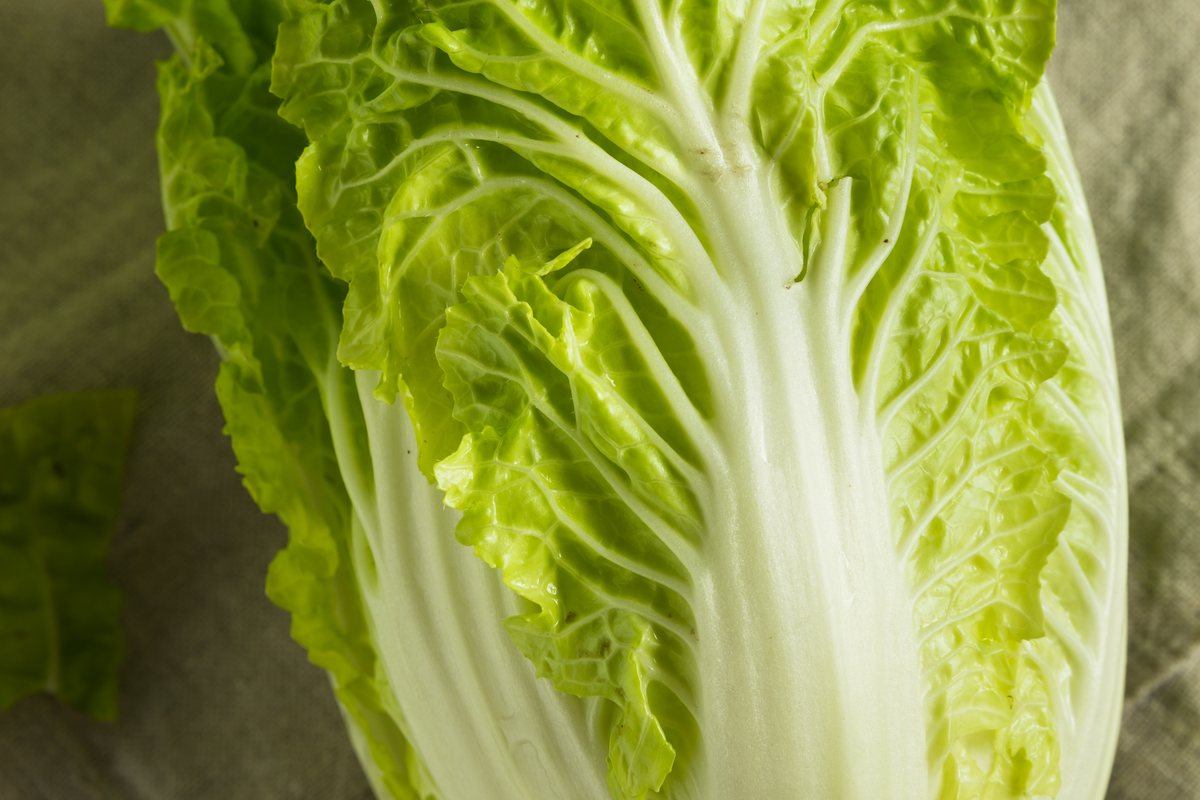
In Korea he is called baechu - and every autumn tons of it end up at the "Kimjang", the communal pickling for the winter.
Chinese cabbage likely originated around 1,000 years ago in northern China from a cross between bok choy and turnip. Botanically, it is therefore more closely related to turnips than to white cabbage or broccoli. Around Beijing, it became the most important winter vegetable, and in Korea, it formed the basis of kimchi. The communal preservation of kimchi in autumn, known as "kimjang," has been recognized as part of UNESCO's Intangible Cultural Heritage since 2013.
Chinese cabbage arrived in Europe in the 19th century, but only became well-known in Germany from the 1970s onwards. Today, it is primarily grown in Rhineland-Palatinate, Lower Saxony, and Bavaria. Because the tightly closed heads keep well for several months when cool, locally grown Chinese cabbage is available from early summer well into winter – an inexpensive winter vegetable with short transport routes.
To useWhat Chinese cabbage does for you
100g of raw Chinese cabbage provides only about 16 kcal, but about 80 µg of vitamins. Folate, approximately 27 mg Vitamin C and about 40 µg Vitamin K. A large salad portion of 200g covers around 40mg of folate and about half of the vitamin C requirement. It also contains potassium, calcium, and fiber.
Like all cruciferous vegetables, Chinese cabbage contains Glucosinolate. When cut and chewed, a plant enzyme releases mustard oils, which, in laboratory tests, stimulate the body's own detoxification processes. Observational studies link a high consumption of cruciferous vegetables with a slightly lower risk of some types of cancer – whether this is due to the mustard oils is not definitively proven. Chinese cabbage contains relatively little of these oils, which is why it tastes milder than Brussels sprouts or radishes.
His greatest strength is the DigestibilityThe thin, tender leaves with few hard fibers are often tolerated even by people who get bloating from white cabbage. Kimchi Fermentation provides additional live lactic acid bacteria. Studies on kimchi are promising, but mostly small; its high salt content should be noted.
IngredientsThis is what's in Chinese cabbage
Chinese cabbage contains water, fiber, folate, vitamin C, vitamin K, vitamin B6, provitamin A, potassium, calcium, magnesium, as well as glucosinolates (especially glucobrassicin, gluconapine and glucobrassicanapin) and polyphenols such as kaempferol.
The green leaf tips contain significantly more carotenoids, vitamin K, and folate than the pale, crisp leaf ribs. During prolonged cooking, a good portion of vitamin C, folate, and glucosinolates leach into the water.
Enhanced combinationsWhat makes Chinese cabbage stronger
Chinese cabbage hardly tastes like cabbage - it readily absorbs spices, acidity and spiciness.
Lactic acid bacteria and seasoning.
The classic kimchi seasoning.
It helps with vitamin K and carotenoids.
Additionally provides enzyme for the mustard oils.
Turn vegetables into a meal.
As a crisp raw salad.
What contradicts itselfIt's best to avoid these combinations.
Vitamins are lost, he becomes weak.
Very salty.
Ethylene causes the leaves to wilt.
Wrap in foil, cut surface dries.
Maintain a consistent level of vitamin K in coumarins.
The salad becomes watery.
In the kitchenWhere he belongs
- KimchiWith radish, ginger and chili.
- Chinese cabbage saladWith apple, carrot and yogurt dressing.
- Stir-fried vegetablesBriefly with garlic and soy sauce.
- Spring rollsFinely chopped in the filling.
- JiaoziChinese dumplings.
- Hot PotCooked in the broth.
- Chinese cabbage rollsInstead of white cabbage, tender cabbage.
- SoupWith ginger and tofu.
- coleslawAsian style with sesame seeds.
- GratinTopped with cheese.
As a home remedyQuick Kimchi for Beginners
Simple kimchi
- Cut a Chinese cabbage (approx. 1 kg) into bite-sized pieces, mix with 2 tablespoons of salt and let sit for 2 hours, turning occasionally.
- Rinse the cabbage thoroughly under cold water and drain well.
- Mix together a paste of 3 cloves of garlic, a thumb-sized piece of ginger, 1 to 2 tablespoons of chili flakes and some soy sauce, then add spring onions and radish sticks.
- Mix everything well while wearing gloves, press firmly into clean jars so that the cabbage is covered with liquid, and seal loosely.
- Allow to ferment for 1 to 2 days at room temperature, then store in the refrigerator.
A flavorful side dish with live lactic acid bacteria. The fermentation process makes the cabbage even more digestible and gives it a long shelf life.
Start with a small bowl a day. If you have high blood pressure, consume sparingly due to the salt content. Kimchi will keep in the refrigerator for several weeks and will become more sour over time.
Ayurveda & TCMWhat the old systems say
Ayurveda
Chinese cabbage is not described in classical Ayurveda. According to modern understanding, it is considered, like other types of cabbage, to be cooling, light, and dry – balancing Pitta and Kapha. For Vata, it is best cooked and eaten with ginger.
Traditional Chinese Medicine
In Traditional Chinese Medicine (TCM), Chinese cabbage is considered (Bai CaiIt is described as cool to neutral and sweet. It is said to clear heat, quench thirst, and moisten the intestines, and is a classic winter vegetable in northern Chinese cuisine.
Warning noticesWhen you should be careful
Please note
- Blood thinners: When taking coumarins such as phenprocoumon or warfarin, eat vitamin K-rich vegetables regularly and do not let the dosage fluctuate.
- Kimchi: very high in salt - in small amounts for high blood pressure and kidney disease.
- Histamine: Fermented kimchi can trigger symptoms in people with histamine intolerance.
- Thyroid: Very large quantities of raw cabbage can strain the thyroid gland in cases of iodine deficiency; normal portions are safe.
- Hygiene: Discard kimchi with mold, bad smell, or a bulging lid.
This page provides information and does not replace medical advice. If symptoms persist, please consult a doctor.
Related to the topicRead on and cook along!
Shop links lead to our product pages; it is indicated there if a partner is involved.
SourcesWhat is this based on?
- USDA FoodData Central: Cabbage, Chinese (pe-tsai), raw.
- Park KY, Jeong JK, Lee YE, Daily JW. Health benefits of kimchi (Korean fermented vegetables) as a probiotic food. Journal of Medicinal Food 2014; 17(1): 6–20.
- Verkerk R et al. Glucosinolates in Brassica vegetables: the influence of the food supply chain on intake, bioavailability and human health. Molecular Nutrition & Food Research 2009; 53(Suppl 2): S219.
- Weaver CM, Proulx WR, Heaney R. Choices for achieving adequate dietary calcium with a vegetarian diet. American Journal of Clinical Nutrition 1999; 70(3 Suppl): 543S–548S.
- UNESCO: Kimjang, making and sharing kimchi in the Republic of Korea. List of Intangible Cultural Heritage of Humanity, 2013.


