
Pak Choi (Brassica rapa subsp. chinensis)
OriginSpoon cabbage from southern China
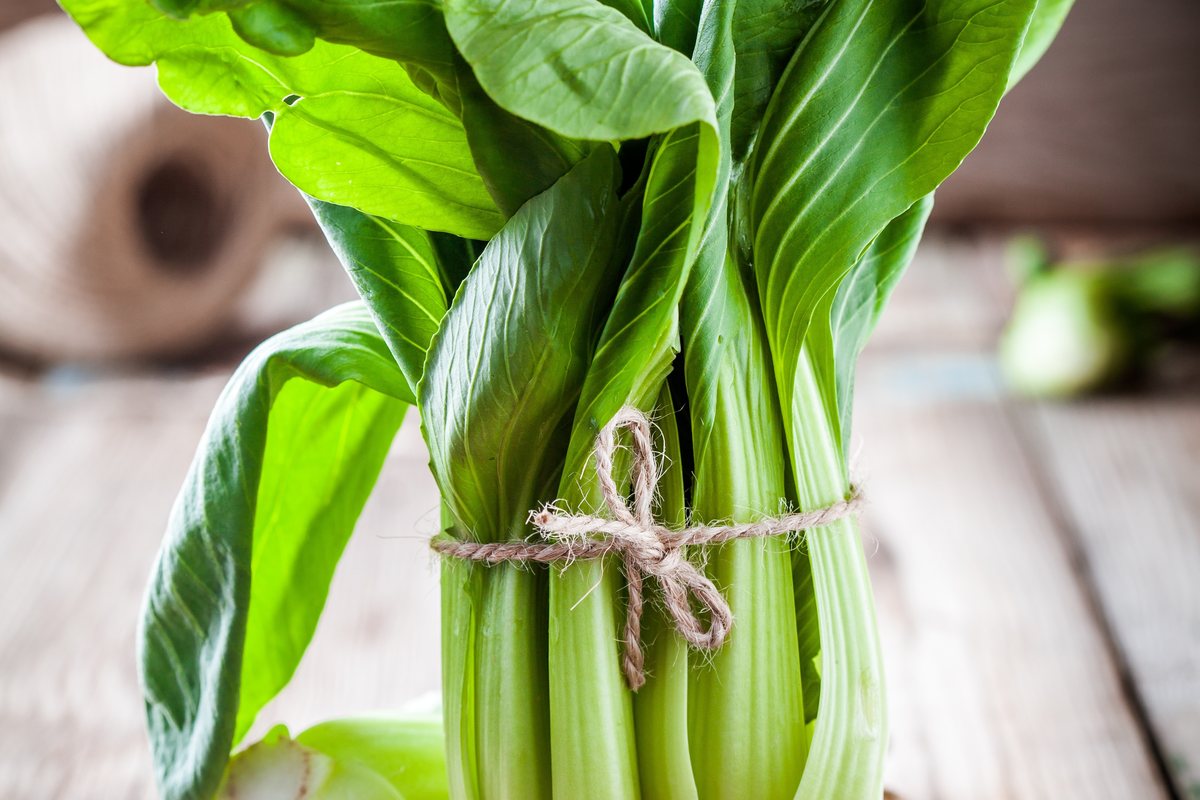
The Cantonese name means "white vegetable" - because of the light, spoon-shaped stems.
Pak choi has been cultivated in southern China since at least the 5th century and remains one of the most common vegetables there. Like Chinese cabbage, turnip, and turnip greens, it belongs to the genus Pak. Brassica rapa The plants look different but are closely related. They came to Southeast Asia, America, and Europe in the 20th century with Chinese immigrants.
In Germany, pak choi has only been cultivated outdoors and in greenhouses for a few decades. It grows quickly: it can be harvested just five to eight weeks after sowing. Besides the large heads, there are tender baby pak choi that can be cooked whole, and green-stemmed varieties, often sold as "Shanghai pak choi".
To useWhat Pak Choi does for you
100g of raw pak choi provides approximately 105mg of vitamin D at only about 13 kcal. Calcium, 45 mg Vitamin C, approximately 45 µg Vitamin K, 65 µg folate and over 2.5 mg Beta-carotene. A 200g serving thus covers about half of the daily requirement for vitamin C, plenty of vitamin K and about one fifth of the calcium requirement.
The crucial factor is how much of it is absorbed. While spinach and chard contain a lot of calcium, they bind it tightly. Oxalic acid, so that only about 5 % are absorbed. Cruciferous vegetables of the type Brassica In contrast, they are low in oxalates. In studies with labeled calcium, the body absorbed about half the calcium from pak choi – a similar or even higher amount than from milk. Therefore, it is a valuable source for people who consume few dairy products.
The Carotenoids The dark leaves contain primarily beta-carotene and lutein. These nutrients are fat-soluble, so a little oil is helpful when cooking. Pak choi also contains the glucosinolates of cruciferous vegetables. Briefly steaming it in a wok preserves most of the vitamin C and mustard oils better than boiling it for a long time in a lot of water.
IngredientsThis is what's in pak choi
Pak choi contains water, fiber, calcium, potassium, magnesium, iron, vitamin C, vitamin K, folate, vitamin B6, carotenoids (beta-carotene, lutein, zeaxanthin), glucosinolates (including gluconapine and glucobrassicin) and flavonoids such as kaempferol and quercetin.
The oxalic acid content is very low, the nitrate content can be elevated – as with many leafy vegetables – especially in winter cultivation.
Enhanced combinationsWhat makes Pak Choi stronger
Pak choi only needs heat, a little fat and strong seasoning.
For vitamin K and carotenoids.
The classic stir-fry.
Turn vegetables into a meal.
Tofu precipitated with calcium contains even more calcium.
Vitamin D helps calcium to be absorbed into the bones.
Crispy and even rich in calcium.
What contradicts itselfIt's best to avoid these combinations.
It becomes mushy, and vitamins are lost.
Mustard oils can put a strain on the thyroid gland if consumed in excessive amounts.
Spinach provides very little calcium.
There is often soil between the stems.
It will keep for 3-4 days in a damp cloth.
Maintain a consistent level of vitamin K.
In the kitchenWhere he belongs
- Pak choi from the wokWith garlic and ginger.
- Steamed baby bok choyWhole, with oyster sauce.
- RamenHalved in the broth.
- Fried riceWith egg and spring onions.
- Noodle panWith tofu and sesame seeds.
- Grilled pak choiHalved, coated with oil.
- SoupWith shiitake mushrooms and miso.
- lettuceYoung leaves raw with sesame dressing.
- curryAdmit it in the final minutes.
- pastaInstead of spinach, use garlic.
As a home remedyCalcium plates for bones without milk
Pak choi with tofu and sesame
- Wash 200g of pak choi, cut the stems and leaves separately into strips.
- Dice 150g of tofu (preferably precipitated with calcium sulfate) and fry in 1 tablespoon of rapeseed oil until golden brown.
- Stir-fry the stems, a chopped clove of garlic and some ginger for 2 minutes, then add the leaves and let them wilt.
- Season with soy sauce and a few drops of sesame oil, then sprinkle with 1 tablespoon of toasted sesame seeds.
A meal for anyone who eats little or no dairy and wants to improve their calcium intake through readily available plant sources.
One to several times a week as a main course. It does not replace calcium tablets if prescribed by a doctor.
Ayurveda & TCMWhat the old systems say
Ayurveda
Pak choi is not described in classical Ayurveda. According to current understanding, it is considered cooling, light, and slightly bitter – beneficial for Pitta and Kapha. For Vata, it is recommended cooked with oil and ginger.
Traditional Chinese Medicine
In Traditional Chinese Medicine (TCM), Pak Choi is considered (Xiao Bai CaiIt is described as cool and sweet. It is said to clear heat, quench thirst, and moisten the intestines. Because of its cooling nature, it is usually prepared with ginger and garlic.
Warning noticesWhen you should be careful
Please note
- Blood thinners: When taking coumarins such as phenprocoumon or warfarin, eat plenty of vitamin K-rich vegetables.
- Thyroid: Consuming very large quantities of raw pak choi over several weeks can inhibit the thyroid gland - one severe case has been described involving around 1 to 1.5 kg per day; normal portions are harmless.
- Nitrate: Winter vegetables from greenhouses may contain more nitrate; do not keep cooked vegetables warm for long.
- Infants: Do not give nitrate-rich leafy vegetables to infants after they have been warmed up.
- Allergy: Cross-reactions with mustard and other cabbage varieties are rare.
This page provides information and does not replace medical advice. If symptoms persist, please consult a doctor.
Related to the topicRead on and cook along!
Shop links lead to our product pages; it is indicated there if a partner is involved.
SourcesWhat is this based on?
- USDA FoodData Central: Cabbage, Chinese (pak-choi), raw.
- Weaver CM, Heaney RP, Nickel KP, Packard PI. Calcium bioavailability from high oxalate vegetables: Chinese vegetables, sweet potatoes and rhubarb. Journal of Food Science 1997.
- Weaver CM, Proulx WR, Heaney R. Choices for achieving adequate dietary calcium with a vegetarian diet. American Journal of Clinical Nutrition 1999; 70(3 Suppl): 543S–548S.
- Chu M, Seltzer TF. Myxedema coma induced by ingestion of raw bok choy. New England Journal of Medicine 2010; 362(20): 1945–1946.
- Verkerk R et al. Glucosinolates in Brassica vegetables: the influence of the food supply chain on intake, bioavailability and human health. Molecular Nutrition & Food Research 2009; 53(Suppl 2): S219.


