OriginThe scent from the cottage garden
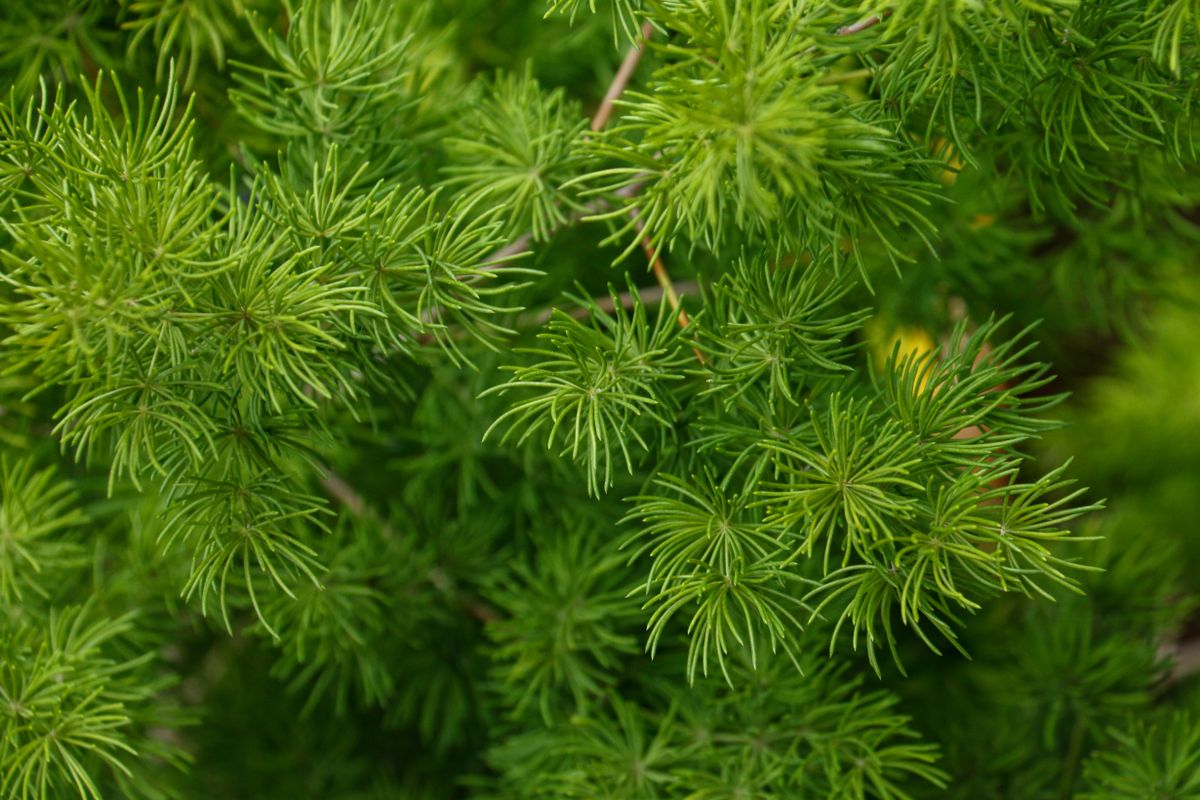
„Cola herb“ is a name from garden centers of the last few decades - the plant is actually called southernwood and was already in every monastery garden four hundred years earlier.
Southernwood is a small, semi-shrubby member of the daisy family from Southern Europe and Western Asia with finely divided, grey-green leaves. It rarely flowers in Central Europe and almost never produces seeds – it is propagated via cuttings, and precisely for this reason it has been passed from garden to garden for centuries. In old cottage gardens, it often appears as an old, woody bush that no one can properly identify anymore.
Their folk names tell the story of their use: Stickroot (according to upright growth), Garheil, Pastor's herb, and in English southernwood or lad's love Young men were said to have put the herb in their pockets because it smelled good. A very practical use was as moth protection: dried sprigs placed among the laundry, like lavender. That's why it's called mothballs in French. wardrobe, Clothes keeper.
The name Cola herb It's new and comes from a garden center. It's not wrong – the scent of the crushed leaves is indeed strikingly reminiscent of cola, with hints of lemon and bitter orange – but it suggests something new where a very old plant is. Nevertheless, it's helpful for the kitchen because it describes where it belongs: in syrups, desserts, and lemonade.
To useWhat the cola plant can do - viewed honestly
Here is the short answer, and it should be: There is no recognized medicinal use for southernwood. Neither Commission E nor the European Medicines Agency maintains a positive monograph. Traditionally, it has been used as a digestive bitter, as a vermifuge, and for menstrual cramps – this is based on tradition, not evidence, and we do not write it as anything else.
What modern research offers is a single interesting strand: In Switzerland, an extract of southernwood was used as a preparation for allergic rhinitis The study examined the plant, with indications of symptom relief. These were small-scale studies using a specific, standardized preparation – nothing can be inferred from this regarding tea from one's own garden. Nevertheless, it is interesting because it shows that there is something in the plant worth investigating.
What it is actually good for is something else and no less valuable: It is an excellent fragrance and aroma herb. The syrup made from the young shoots tastes like a homemade, significantly better cola. It works as reliably as lavender as a moth repellent. And in small amounts, its bitter component makes fatty meat more digestible – this is the true essence of the old digestive tradition, because bitter substances do exactly that, regardless of the plant they come from.
IngredientsThat's what's in the weed
The characteristic scent comes from a essential oil It contains approximately 0.2 to 1 percent of its composition, which varies considerably depending on its origin. Among the constituents are 1,8-cineole, camphor, silvestrene, and various coumarins – the coumarins explain the sweet, hay-like undertone, which, together with the citrusy terpenes, creates the cola-like impression. The same limitation applies to the scent as with all aromatic herbs: when fresh, it is pronounced, but when dried, it almost disappears after a few months.
In addition, southernwood contains Bitter substances and how many Artemisia-types, Flavonoids and tannins. The bitter substances are the understandable part of the digestive tradition: they trigger the same reflex on the tongue as wormwood and gentian, albeit weaker.
A safety note: Like other mugwort species, southernwood can thujone-like compounds It contains wormwood, though far less than wormwood. For culinary use – a few shoots in syrup – this is insignificant. For treatments, concentrated extracts, and use during pregnancy, it is one of several reasons for caution; the other is simply the lack of reliable safety data.
Enhanced combinationsWhat makes cola herb stronger
An herb for sugar, acid and cold preparations - and for the wardrobe.
The best use of all: young shoots in sugar water, add lemon - tastes like a better cola.
As with all aromatic herbs, the aroma is lost when heated - prepare cold or add only after cooking.
Let a few leaves steep in the cream - for ice cream, panna cotta and fruit salad.
Use pork, goose or lamb sparingly - the bitterness makes fatty foods more digestible.
Dried twigs in a linen bag placed among the laundry - like lavender.
Because it hardly produces seeds, it is passed on as a cutting - that's how it has been circulating for centuries.
What contradicts itselfIt's best to avoid these combinations.
There is no recognized medicinal use - the tradition is rich, the evidence empty.
The bitterness quickly becomes dominant, and safety data for course quantities is lacking.
As with all mugwort species, proceed with caution.
People with mugwort allergies often also react to related species.
Dried cola herb is of little use in the kitchen - but it's good for the wardrobe.
The aroma is volatile; prepare it cold or add it at the very end.
To which courtWhere it belongs
- Cola herb syrupSoak a handful of shoots in sugar water with lemon overnight, strain, and briefly bring to a boil.
- Homemade lemonadeSyrup with sparkling water - the most surprising use of the plant.
- Ice cream and sorbetLet the leaves steep in the cream or syrup, then strain.
- fruit saladA few finely chopped leaves sprinkled over peach, melon, and berries.
- Panna cottaLet the vanilla extract from the warm cream, then thicken.
- Roast gooseAdd a sprig to the filling - sparingly, the bitterness carries far.
- Herb vinegarShoots in white wine vinegar - gives an unusual fruity-bitter note.
- Cocktail syrupAs a base for non-alcoholic drinks with lemon and mint.
- moth sachetsDried twigs in a linen bag in the wardrobe.
- cottage garden plantAn old bush in the garden that comes back every year - and cuttings to give away.
As a home remedyThe cola herb syrup
Homemade cola from the garden
- Wash a generous handful of young cola plant shoots, drain them, and roughly chop them.
- Boil 500 ml of water with 400 g of sugar until the sugar has dissolved, then remove from the heat and let it cool slightly.
- Add the herbs, juice, and grated zest of an untreated lemon, cover, and let steep overnight - do not boil, otherwise the aroma will be lost.
- Strain, bring to a brief boil again, pour hot into clean bottles and seal. The syrup will keep for several months in the refrigerator.
For lemonade, for desserts, for non-alcoholic drinks – and as the best reason to have this plant in your garden. This is purely a recipe for enjoyment, without any medicinal claims, and that's exactly how it's meant. Anyone who drinks a glass of it after a heavy meal will also benefit from the bitter compounds that formed the basis of its ancient digestive tradition – but that's a side effect, not a promise.
As desired, keeping the sugar content in mind. Not a problem for children because at this dilution it's a drink and not a treatment. During pregnancy and breastfeeding Stick to single glasses and avoid concentrated extracts and tea cures. If you have an allergy to plants in the Asteraceae family – mugwort, ragweed, chamomile – test a small amount first.
Ayurveda & TCMWhat the old systems say
Ayurveda
Southernwood is not a classic ingredient in Ayurveda. Based on its properties, it would be classified as bitter, pungent, and slightly warming, while also being drying. Kapha lowering, Pitta in moderation, Vata increasing. As a bitter tonic for sluggish digestion, it would be classified there in the group of Deepana-Herbs fall. A transmission based on principle, not tradition.
Traditional Chinese Medicine
It is not listed in the Chinese Materia Medica, but its genus is. Ai Ye (Mugwort) and Qing Hao (Annual mugwort) are established plants there. Based on its characteristics, southernwood would be a bitter, aromatic, slightly warming herb that transforms dampness and moves Qi. As with so many European garden plants: the genus is known, but this species is not.
Warning noticesWhen you should be careful
Please note
- No recognized application: There is no positive monograph for southernwood - its use is based on tradition.
- Asteraceae allergy: Mugwort allergy sufferers often also react to related species - test in small amounts first.
- Pregnancy and breastfeeding: Avoid tea cures and concentrated extracts; this does not apply to a glass of lemonade.
- Crowd: Larger quantities bring a lot of bitterness and possible thujone-like compounds - use sparingly.
- Worming treatment: The traditional use is obsolete; effective and safe medications are available.
- No replacement: Anyone who has an illness treats it with a doctor, not with a fragrant herb.
This page provides information and does not replace medical advice. If symptoms persist, please consult a doctor.
Related to the topicRead on and cook along!
Shop links lead to our product pages; it is indicated there if a partner is involved.
SourcesWhat is this based on?
- Blaschek W (ed.): Wichtl - Herbal drugs and phytopharmaceuticals. 6th edition 2016, genre Artemisia - Evaluation of traditional areas of application.
- Remberg P et al. Characteristics, clinical effect profile and tolerability of a nasal spray preparation of Artemisia abrotanum L. for allergic rhinitis. Phytomedicine 2004; 11(1): 36–42.
- Hänsel R, Sticher O: Pharmacognosy - Phytopharmacy. 9th edition - essential oils and bitter substances of Artemisia species.
- Federal Institute for Risk Assessment: Assessment of thujone in food and beverages.
- Marzell H: Dictionary of German Plant Names - to stabwort, garden salsify and wardrobe.