Couscous (Triticum durum)
OriginThe Maghreb Feast
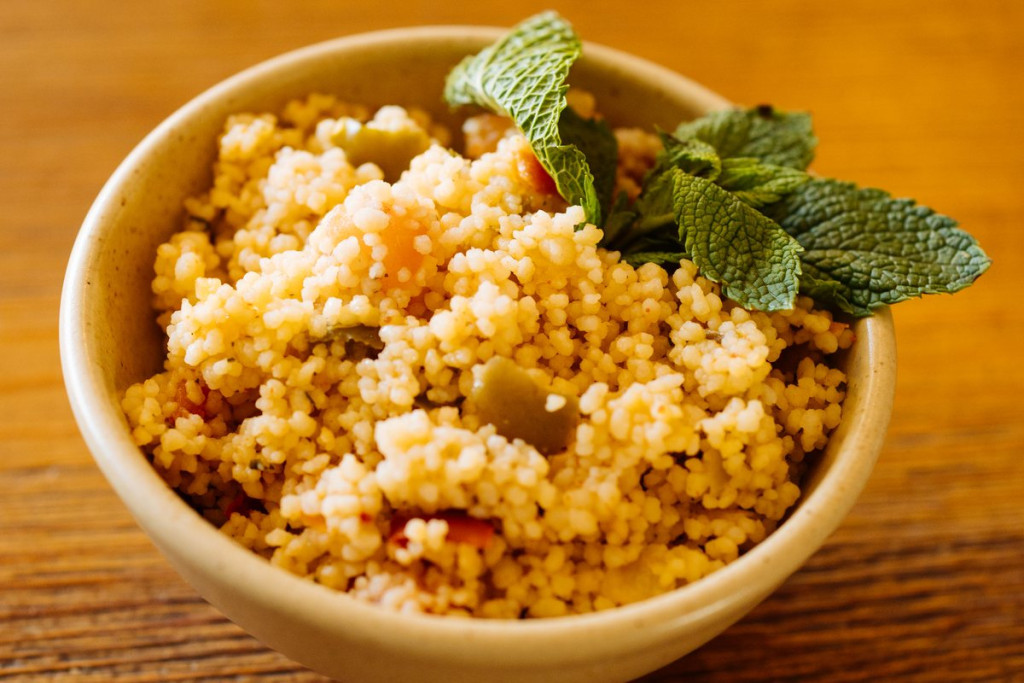
In 2020, UNESCO added the knowledge and customs surrounding couscous to its list of intangible cultural heritage – as a joint application from Algeria, Morocco, Tunisia and Mauritania.
Couscous originates from North Africa and has been prepared there since the Middle Ages, probably even earlier by the Berber peoples. Traditionally, women roll moistened semolina into small balls with their palms in a large bowl, sift it, and steam it several times in the upper part of a steamer. Couscoussiers, Meanwhile, a stew of vegetables, chickpeas, and meat simmers underneath. The steam from the stew flavors the couscous.
UNESCO recognizes not only the dish itself, but everything surrounding it: from grain cultivation to the rolling process and the tools used, to the shared meal that connects families and generations. Couscous is part of weddings, funerals, and Friday dinners. It arrived in France with people from Algeria and Morocco, and later in Germany as a quick side dish. Couscous in supermarkets is almost always industrially pre-steamed and only needs to be rehydrated.
To useWhat couscous does for you
According to USDA data, 100g of dry couscous provides approximately 375 kcal, almost 13g of protein and about 77g of carbohydrates, but only around 5g of fat. Dietary fiber. When cooked, 100g contains approximately 110 kcal and 1.4g of fiber. The following is noteworthy: Selenium contentAccording to the USDA, cooked couscous provides around 27 µg of vitamin D per 100 g, depending on the soil in which the wheat grew.
White couscous is made from semolina, that is, from the inside of the grain without bran and germ. glycemic index At around 65, it is in the middle range - slightly lower than white rice, but significantly higher than bulgur. Wholegrain couscous It is made from the whole grain, contains about twice as much fiber and more magnesium, iron, and B vitamins. It is the better choice for everyday use.
His greatest strength is the combinationWith chickpeas, vegetables, and a little olive oil, this quick side dish becomes a balanced meal packed with protein, fiber, and vitamins – just like you'd eat it in the Maghreb. Couscous contains gluten and is not suitable for people with celiac disease.
IngredientsThis is what's in couscous
Couscous consists primarily of starch and wheat protein (including gluten). It also contains small amounts of fat, selenium, phosphorus, potassium, magnesium, iron, zinc, and vitamins B1, B3, B5, and folate. Whole-grain couscous additionally contains fiber, phenolic acids, lignans, and minerals from the bran and germ.
Durum wheat semolina is slightly yellowish because durum wheat naturally contains carotenoids such as lutein. Besides wheat couscous, there is also couscous made from barley in the Maghreb (Belboula) or millet; gluten-free versions made from corn or rice are available in our stores.
Enhanced combinationsWhat makes couscous stronger
Couscous is a stage - what goes on top determines the meal.
The classic ingredient in couscous stew.
Provides fiber and carotenoids.
The spice of Ras el-Hanout.
It helps with plant-based iron.
It loosens the grains and carries aromas.
Like in Seffa, Morocco.
What contradicts itselfIt's best to avoid these combinations.
Wheat couscous contains gluten.
Whole grains contain twice as much fiber.
Without vegetables and legumes, you'll quickly get hungry again.
Medium GI - cushion with vegetables.
Often high in salt and containing flavor enhancers.
Cool quickly, eat soon.
In the kitchenWhere he belongs
- Couscous with seven vegetablesMoroccan food, for Friday dinner.
- Couscous saladWith cucumber, tomato, mint and lemon.
- Tagine side dishIt absorbs the sauce.
- SeffaSweet with cinnamon, raisins and almonds.
- Stuffed vegetablesPeppers or zucchini with couscous.
- Chickpea stir-fryWith harissa and spinach.
- bowlWith roasted vegetables and yogurt dip.
- BreakfastWith milk, fruit and nuts.
- Couscous frittersWith herbs and egg.
- Soup garnishOne spoonful in vegetable broth.
As a home remedyCouscous as a light, easily digestible food
Mild vegetable couscous
- Place 50g of couscous in a bowl.
- Dice the carrot and zucchini into small cubes and simmer in 200 ml of vegetable broth for 5 minutes until soft.
- Pour the hot broth over the couscous, add the vegetables, cover and let it soak for 5 minutes.
- Fluff with a teaspoon of olive oil and some parsley and eat warm.
As a well-tolerated, easily digestible meal, for example after a gastrointestinal infection or for those with a sensitive stomach. White couscous is gentle on the digestive system; with soft vegetables and broth, it also provides fluids and salt.
A small portion of 50g dry. Once your stomach is feeling better, switch to whole-grain couscous.
Ayurveda & TCMWhat the old systems say
Ayurveda
Couscous is not described in classical Ayurveda. As a wheat product, it is considered sweet, heavy, and nourishing, balancing Vata and Pitta. Steamed and seasoned with spices such as cumin, ginger, and cinnamon, it becomes lighter and more easily tolerated by Kapha.
Traditional Chinese Medicine
In Traditional Chinese Medicine (TCM), couscous is not described classically. Wheat is considered sweet and cooling and is said to calm the heart and mind; with warming spices and cooked vegetables, the meal is considered balancing for the digestive system.
Warning noticesWhen you should be careful
Please note
- Celiac disease: Couscous made from wheat or barley contains gluten - only choose explicitly gluten-free products.
- Wheat allergy: not suitable.
- Diabetes: White couscous has a medium GI; keep portions small and combine with vegetables and legumes.
- Irritable bowel syndrome: Fructans from wheat can cause bloating.
- Storage: Cool cooked couscous quickly and consume within two to three days.
This page provides information and does not replace medical advice. If symptoms persist, please consult a doctor.
Related to the topicRead on and cook along!
Shop links lead to our product pages; it is indicated there if a partner is involved.
SourcesWhat is this based on?
- UNESCO, Intangible Cultural Heritage: Knowledge, know-how and practices pertaining to the production and consumption of couscous (Algeria, Mauritania, Morocco, Tunisia), Decision 15.COM 8.b.14, 2020.
- Atkinson FS, Foster-Powell K, Brand-Miller JC. International tables of glycemic index and glycemic load values: 2008. Diabetes Care 2008; 31(12): 2281–2283.
- USDA FoodData Central: Couscous, dry and Couscous, cooked.
- Aune D et al. Whole grain consumption and risk of cardiovascular disease, cancer, and all cause and cause specific mortality: systematic review and dose-response meta-analysis of prospective studies. BMJ 2016; 353: i2716.
- German Celiac Society: Cereals containing gluten.