
Cucumber (Cucumis sativus)
OriginThe cool fruit from India
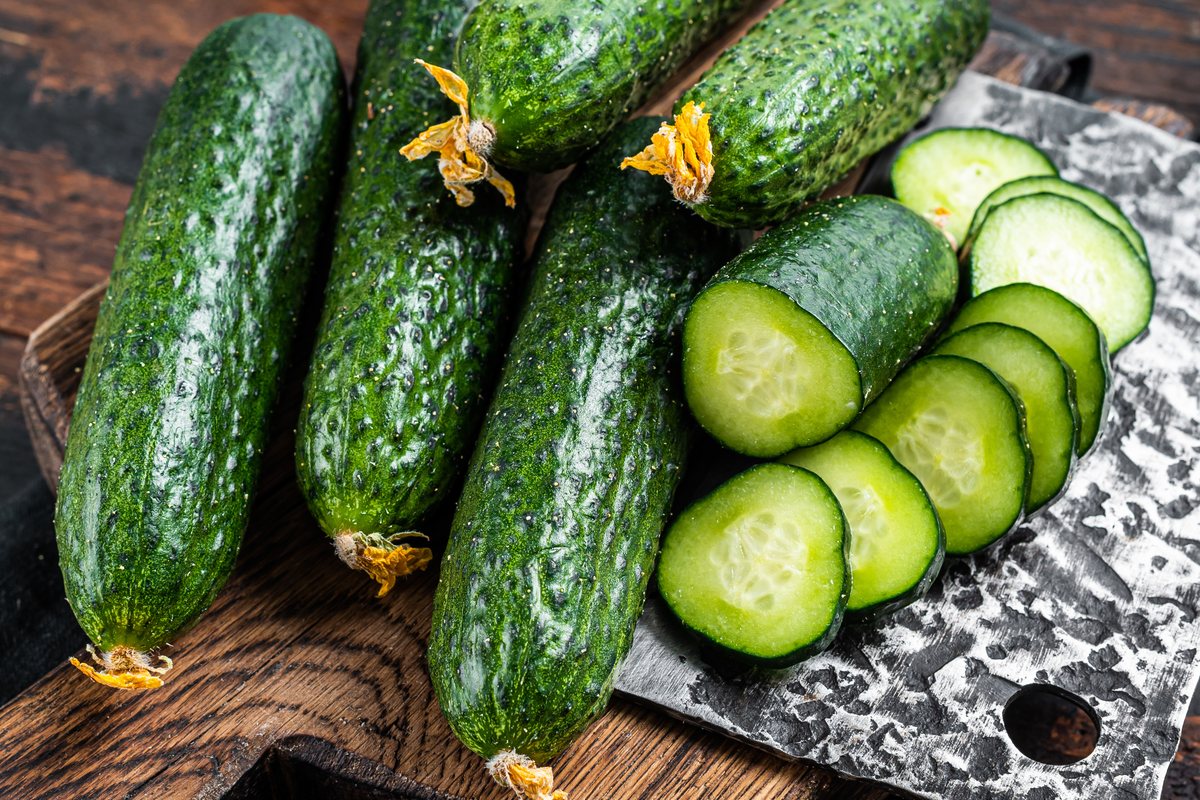
„Cool as a cucumber“ - the inside of a cucumber is actually a few degrees cooler than the surroundings because it evaporates so much water.
The cucumber originates from the foothills of the Himalayas in India, where it has been cultivated for about 3,000 years. It came to Rome via Persia and Greece – Emperor Tiberius is said to have demanded cucumbers daily, which were moved along the sun in mobile planters. It has been widespread in Central Europe since the Middle Ages.
The Spreewald region is famous for its pickled cucumbers; "Spreewald cucumbers" are a protected geographical indication. Modern salad cucumbers are bred to produce hardly any bitter substances and do not require pollination.
To useWhat the cucumber can do for you
Cucumbers consist of approximately 96 percent... Water They contain only about 15 kcal per 100 g. On hot days, they contribute to hydration and provide potassium, vitamin K, and some vitamin C – primarily in the peel. Peeling them results in the loss of a large portion of the already small amount of nutrients.
Lactic acid fermented pickles Pickles (without vinegar, often found in the refrigerated section or homemade) contain live lactic acid bacteria. Pickles from a jar are pasteurized and usually contain sugar; they are a treat, but no longer a fermented food.
Externally, cucumber slices are an old home remedy for swollen eyes and reddened skin: the coolness and the water are soothing. No further effects have been proven – but the coolness feels good.
IngredientsThis is what's in the cucumber
Cucumbers contain water, little sugar, potassium., Vitamin K, Vitamin C, magnesium, and in the peel, carotenoids, flavonoids, and silica. The typical fresh scent comes from aldehydes such as nonadienal.
Cucurbits can Cucurbitacins These contain bitter, heat-stable substances that can cause nausea and diarrhea. Modern varieties are largely free of these; bitter ends or whole bitter cucumbers should not be eaten, especially if grown from your own seeds.
Enhanced combinationsWhat makes the cucumber stronger
The cucumber is pure freshness - it loves dill, yogurt, vinegar and salt.
Cucumber salad with dill and sour cream - the German summer classic.
Tzatziki, Raita, Cacık - cucumber and yogurt cool spicy dishes.
Salt pickles in a 2 to 3 percent brine with dill and garlic.
Wash thoroughly, buy organic, leave the peel on.
Cucumber salad with sesame oil, chili and garlic.
Cucumber slices and mint in a water jug.
What contradicts itselfIt's best to avoid these combinations.
Cucurbitacins - discard bitter pieces.
Salt attracts water - only add it shortly before serving.
Pickled cucumbers are pasteurized - live cultures are only found in lactic acid-cured pickled cucumbers.
Pickled cucumbers are very high in salt.
Ethylene causes cucumbers to quickly turn yellow and soft.
Cucumbers suffer cold damage below 7 °C - but only briefly in the vegetable drawer.
In the kitchenWhere she belongs
- Cucumber saladWith dill, sour cream or vinegar and oil.
- TzatzikiWith yogurt, garlic and olive oil.
- pickled cucumbersLactic acid with dill and mustard seeds.
- Braised cucumbersWith minced meat or dill cream sauce.
- Cold cucumber soupWith yogurt and mint.
- RaitaIndian curry.
- Smashed CucumberChinese with sesame and chili.
- Pickle juiceWith mint and lemon.
- sandwichWith cream cheese - British style.
- gazpachoWith tomato and bell pepper.
As a home remedyCucumber slices for eyes and skin
Cool cucumber topping
- Wash a cucumber and place it in the refrigerator for 30 minutes.
- Cut into slices approximately 5 mm thick.
- Place on closed eyelids or on reddened skin after sun exposure.
- Leave to stand for 10 to 15 minutes, renew when warmed.
Tired, puffy eyes and slightly reddened, irritated skin after sun exposure. The coolness constricts the blood vessels and soothes. It's a cooling effect, not a cure.
As needed. Do not apply to open skin or if blisters are present - a true sunburn with blisters should be cooled, and if feverish or extensive, a doctor should be consulted.
Ayurveda & TCMWhat the old systems say
Ayurveda
The cucumber (TrapushaIn Ayurveda, it is considered sweet, cooling, and heavy – ideal for Pitta and heat, diuretic, and thirst-quenching. For Kapha and Vata doshas, it should be eaten in moderation and with a little pepper or cumin.
Traditional Chinese Medicine
In Traditional Chinese Medicine (TCM), the cucumber (Huang GuaSweet and cooling. It is said to clear heat, quench thirst, promote urination and reduce swelling - the classic summer vegetable in hot weather.
Warning noticesWhen you should be careful
Please note
- Bitter substances: Do not eat bitter cucumbers.
- Salt: Pickled cucumbers are high in salt.
- Histamine: Use pickled and fermented cucumbers with caution if you have histamine intolerance.
- Allergy: Rare, cross-reaction with melon and mugwort possible.
- Blood thinners: Vitamin K in normal amounts is unproblematic.
This page provides information and does not replace medical advice. If symptoms persist, please consult a doctor.
Related to the topicRead on and cook along!
Shop links lead to our product pages; it is indicated there if a partner is involved.
SourcesWhat is this based on?
- Mukherjee PK et al. Phytochemical and therapeutic potential of cucumber. Fitoterapia 2013; 84: 227-236.
- Federal Institute for Risk Assessment: Do not eat bitter zucchini, pumpkins, and cucumbers.
- Marco ML et al. Health benefits of fermented foods: microbiota and beyond. Current Opinion in Biotechnology 2017; 44: 94–102.
- Aune D et al. Fruit and vegetable intake and the risk of cardiovascular disease, total cancer and all-cause mortality - a systematic review and dose-response meta-analysis of prospective studies. International Journal of Epidemiology 2017; 46(3): 1029–1056.
- USDA FoodData Central: Cucumber, with peel, raw.


