
Elderberry (Sambucus nigra)
OriginThe Tree of Frau Holle
The elder tree was considered the dwelling place of good house spirits - one took off one's hat before it.
Black elderberry grows throughout Europe, extending into West Asia and North Africa, preferring nitrogen-rich soils at forest edges, stream banks, farmyards, and along roadsides. Almost every farm used to have its own elderberry bush.
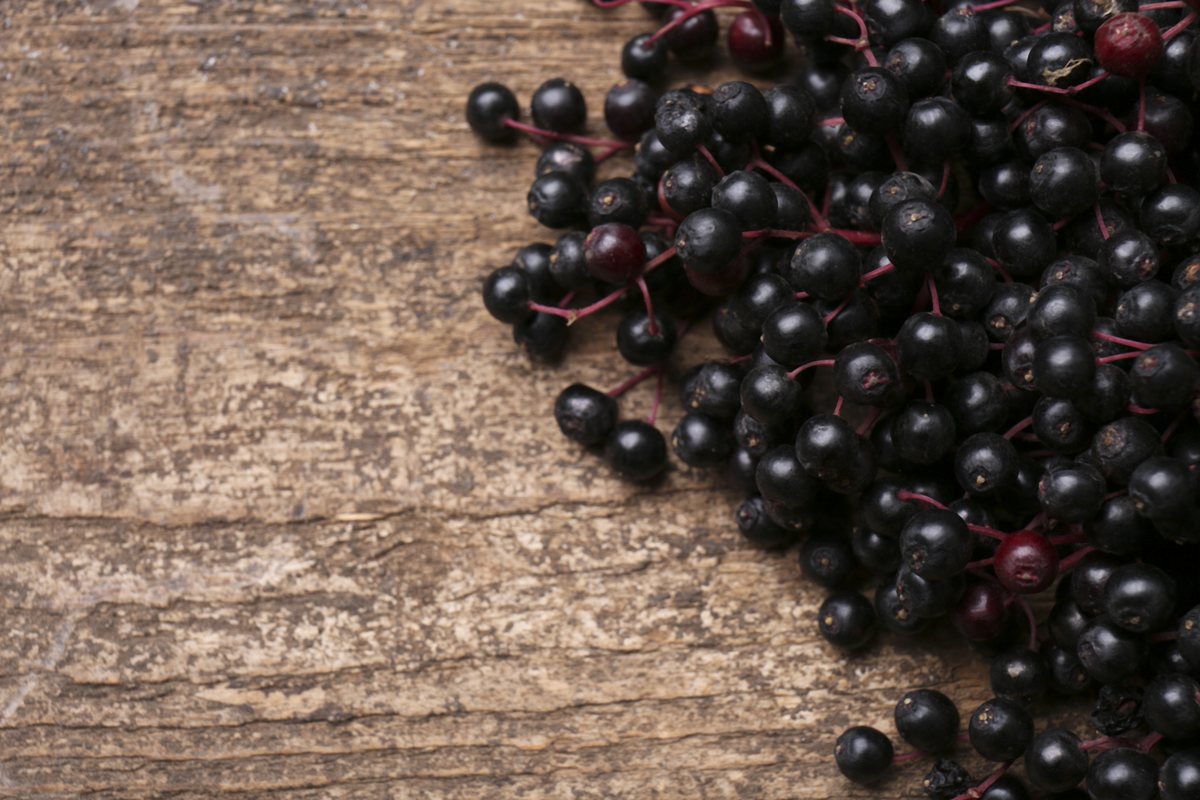
Flowers and berries are two different things: The white flower umbels in May and June are used for tea, syrup, and elderflower fritters. The berries ripen from August onwards and hang in heavy, nodding clusters. It is dangerous to confuse them with the... Dwarf elderberry (Sambucus ebulusIt does not grow as a shrub, but as a herbaceous perennial about one meter tall, smells unpleasant, and bears its berries in upright Umbels. It is considered poisonous and is not eaten.
To useWhat elderberries can do for you
According to the USDA, 100g of raw elderberries provide approximately 73 kcal, about 7g of carbohydrates. Dietary fiber, approximately 36 mg Vitamin C and about 280 mg of potassium. Above all, they are one of the richest domestic sources of Anthocyanins - blue-violet dyes, mainly cyanidin glycosides, which have a strong antioxidant effect in the laboratory.
Elderberry juice is known as a home remedy for Colds and flu. A 2019 meta-analysis summarized four small studies with a total of 180 participants and found shorter and milder symptoms with elderberry extract. However, a more thorough systematic review from 2021 assessed the evidence as unsureThe studies were small, often supported by manufacturers, and used standardized extracts, not household juice.
To be honest: Hot elderberry juice is a warming, vitamin-rich drink that's soothing during cold and flu season. Whether it noticeably shortens a cold is uncertain. Unlike elderflowers, there's no recognized medicinal monograph for elderberries.
IngredientsThis is what's in elderberries
Elderberries contain anthocyanins (especially cyanidin-3-sambubioside and cyanidin-3-glucoside), flavonols such as rutin and quercetin, phenolic acids, fruit acids, sugars, fiber, vitamin C, provitamin A, B vitamins, potassium and some iron.
Unripe berries, stems, leaves and seeds contain the cyanogenic glycoside Sambunigrin and other irritating substances. The concentration is lower in ripe berries, but not zero. Heat above 80°C largely destroys these substances – that's why elderberries are always cooked, steamed, or hot-juiced.
Enhanced combinationsWhat makes elderberry stronger
Elderberry tastes earthy and tart when cooked - acidity, sweetness and spices make it well-rounded.
Enhances the aroma, preserves the color.
For hot elderberry punch.
North German elderberry soup.
Anthocyanins in a spoonable form.
Dark berries in a mix.
First add it to the cooled juice.
What contradicts itselfIt's best to avoid these combinations.
Nausea, vomiting, diarrhea.
Anything with sambunigrin – always sort it out.
It led to poisonings in the USA.
Upright umbels, herbaceous perennial - poisonous.
Only juice or boil hot.
It does not replace treatment.
In the kitchenWhere she belongs
- Elderberry juiceHot-juiced, pure or diluted.
- Elderberry soupWith apples and semolina dumplings.
- Elderberry jellyWith apple juice for binding.
- Elderberry pureeWith pancakes or semolina pudding.
- Elderberry punchHot with cinnamon and cloves.
- Elderberry chutneyOnions go well with game and cheese.
- Elderflower sorbetMade from boiled juice.
- Red fruit jellyWith elderberries and blackberries.
- Elderberry vinegarMade from heated juice.
- Elderflower balsamic sauceCooked down into red cabbage.
As a home remedyHot elderberry juice during cold season
Hot elderberry juice
- Boil 500g of ripe elderberries, stripped of their stems, with 250ml of water in a pot.
- Let it boil vigorously for at least 10 minutes, crushing the berries in the process.
- Strain through a fine sieve or cloth and reheat to taste with apple juice, a cinnamon stick and some ginger.
- Let it cool slightly, sweeten with a teaspoon of honey if desired, and drink warm in small sips.
As a warming drink at the onset of a cold – it provides fluids, warmth, vitamin C, and anthocyanins. Whether it shortens the duration of the illness is not scientifically proven; however, it feels good and, when boiled, is harmless.
1 to 2 cups a day. No honey for children under one year old. Consult a doctor if fever lasts more than three days, if breathing difficulties occur, or if the child is very young.
Ayurveda & TCMWhat the old systems say
Ayurveda
European elderberry is not described in classical Ayurveda. According to current understanding, cooked berries are considered tart, slightly warming, and diaphoretic – balancing for Kapha, and for Vata when combined with warming spices.
Traditional Chinese Medicine
In Traditional Chinese Medicine (TCM), an Asian elderberry is primarily used (Sambucus williamsii) used, specifically the branches, not the berries. Elderberries are not a traditional medicine there.
Warning noticesWhen you should be careful
Please note
- Never raw: Raw or unripe berries can cause nausea, vomiting and diarrhea - always heat above 80°C.
- Stems and leaves: Do not press or boil; in California, juice pressed in this way led to poisoning (CDC 1984).
- Dwarf elderberry: Herbaceous perennial with upright umbels - poisonous, do not harvest.
- A cold: Elderberry is not a substitute for medical treatment, especially for children, the elderly, and those with high fever.
- Pregnancy: Boiled juice in normal quantities is considered safe; data is lacking on extracts.
- Autoimmune diseases: If taking immunosuppressants, consult your doctor before using extracts.
This page provides information and does not replace medical advice. If symptoms persist, please consult a doctor.
Related to the topicRead on and cook along!
Shop links lead to our product pages; it is indicated there if a partner is involved.
SourcesWhat is this based on?
- Hawkins J, Baker C, Cherry L, Dunne E. Black elderberry (Sambucus nigra) supplementation effectively treats upper respiratory symptoms: a meta-analysis of randomized, controlled clinical trials. Complementary Therapies in Medicine 2019; 42: 361–365.
- Wieland LS, Piechotta V, Feinberg T et al. Elderberry for prevention and treatment of viral respiratory illnesses: a systematic review. BMC Complementary Medicine and Therapies 2021; 21:112.
- Centers for Disease Control (CDC). Poisoning from elderberry juice - California. MMWR 1984; 33(13): 173–174.
- Federal Centre for Nutrition (BZfE): Elderberry harvest time. 2024.
- Consumer Advice Center Bavaria: Why shouldn't you eat elderberries raw?
- USDA FoodData Central: Elderberries, raw.


