
Kohlrabi (Brassica oleracea var. gongylodes)
OriginGerman vegetables
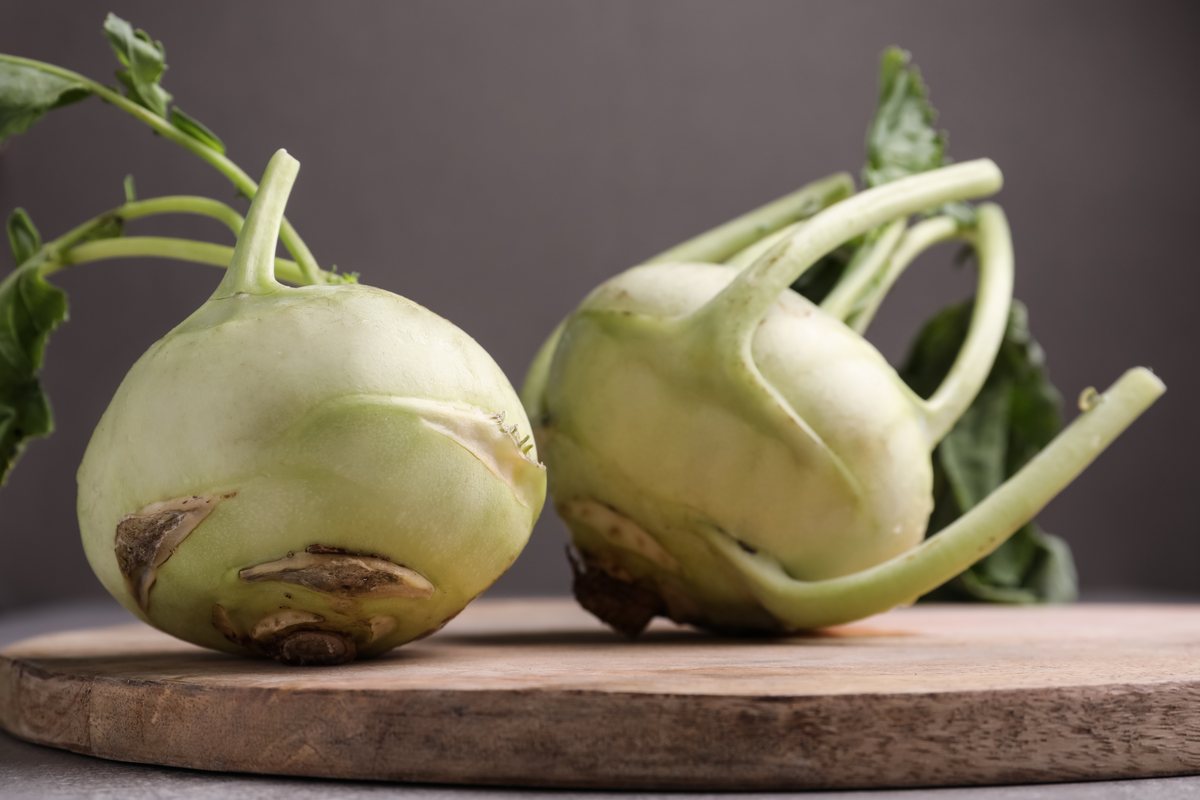
In English, Italian and Japanese it is simply called "Kohlrabi" - a vegetable that Germany has exported to the world.
Kohlrabi is a cultivated variety of wild cabbage in which the stem thickens into a bulbous shape – botanically speaking, the bulb is therefore a stem, not a root. It was probably cultivated in Italy or Central Europe in the 16th century and remains more popular in Germany than almost anywhere else.
Germany is one of the largest producers and consumers; white (actually light green) and blue varieties taste the same inside. Early kohlrabi from greenhouses is available from March, field-grown kohlrabi from May to October, and thick storage varieties until winter.
To useWhat kohlrabi does for you
Kohlrabi provides approximately 60 mg Vitamin C Per 100g – a medium-sized tuber covers the daily requirement – plus potassium, fiber, vitamin B6 and folate, at only about 27 kcal. leaves They contain many times the amount of beta-carotene, calcium and vitamin K.
As the mildest type of cabbage, it is also well-tolerated by people who experience bloating with other types of cabbage and is suitable for weaning. Like all cruciferous vegetables, it contains Glucosinolate, although less than broccoli or Brussels sprouts.
When eaten raw, the vitamin C is fully preserved - kohlrabi sticks are a crunchy snack for children and adults.
IngredientsThis is what's in kohlrabi
The tuber contains water, sugar, fiber, Vitamin C, Potassium, vitamin B6, folate, magnesium, and glucosinolates. The leaves also contain plenty of beta-carotene, calcium, iron, and vitamin K.
Like other vegetables, kohlrabi - especially from greenhouses - can contain moderate amounts of nitrate.
Enhanced combinationsWhat makes kohlrabi stronger
Kohlrabi is mild and sweet - it likes butter, nutmeg, herbs and crunch.
Kohlrabi sticks with dip or finely grated as carpaccio - maximum vitamin C.
Kohlrabi vegetables in a light sauce with nutmeg.
Steam the tender leaves like spinach or finely chop them and add them to vegetables.
Fresh herbs for the finish.
Briefly stir-fried in a wok.
Kohlrabi and apple salad, fresh and crisp.
What contradicts itselfIt's best to avoid these combinations.
Very large tubers become woody - choose medium-sized ones.
They are the most nutrient-rich part.
Vitamin C and bite are lost.
The leaves absorb water - cut them off and use them separately.
Prepare the nitrate porridge fresh.
Only relevant in cases of extreme quantities.
In the kitchenWhere he belongs
- Kohlrabi vegetableIn a light sauce with nutmeg.
- Kohlrabi carpaccioThinly coated with lemon and olive oil.
- Kohlrabi sticksWith hummus or quark dip.
- Kohlrabi schnitzelSlices breaded and fried.
- Kohlrabi soupWith potatoes and herbs.
- Raw vegetable saladWith apple, carrot and lemon.
- Stuffed KohlrabiWith minced meat or lentils.
- Kohlrabi friesBaked in the oven.
- Stir-fried vegetablesWith sesame and ginger.
- Kohlrabi leavesSteamed like spinach.
As a home remedyKohlrabi as a light, easily digestible food
Steamed kohlrabi with herbs
- Peel a young kohlrabi and cut it into sticks, finely chop the tender leaves.
- Steam in a little water with a piece of butter, covered, for 6 to 8 minutes.
- Add the chopped leaves for the last 2 minutes of cooking.
- Season with nutmeg, salt and fresh parsley.
A light, easily digestible vegetable side dish for sensitive digestion, after infections, or for children. Kohlrabi is the mildest of the cabbages and causes significantly less bloating than its relatives.
As a side dish, as often as it feels good.
Ayurveda & TCMWhat the old systems say
Ayurveda
Kohlrabi is not described in classical Ayurveda. Today it is classified as sweet, light and cooling – cooked, it is good for Pitta and Vata.
Traditional Chinese Medicine
In Traditional Chinese Medicine (TCM) kohlrabi (Pie LanSweet, spicy, and cooling. It is said to clear heat, loosen phlegm, strengthen the digestive system, and reduce swelling.
Warning noticesWhen you should be careful
Please note
- Flatulence: mildest cabbage, but increase slowly if sensitive.
- Blood thinners: The leaves contain a lot of vitamin K.
- Nitrate: Prepare baby food fresh.
- Allergy: Rare, cross-reaction with other cruciferous plants.
- Woody: Avoid very large tubers.
This page provides information and does not replace medical advice. If symptoms persist, please consult a doctor.
Related to the topicRead on and cook along!
Shop links lead to our product pages; it is indicated there if a partner is involved.
SourcesWhat is this based on?
- Higdon JV et al. Cruciferous vegetables and human cancer risk: epidemiological evidence and mechanistic basis. Pharmacological Research 2007; 55(3): 224–236.
- Traka M, Mithen R. Glucosinolates, isothiocyanates and human health. Phytochemistry Reviews 2009; 8:269–282.
- Aune D et al. Fruit and vegetable intake and the risk of cardiovascular disease, total cancer and all-cause mortality - a systematic review and dose-response meta-analysis of prospective studies. International Journal of Epidemiology 2017; 46(3): 1029–1056.
- Federal Institute for Risk Assessment: Nitrate in food - questions and answers.
- USDA FoodData Central: Kohlrabi, raw.


