
OriginThe bee herb of the monasteries
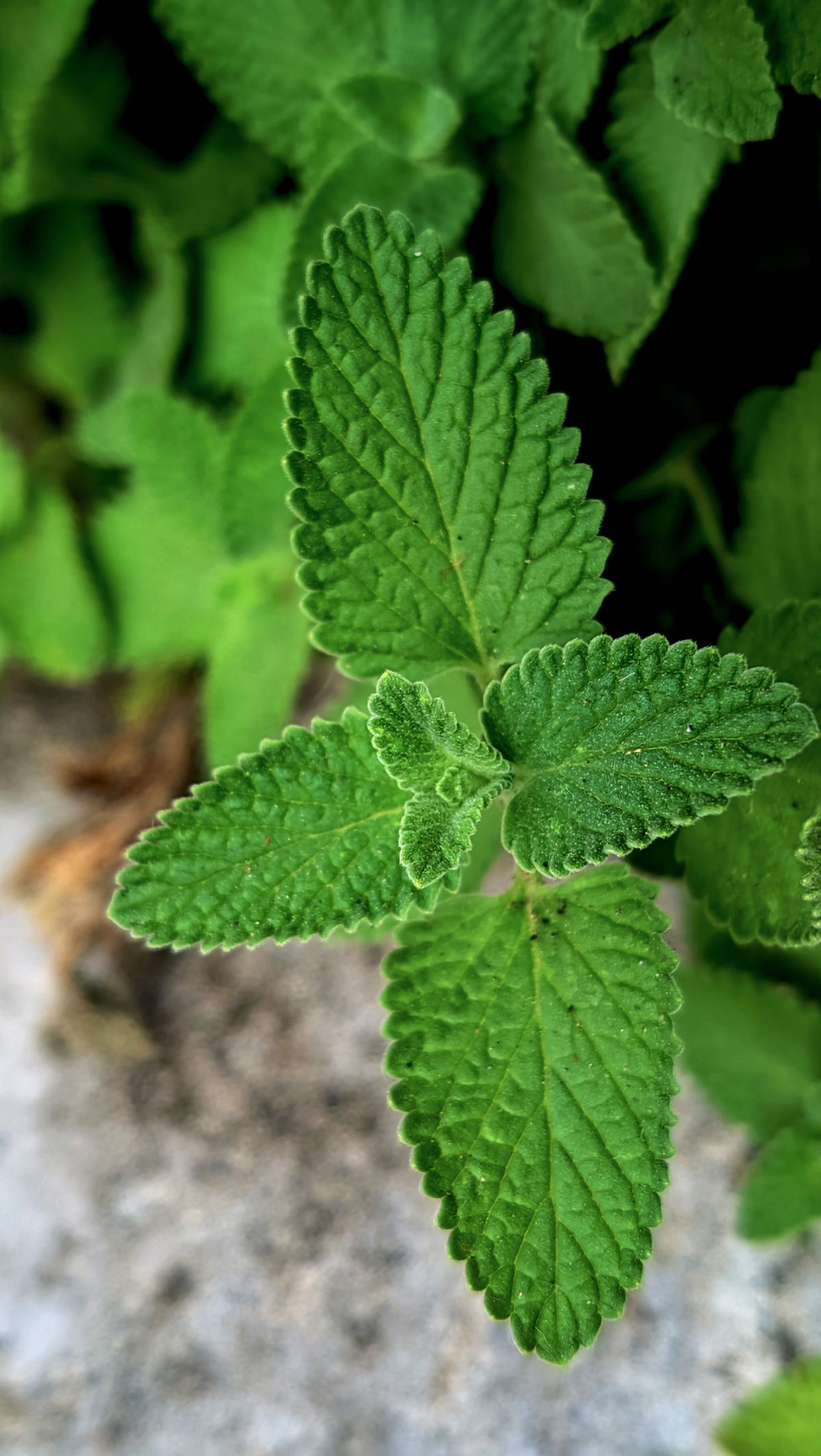
Melissa In Greek, it simply means honeybee - and indeed, for centuries beekeepers have rubbed new beehives with lemon balm to ensure the swarm stays.
Lemon balm originates from the eastern Mediterranean and the Near East, arriving in Central Europe with the Romans and later via monasteries. It is mentioned in Charlemagne's Capitulary, by Hildegard von Bingen, and in every monastery garden – and from there it has naturalized so thoroughly that it can now be found growing along fences and embankments throughout Europe. In the garden, it is one of the easiest perennials to care for: once planted, it returns every year and spreads attractively.
Their most famous product is the Carmelite spirit, an alcoholic extract of lemon balm, lemon peel, nutmeg, coriander, cloves and cinnamon, which the Carmelite nuns in Paris produced from 1611 onwards. It was sold as a universal remedy for nervousness, headaches, stomach problems and states of weakness and is still available in pharmacies today - one of the oldest continuously produced medicines in Europe.
There is an important distinction to make when shopping. Lemon balm (Melissa officinalisIt is a medicinal and culinary plant. Catnip and the Lemon balm basil They smell similar, but they are different plants. And be careful with tea: many "lemon balm" blends in the supermarket contain mostly flavorings or lemongrass, because real lemon balm leaves quickly lose their aroma when dried and stored. Anyone who wants to use it properly should plant it in the garden or on the balcony – it costs nothing and grows on its own.
To useWhat lemon balm does for you
Lemon balm is listed by the European Medicines Agency for two internal uses: in slight nervous tension with the aim of supporting sleep onset, and in the case of mild gastrointestinal discomfort including flatulence. Commission E has given it a correspondingly positive assessment. Its special feature is its dual role: it acts simultaneously on the nerves and the abdomen – and because these two are closely linked in so many people, it is often a more suitable plant than a purely calming or purely stomachic herb.
For the nervous system, there's more than just tradition: In smaller controlled studies, standardized lemon balm extracts showed an improvement in tension, nervousness, and sleep quality, especially in combination with valerian. The studies are small and not all independent, so no need to make sweeping statements—but they point in the same direction. The most likely mechanism: Rosmarinic acid inhibits an enzyme that breaks down the calming neurotransmitter GABA, thus allowing more of it to remain available.
The third application is known to very few, and it has the best data of all: Lemon balm extract cream for cold sores. In several placebo-controlled studies, a cream containing one percent lemon balm leaf extract shortened the healing time and relieved burning, tightness, and itching—best when applied at the first tingling sensation, before the blister becomes visible. This is likely due to tannins and rosmarinic acid, which prevent the virus from attaching to the cell. For a culinary herb, this is an unusually substantial finding.
IngredientsThat's what's in the leaf
The lemon scent comes from the essential oil, which, however, is present in very small quantities: usually only 0.05 to 0.3 percent of the dried drug. This is exceptionally little – by comparison, peppermint contains ten to thirty times as much. Its main components are Citral (the mixture of Geranial and Neral), Citronellal and caryophyllene oxide. Because it contains so little oil and is also very volatile, dried lemon balm loses its aroma faster than almost any other herb – after half a year in a jar, it smells only like hay.
The part that actually determines effectiveness is therefore the water-soluble components: Rosmarinic acid (up to six percent) and other hydroxycinnamic acid derivatives, along with flavonoids and tannins. Rosmarinic acid is antioxidant, anti-inflammatory, and inhibits the enzyme GABA transaminase – this is the best explanation for its soothing effect. The tannins and polyphenols are what prevent the viruses from attaching to cells in cases of cold sores.
In practical terms, this means two things. First: Fresh leaf is clearly superior to dried leaf. - In summer, use potted tea leaves on the balcony; in winter, opt for pharmacy-quality tea with listed essential oil content. Secondly: Steep the tea covered to prevent the small amount of essential oil from evaporating, and be generous with the amount – three to four fresh leaves per cup are insufficient; a small handful is ideal.
Enhanced combinationsWhat makes lemon balm stronger
A mild herb that thrives on good company and generous dosage.
The best-researched combination - lemon balm makes it more pleasant in taste and complements it in effect.
For the nervous stomach that rebels in the evening: relaxing from three sides.
For daytime tension relief without causing drowsiness.
A small handful of fresh leaves or two heaped teaspoons of dried balm - lemon balm is mild and can handle large quantities.
Don't wait until the bubble is visible - the early moment is crucial.
Finely sliced over strawberries, melon, quark or in lemonade - its culinary side is underestimated.
What contradicts itselfIt's best to avoid these combinations.
Lemon balm loses its aroma faster than almost any other herb - fresh or freshly bought is significantly better.
The already scarce essential oil escapes with the steam - put the lid on.
Like all lemony herbs, it immediately loses its character when cooked - add only after the stove.
Many supermarket lemon balm teas rely on flavorings and lemongrass instead of lemon balm leaves.
In the laboratory, lemon balm ingredients inhibit the binding of TSH - not clinically proven, but a reason for caution.
Lemon balm also has a mild effect, and its benefits come more from regularity than from a single strong cup.
To which courtWhere she belongs
- Lemon balm teaA small handful of fresh leaves or two teaspoons of dried leaves, covered for ten minutes.
- Evening teaValerian and hops - lemon balm makes the mixture significantly more drinkable.
- Belly teaWith chamomile and fennel for nervous stomach and bloating.
- Lemon balm lemonadeSteep the leaves in cold water with lemon and honey - the best summer drink from the garden.
- Herb butterFinely chopped with lemon zest in soft butter - for fish and chicken.
- fruit saladOver strawberries, melon and peach - freshly cut, just before serving.
- Lemon balm pestoWith almonds, olive oil and Parmesan cheese - unusual, but surprisingly good.
- Lemon balm sugarLeave the leaves to steep in sugar in a glass – for pastries and desserts.
- Carmelite spiritThe historical alcoholic extract - still available in pharmacies today.
- Herpes creamReady-made preparation with one percent lemon balm leaf extract; apply at the first tingling sensation.
As a home remedyThe first tingle
Lemon balm compress for cold sores
- At the first tingling sensation - before a bubble is visible - pour 100 ml of boiling water over two heaped teaspoons of dried lemon balm leaves.
- Cover and let steep for ten minutes, then allow to cool completely; the extract should be deliberately concentrated.
- Soak a cotton pad in the solution and place it on the affected area for five to ten minutes. Repeat several times a day, at least four to five times.
- More practical and better researched is the ready-made cream with one percent lemon balm leaf extract from the pharmacy - it lasts longer and can be used on the go.
For cold sores, especially in the early stages. It's worth mentioning that the studies are for the standardized cream, not the homemade extract. Both contain tannins and rosmarinic acid, which inhibit the viruses from attaching to skin cells. Timing is crucial: those who start treatment at the first tingling sensation have significantly better chances than those who wait until a blister has formed.
Apply four to five times daily for the entire duration of the outbreak, even if it starts to improve. Do not apply to open, weeping sores around the eyes. Frequently recurring herpes, outbreaks in the eye, cold sores in people with weakened immune systems, or spread beyond the lip should be evaluated by a doctor – effective medications are available.
Ayurveda & TCMWhat the old systems say
Ayurveda
Lemon balm is not a classic ingredient in Ayurveda, but it is frequently used in modern practice and is classified as sweet-sour, cooling and light: Pitta and Vata soothing, in cases of severe Kapha Restrained. This is perfectly suited for irritability, nervous tension, and a stomach that reacts to stress. A classification based on principle – the Ayurvedic equivalents with similar effects would be Brahmi and Jatamansi.
Traditional Chinese Medicine
Lemon balm is not listed in the Chinese Materia Medica. Based on its characteristics—cool, aromatic, slightly sour—it would be a remedy that calms rising liver yang and moves stagnant liver qi, thus belonging to the vicinity of Bo He (Mint) Mei Gui Hua (Rosebud). Both are used there for irritability, chest pressure, and stress-related digestive problems – the same combination of nerves and abdomen.
Warning noticesWhen you should be careful
Please note
- Thyroid: Lemon balm ingredients inhibit TSH binding in laboratory tests; use with caution in cases of hyperthyroidism or hormone therapy.
- Fatigue: In higher doses, lemon balm can cause drowsiness - test the reaction on a free evening first.
- Quality: Many commercially available teas contain mostly flavorings; real lemon balm leaves are needed for the desired effect.
- Herpes: The studies concern the standardized cream, not the homemade extract.
- Pregnancy and breastfeeding: As a tea in the usual quantity, it is unproblematic; avoid high-dose extracts.
- No replacement: Frequently recurring herpes, infections in the eye area, or outbreaks in people with weakened immune systems should be treated by a doctor.
This page provides information and does not replace medical advice. If symptoms persist, please consult a doctor.
Related to the topicRead on and cook along!
Shop links lead to our product pages; it is indicated there if a partner is involved.
SourcesWhat is this based on?
- EMA/HMPC: European Union herbal monograph on Melissa officinalis L., folium - traditional use for mild nervous tension and mild gastrointestinal discomfort.
- Commission E: Monograph Melissae folium (melissa leaves), Federal Gazette 1984.
- Koytchev R, Alken RG, Dundarov S. Balm mint extract (Lo-701) for topical treatment of recurring herpes labialis. Phytomedicine 1999; 6(4): 225–230.
- Cases J et al. Pilot trial of Melissa officinalis L. leaf extract in the treatment of volunteers suffering from mild-to-moderate anxiety disorders and sleep disturbances. Mediterranean Journal of Nutrition and Metabolism 2011; 4(3): 211–218.
- Blaschek W (ed.): Wichtl - Herbal drugs and phytopharmaceuticals. 6th edition 2016, monograph Melissae folium.


