
Papaya (Carica papaya)
OriginThe "tree lemur" from Central America
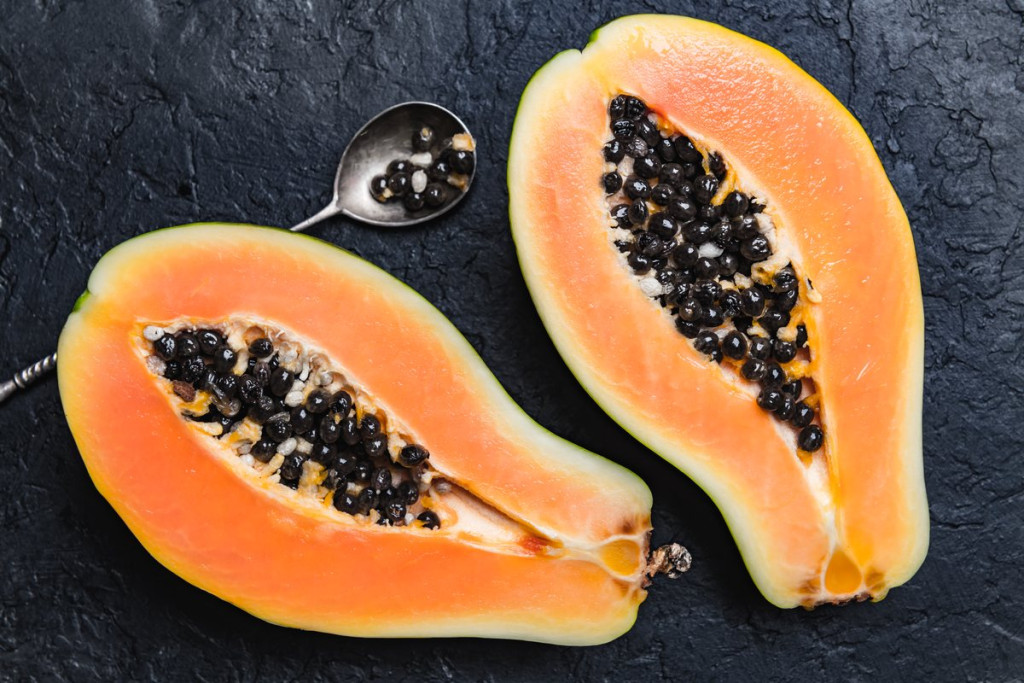
Christopher Columbus is said to have called the papaya the "fruit of the angels".
The papaya originates from southern Mexico and Central America. Spanish and Portuguese sailors brought it to the Philippines, India, and Africa in the 16th century, where it quickly became naturalized. The papaya tree is actually a huge, woody perennial: it grows quickly, bears fruit after just one year, and produces its fruit directly on the trunk.
Today, India is the largest producer, followed by countries such as Brazil, Mexico, and Indonesia. The small, pear-shaped Solo papayas from Brazil and the large, red-fleshed Formosa and Maradol varieties from Latin America are the most common types imported to Germany. Because the fruit is delicate, it is often flown in.
To useWhat Papaya Does for You
100g of ripe papaya provides only about 43 kcal, but about 60 mg of vitamin D. Vitamin C A large 150g slice covers almost the entire daily requirement. It also contains folate, potassium, and especially... CarotenoidsBeta-cryptoxanthin and beta-carotene, from which the body produces vitamin A, are abundant in red-fleshed varieties. Lycopene, the red pigment of the tomato.
A study from Costa Rica showed that the body absorbs beta-carotene and lycopene from papaya significantly better than from carrots or tomatoes because the pigments in the fruit pulp are in a readily soluble form. A little fat in the meal further improves absorption.
The enzyme Papain It breaks down proteins; it is found primarily in the milky sap of the unripe fruit and is used industrially as a meat tenderizer. Ripe papaya contains very little of it. It's easy to imagine that papaya noticeably aids digestion after a heavy meal, but this has hardly been studied. Papaya is therefore a valuable, easily digestible fruit – but not a digestive aid in the medical sense.
IngredientsThis is what's in papaya
Ripe papaya contains water, glucose and fructose, dietary fiber (especially pectin), vitamin C, folate, potassium, magnesium, the carotenoids beta-cryptoxanthin, beta-carotene, lycopene and lutein, as well as polyphenols and, in small amounts, the enzyme papain.
The black seeds contain benzyl isothiocyanate, a pungent mustard oil compound similar to that found in cress, as well as oil and protein. The milky sap of the green fruit is rich in papain and chymopapain.
Enhanced combinationsWhat makes papaya stronger
Papaya only needs a splash of acid - and some fat - so that the carotenoids can be absorbed.
It enhances the aroma, the typical tropical kick.
Carotenoids are fat-soluble.
Fiber and vitamin C.
Vitamin C helps with absorption.
For fruit salads and bowls.
Like in Mexican markets.
What contradicts itselfIt's best to avoid these combinations.
The milky sap can promote labor.
Cross-reactivity is possible.
Just a spicy pinch.
Papain breaks down proteins, making them bitter.
Green fruits hardly ripen after being picked.
Avoid papain extracts.
In the kitchenWhere she belongs
- pure papayaHalved, eaten with a spoon and lime.
- Som TamThai green papaya salad.
- fruit saladWith mango and pineapple.
- SmoothieWith banana and yogurt.
- breakfast bowlWith oats and coconut.
- Papaya salsaWith fish or beans.
- Green papaya in curryCooked as a vegetable.
- marinating meatWith green papaya as a tenderizer.
- Papaya seedsDried as a pepper substitute.
- SorbetMade from ripe fruit pulp.
As a home remedyPapaya breakfast for the stomach
Papaya breakfast
- Peel, seed, and dice half a ripe papaya.
- Serve with 3 tablespoons of natural yogurt and a squeeze of lime juice.
- If desired, sprinkle a tablespoon of rolled oats or chopped nuts on top.
- Eat immediately so that the papain doesn't make the yogurt bitter.
A light, easily digestible breakfast after heavy meals or for those with a sensitive stomach. It provides vitamin C, carotenoids, and fiber; no specific health benefits have been proven.
Half a papaya a day is a good amount. If you have a latex allergy, eat a small sample first or consult a doctor.
Ayurveda & TCMWhat the old systems say
Ayurveda
In Ayurveda, ripe papaya is considered (ErandakarkatatiIt is described as warm, sweet, and easily digestible. It is said to stimulate the digestive fire, balances Vata and Kapha, and should only be eaten in moderation by Pitta dominance.
Traditional Chinese Medicine
In Traditional Chinese Medicine (TCM) papaya (Fan Mu GuaIt is described as neutral and sweet. It is said to strengthen the stomach, relieve food congestion, and moisten the digestive juices.
Warning noticesWhen you should be careful
Please note
- Pregnancy: Avoid unripe, green papaya, its milky sap, and papaya products – in animal studies, the latex triggered uterine contractions. Ripe papaya in normal quantities is considered safe.
- Latex allergy: Papaya is part of the latex fruit syndrome, like banana, avocado and kiwi - take tingling in the mouth or swelling seriously.
- Cores: They contain pungent mustard oils - just a pinch; larger quantities can irritate the stomach and intestines.
- Blood thinners: High doses of papain or papaya extracts may enhance the effects of warfarin - consult your doctor beforehand.
- Milky sap: The latex of unripe fruit can irritate the skin - wear gloves when peeling green papaya.
This page provides information and does not replace medical advice. If symptoms persist, please consult a doctor.
Related to the topicRead on and cook along!
Shop links lead to our product pages; it is indicated there if a partner is involved.
SourcesWhat is this based on?
- Schweiggert RM et al. Carotenoids are more bioavailable from papaya than from tomato and carrot in humans: a randomized cross-over study. British Journal of Nutrition 2014; 111(3): 490–498.
- Adebiyi A et al. Papaya (Carica papaya) consumption is unsafe in pregnancy: fact or fable? Scientific evaluation of a common belief in some parts of Asia using a rat model. British Journal of Nutrition 2002; 88(2): 199–203.
- Wagner S, Breiteneder H. The latex-fruit syndrome. Biochemical Society Transactions 2002; 30(6): 935–940.
- USDA FoodData Central: Papayas, raw.


