OriginThe potato under the pine tree
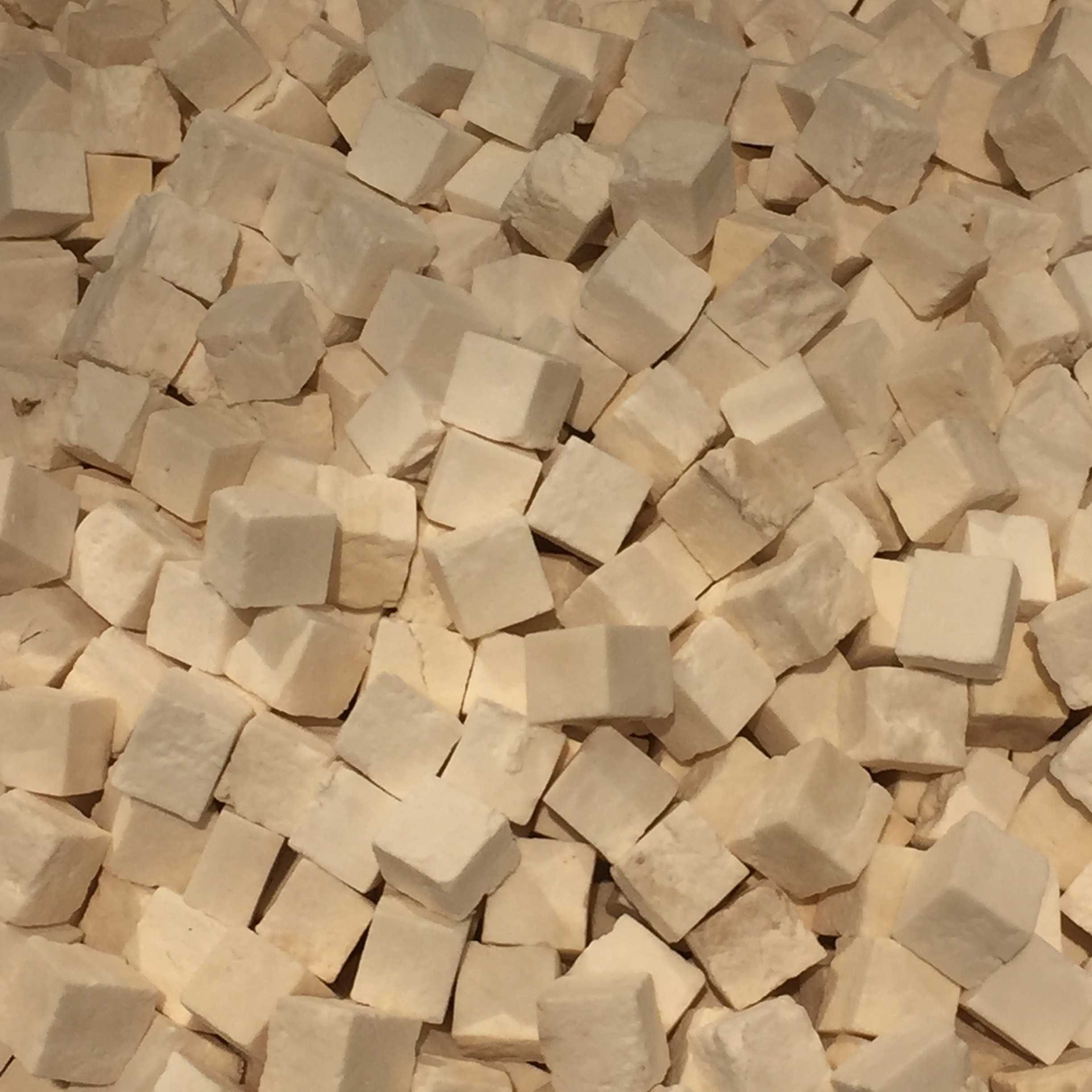
Poria is not picked, but dug up - its sclerotium sits up to half a meter deep on pine roots.
Wolfiporia extensa - long as Poria cocos The polypore listed here is a fungus whose fruiting body is inconspicuous and rare. The economically and medically significant organ is the sclerotium: a bulbous, dark brown and wrinkled exterior, white to pinkish interior, which grows on the roots of pine trees. It can reach thirty centimeters in diameter and weigh several kilograms, and is often located half a meter deep in the soil.
Traditionally, harvesting Poria was a search: collectors tapped the ground in pine stands and poked at suspicious spots. Today, Poria is cultivated on a large scale by inoculating felled pine logs with the fungus and burying them; after one to two years, the sclerotia are harvested. China is by far the largest producer, with cultivation areas primarily in Yunnan, Hubei, and Anhui.
In Chinese medicine Fu Ling One of the most frequently prescribed drugs of all – analyses of classic formula collections show it in an exceptionally large number of formulas. The reason lies less in a strong individual effect than in its role as a harmonizing, well-tolerated base drug that complements other components without dominating itself. In Europe, however, it is practically unknown and hardly available outside of TCM pharmacies.
To useA basic drug – and a major research gap
There is no EMA monograph for Poria and no Commission E assessment. It is official in the Chinese Pharmacopoeia. Its attributed effects are mild and broad: diuretic, digestive, and calming. In the classification of Chinese medicine, it is a "bland cleansing" drug – bland in taste and effect, which is not meant pejoratively but rather describes a distinct category of action.
Western research is limited. There are cell studies and animal models of triterpenes—especially pachymic acids—and polysaccharides, with findings of anti-inflammatory, diuretic, and immunomodulatory effects. Controlled clinical trials in humans on the single drug are practically nonexistent; Chinese clinical literature primarily concerns formulas with multiple components and is methodologically difficult to evaluate.
This makes Poria an interesting case: a drug that has been used millions of times in one of the world's largest medical systems for two thousand years, and about which we know almost nothing by Western standards. This is neither an argument for nor against its effectiveness—it is simply a gap in our knowledge.
What can be said is that Poria is considered very well tolerated. In Chinese medicine, it is also used in weakened individuals and over extended periods, and no serious side effects are known. However, as a diuretic, the same precautions apply as for all diuretics: it should not be used in cases of kidney or heart failure with edema, and not without adequate fluid intake.
IngredientsTriterpenes, polysaccharides and four commercial grades
The sclerotium consists of approximately ninety percent polysaccharides, primarily a beta-glucan called pachyman, as well as lanostane-type triterpenes—pachymic acids and related compounds. The triterpenes are considered the more pharmacologically active components; pachyman itself is poorly water-soluble and shows little activity in studies, which is why chemically modified derivatives are used in research.
The trade recognizes several qualities, corresponding to different layers of the sclerotium. Fu Ling Pi The dark outer shell is considered to have particularly detoxifying properties. Bai Fu Ling The white interior is the most common form. Chi Fu Ling is the reddish layer in between. And Fu Shen This is the piece with a pine root embedded in it – it is traditionally associated with the heart and used for restlessness and sleep disorders. These distinctions are rarely declared in European trade.
Poria has an almost neutral taste with a slightly mealy, earthy note. In China, it is therefore also used as a foodstuff: Poria powder is incorporated into cakes and cookies, most famously in Peking cakes. Fuling Jiabing, a traditional sweet made from thin Poria wafers with a nut filling.
As with all TCM herbs, the safest choice for these preparations is products from certified sources and of pharmacopoeial quality. Sclerotia grow in the soil and can absorb heavy metals and residues; certificates of analysis are a useful criterion.
Enhanced combinationsHow Poria is used
In China, it almost never stands alone. Its role is that of a compatible basic building block in a mixture.
It is a component of numerous classic formulas, such as Si Jun Zi Tang to strengthen and Wu Ling San For water drainage. It is rarely used alone.
Poria powder can be incorporated into baked goods - the Beijing Fuling waffles are the best-known application.
In China, a common everyday preparation method is to cook sclerotium slices in the soup.
The variant with an embedded pine root is traditionally used for inner restlessness and sleep disorders.
Sclerotia grow in the soil. Tested products with a certificate of analysis are the safe choice.
As with all diuretics, the following applies: without sufficient fluids, there is no elimination.
What contradicts itselfIt's best to avoid these combinations.
Do not use in cases of edema due to renal insufficiency or impaired renal function.
There are practically no controlled human studies. Anyone offered Poria as a proven remedy for specific ailments should ask what this claim is based on.
In Chinese medicine, it is prescribed as part of a diagnosis and in combination with other treatments. Its usefulness as a standalone treatment without this framework is difficult to justify.
An additive effect is possible. Consult your doctor if you are taking appropriate medication.
Soil-borne sclerotia can absorb heavy metals.
Limit the duration and keep an eye on your electrolyte balance.
ApplicationApplication and cuisine
- decoctionBoil sclerotium discs for twenty to thirty minutes - the standard preparation.
- In formulationsAlmost always part of a mixture, rarely alone.
- Chicken soupSlices cooked in the broth - the everyday way in China.
- Fuling JiabingPeking waffles made from Poria powder with a nut filling.
- CakePoria powder incorporated into baked goods; taste is inconspicuous.
- Fu ShenThe variant with an embedded pine root, traditionally used for restlessness.
- Fu Ling PiThe outer shell, traditionally particularly absorbent.
- powderFinely ground and stirred into porridge and drinks.
- Pharmacopoeia qualityPrefer tested products from TCM pharmacies.
- Amount of drinkAlways keep this in mind when using a detoxifying application.
As a home remedyEveryday preparation
Poria in chicken broth
- Check beforehand: no kidney or heart failure with water retention, no prescribed diuretics without consulting a doctor.
- Rinse approximately 10 to 15 g of dried Poria slices from a verified source briefly.
- Place chicken broth or water in a pot and simmer gently for thirty to forty minutes. The sclerotium is hard and needs time.
- Add a few slices of ginger, dried jujube dates and some goji berries if desired - the usual Chinese combination.
- Season to taste and serve. The poria slices will soften and can be eaten; they have almost no flavor.
- Drink plenty of fluids throughout the day. Take a break after one to two weeks – as with all detoxifying agents.
In Chinese medicine, it is used as a mild detoxifying agent, to strengthen digestion, and as a calming remedy, almost always in combination with other medications. It has no recognized use in Europe.
In Chinese practice, 9 to 15 g are typically used daily. There is no European-approved dosage recommendation. Do not use in cases of kidney or heart failure with edema; consult a doctor if taking diuretics.
Ayurveda & TCMWhat the old systems say
Ayurveda
Poria is not represented in Ayurveda. Its function – mildly detoxifying, strengthening digestive power, calming – is distributed among several drugs there; the closest match would probably be... Punarnava for the eliminating and Shankhpushpi for the calming aspect. The fact that a single drug covers both aspects simultaneously and can therefore be included in almost every formula is a unique feature of the Chinese system.
Traditional Chinese Medicine
Fu Ling It is among the most frequently used herbs in the entire Chinese materia medica. It is considered sweet, bland, and neutral, with an affinity for the heart, lungs, spleen, and kidneys, and has three functions: eliminating water and filtering dampness, strengthening the spleen, and calming the mind. This triple role explains its ubiquity—it fits equally well in formulas for digestion, water balance, and restlessness. The variant Fu Shen, with an embedded pine root, is specifically used for its calming effect.
Warning noticesWhen you should be careful
Please note
- Not suitable for patients with kidney or heart failure and edema: As with all detoxifying agents, this is a clear contraindication.
- No European monograph: There is no tested dosage recommendation and no recognized indication.
- Few Western studies: Controlled human studies on the single drug are practically non-existent.
- Interaction with diuretics: An additive effect is conceivable - consult your doctor if taking appropriate medication.
- Check quality: Soil-borne sclerotia can absorb heavy metals. Pharmacopoeia-grade products and certificates of analysis are preferable.
- Not intended for use as a single drug: In Chinese practice, Poria is prescribed both as part of a diagnosis and in combinations.
This page provides information and does not replace medical advice. If symptoms persist, please consult a doctor.
Related to the topicRead on and cook along!
Shop links lead to our product pages; it is indicated there if a partner is involved.
SourcesWhat is this based on?
- Chinese Pharmacopoeia Commission: Pharmacopoeia of the People's Republic of China, entry Fu Ling.
- Ríos J.-L.: Chemical constituents and pharmacological properties of Poria cocos. Planta Medica 2011.
- Wang Y. et al.: Poria cocos - traditional uses, phytochemistry and pharmacology. Journal of Ethnopharmacology 2013.
- Esteban CI: Interested medicinal de Poria cocos. Revista Iberoamericana de Micología 2009.
- Bensky D. et al.: Chinese Herbal Medicine - Materia Medica, entry Fu Ling.