
Radishes (Raphanus sativus)
OriginFrom pyramid radish to garden radish
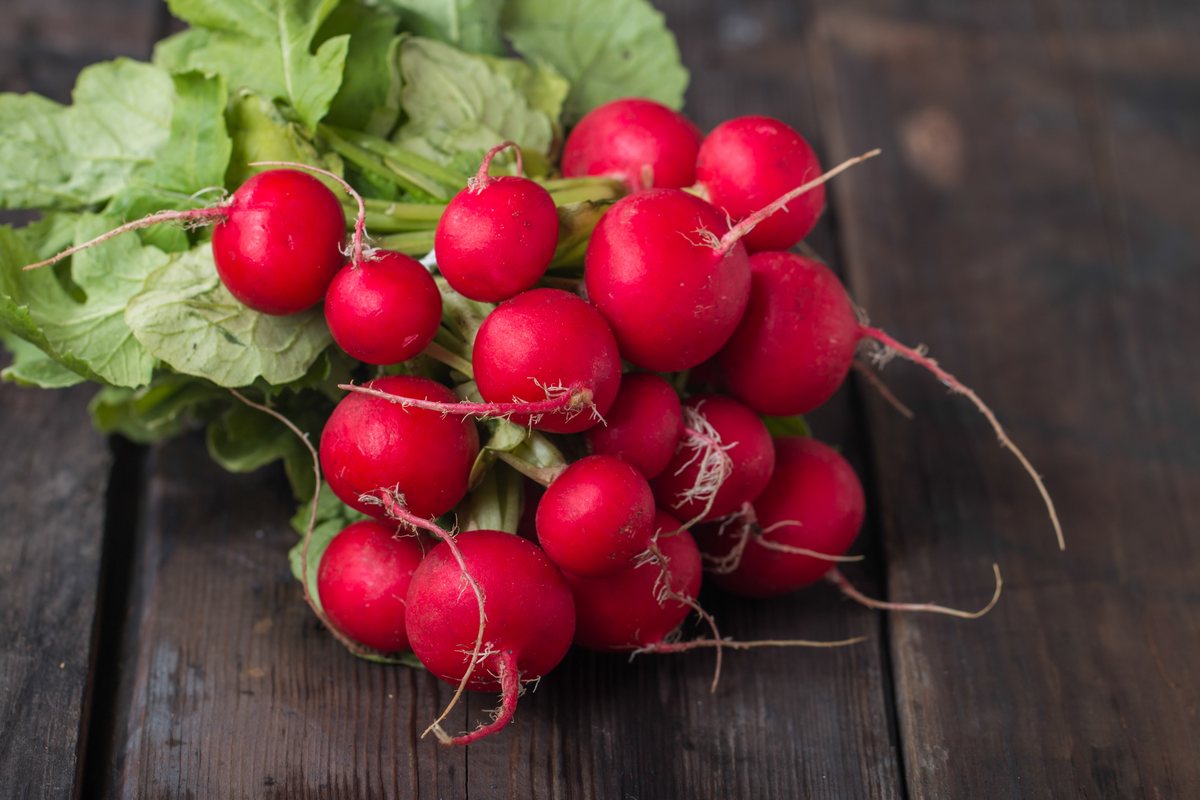
According to Herodotus, even the workers on the Egyptian pyramids were supplied with radishes, onions, and garlic.
Radishes have been cultivated in Asia and the Mediterranean region for millennia. The small, round, red radishes we know, however, are a relatively recent cultivated variety: they originated in Europe in the 16th and 17th centuries, probably in France and Italy.
The name comes from Latin. radix - Root. Botanically speaking, however, the radish is not a root, but a thickened stem. Today there are white, purple, yellow and two-toned varieties such as the elongated "icicle" or the red and white "French Breakfast" radish.
To useWhat the radish does for you
Radishes provide approximately 15 mg per 100 g. Vitamin C, 230 mg potassium, They contain folate and fiber at only about 16 kcal – they consist of 95% water. The leaves even contain significantly more vitamin C, calcium, and iron than the bulb.
The sharpness comes from Mustard oil glycosides, Radish contains, in particular, glucoraphasatin, which, when chewed, produces pungent isothiocyanates. These stimulate the production of digestive juices and bile ducts – which is why radishes have traditionally been used to treat bloating. Commission E has given radish root a positive assessment for digestive problems and catarrh of the upper respiratory tract.
Like all cruciferous vegetables, radishes are being researched for their isothiocyanates; in laboratory studies, these have shown antioxidant and antimicrobial effects. In humans, their benefits are primarily documented as part of a vegetable-rich diet.
IngredientsThat's what's in the radish
Radishes contain mustard oil glycosides (glucoraphasatin, glucoraphenin), vitamin C, folate, potassium, calcium, fiber and, in red varieties, anthocyanins in the peel, especially pelargonidin compounds.
The spiciness is mainly in the peel and increases with dryness and heat. The leaves are rich in vitamin C, carotenoids, and minerals.
Enhanced combinationsWhat makes the radish stronger
Radishes like fat and salt - this reduces the spiciness and makes them the perfect bread topping.
The French classic.
Herbed quark with radishes.
Fresh and crisp.
Don't throw away the leaves.
Radish and honey as cough syrup.
Quickly inserted, colored pink.
What contradicts itselfIt's best to avoid these combinations.
The mustard oils are irritating.
Radish stimulates bile production.
The leaves draw water from the tuber.
Radishes contain nitrate.
Furry and hollow.
Typical of cabbage vegetables.
In the kitchenWhere it belongs
- Buttered bread with radishesAnd a little salt.
- Radish quarkWith chives.
- Cucumber and radish saladWith yogurt and dill.
- Radish leaf pestoWith nuts and oil.
- Pickled radishesQuickly in vinegar.
- Roasted radishesMild and sweet when baked in the oven.
- TacosIn thin slices.
- SnackWith radish and pretzels.
- bowlAs a crunchy topping.
- SoupThe leaves in green soup.
As a home remedyRadish and honey syrup
Radish and honey syrup
- Wash a black radish or a bunch of radishes and slice them thinly.
- Layer honey into a glass.
- Leave to steep overnight, covered - a syrup will form.
- Drain the syrup and store it in the refrigerator.
A traditional home remedy for coughs and congestion. The mustard oils have a mild expectorant effect, and the honey soothes the throat. Commission E has given radish a positive assessment for catarrh of the upper respiratory tract.
Take 1 teaspoon several times a day and consume within 2 days. Not for children under 1 year (honey).
Ayurveda & TCMWhat the old systems say
Ayurveda
Radish (MulakaIt is an important vegetable in Ayurveda: pungent and warming, good for all doshas when young, but tends to increase Pitta when ripe. It is used for indigestion and coughs.
Traditional Chinese Medicine
In Traditional Chinese Medicine (TCM) radish (Lai Fu, the seed Lai Fu Zi) spicy and sweet, moves the Qi, resolves food stagnation and phlegm - a classic digestive aid.
Warning noticesWhen you should be careful
Please note
- Stomach: Avoid if you have gastritis or stomach ulcers.
- Bile: Not in large quantities in the case of gallstones.
- Nitrate: Not for infants.
- Honey syrup: Not suitable for children under 1 year old.
- Allergy: Rare, cross-reaction with mustard possible.
This page provides information and does not replace medical advice. If symptoms persist, please consult a doctor.
Related to the topicRead on and cook along!
Shop links lead to our product pages; it is indicated there if a partner is involved.
SourcesWhat is this based on?
- Gamba M et al. Nutritional and phytochemical characterization of radish (Raphanus sativus): A systematic review. Trends in Food Science & Technology 2021; 113: 205–218.
- Manivannan A et al. Deciphering the nutraceutical potential of Raphanus sativus - a comprehensive overview. Nutrients 2019; 11(2): 402.
- Higdon JV et al. Cruciferous vegetables and human cancer risk: epidemiological evidence and mechanistic basis. Pharmacological Research 2007; 55(3): 224–236.
- Commission E: Monograph Raphani sativi radix (radish). Federal Gazette 1986.
- USDA FoodData Central: Raw radishes.


