
Beetroot (Beta vulgaris)
OriginFrom leaf to tuber
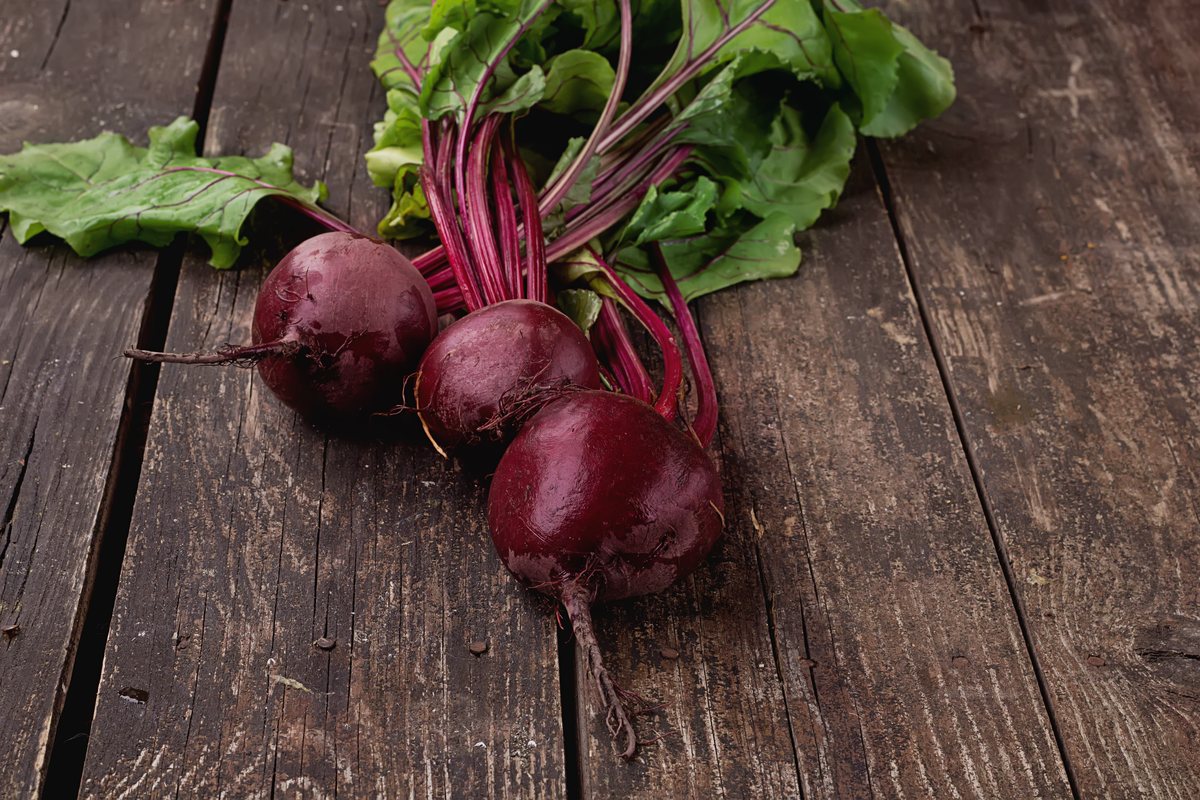
The Romans mainly ate the leaves of the turnip - the thick red tuber is a modern-day variety.
All the prayers come from the wild turnip. Beta vulgaris subsp. maritime It grows on the coasts of the Mediterranean and the Atlantic. The Greeks and Romans primarily used the leaves – which became known as chard – and the root for medicinal purposes. Turnips with thick, red bulbs were not described in Central Europe until the 16th century.
In the 18th century, the Berlin chemist Andreas Sigismund Marggraf discovered sugar in beets; this led to the development of the sugar beet, a relative of the red beet. In Eastern Europe, it is a staple food – borscht, pickled beets, beet salad. In Germany, it was long considered a winter vegetable sold in jars; since athletes and blood pressure researchers rediscovered it, it has become fashionable again.
To useWhat beetroot does for you
Beetroot is rich in nitrate. Bacteria on the tongue convert nitrate into nitrite, which in the body is then converted into nitric oxide – a messenger substance that dilates blood vessels. In controlled studies, a daily glass of beetroot juice lowered blood pressure in people with hypertension by an average of around 8 mmHg systolic over four weeks. This is one of the best-documented effects of any vegetable.
In sports, nitrate from beetroot juice improves oxygen utilization by the muscles; studies have shown a slight increase in endurance performance in untrained and moderately trained individuals. The effect is less pronounced in elite athletes.
One important drawback: Antiseptic mouthwash kills the bacteria on the tongue and almost completely negates its effect on blood pressure. And nitrate isn't always beneficial – nitrite can be problematic for infants and in combination with cured meats. However, nitrate from vegetables is considered safe for adults.
IngredientsThis is what's in beetroot
The red color comes from Betalainen, especially betanin – not anthocyanins as in berries. Betanin is sensitive to heat and light and is used as the food coloring E 162. In addition, there are nitrate, Folate, potassium, manganese, fiber and sugar (about 7 g per 100 g).
Beetroot also contains oxalate, especially in the leaves. The earthy taste comes from geosmin, the same substance found in the air after a summer rain. Whether urine turns red (beeturia) depends on stomach acidity, iron levels, and genetics—it is more common in cases of iron deficiency.
Enhanced combinationsWhat makes beetroot stronger
Beetroot needs acid and fat to counteract its earthy flavor - and for its effect on blood pressure, it is best eaten raw or as juice.
Nitrate is water-soluble and goes into the cooking water - for the effect, juice, raw food or cooked in the oven.
Beetroot with fresh horseradish - a classic from Eastern Europe.
Acid softens the earthiness - beetroot and apple salad with apple cider vinegar.
Salty cheese, sweet beetroot, bitter walnut.
Borscht with dill and sour cream, oven-baked beets with caraway seeds.
This is how the best results were achieved in the studies.
What contradicts itselfIt's best to avoid these combinations.
Chlorhexidine mouthwash kills the tongue bacteria that convert nitrate - the blood pressure-lowering effect disappears.
Beetroot, and especially its leaves, contain a lot of oxalate.
Nitrate can impair oxygen supply in infants - beetroot should only be given during weaning, not as juice.
Blood pressure can drop too low when taken with nitroglycerin preparations or potency drugs - avoid juice cleanses.
Color, nitrate and aroma leach into the water - it's better to cook whole with the peel on or roast in the oven.
People who already have low blood pressure are more likely to experience dizziness.
In the kitchenWhere she belongs
- BorschtBeetroot, cabbage, carrot, dill, sour cream.
- Oven-roasted beetrootCooked in aluminum foil with a tray for 60 minutes, with goat cheese.
- Beetroot carpaccioSliced paper-thin raw with lemon, olive oil, and horseradish.
- Beetroot saladWith apple, onion, vinegar and caraway.
- Beetroot hummusWith chickpeas, tahini, and lemon.
- LabskausNorth German dish with potato, corned beef and herring.
- Beetroot risottoBright red with Parmesan and horseradish.
- Juice shotWith apple, ginger and lemon.
- leavesSteamed like chard, with garlic.
- InsertedIn a vinegar broth with cloves and bay leaves.
As a home remedyThe beetroot shot
Beetroot juice for blood pressure
- Peel a medium-sized raw beetroot and juice it with half an apple and a thumb-sized piece of ginger.
- Alternatively, take 200 ml of pure, natural beetroot juice from the store.
- Drink with a squeeze of lemon, preferably at the same time of day.
- Continue for at least four weeks and measure your blood pressure yourself.
For slightly elevated blood pressure and to support endurance. Studies have shown that approximately 250 ml of juice daily was sufficient for a measurable reduction.
150 to 250 ml per day. Not a substitute for blood pressure medication – do not discontinue on your own. Do not use with nitroglycerin or erectile dysfunction medication without consulting a doctor. Unsuitable for kidney stones, infants, and low blood pressure.
Ayurveda & TCMWhat the old systems say
Ayurveda
Beetroot is not a classic Ayurvedic medicine. Modern practitioners describe it as sweet, warming, and heavy: good for Vata, in moderation for Pitta, and it is considered blood-building – which aligns with its folate content.
Traditional Chinese Medicine
In Traditional Chinese Medicine (TCM), beetroot is described as sweet and neutral. It is said to nourish the blood, strengthen the heart, calm the mind, and relieve the liver – a modern classification based on color and effect.
Warning noticesWhen you should be careful
Please note
- Oxalate: If you are prone to kidney stones, consume the tuber and especially the leaves only in moderation.
- Medications: Discuss juice cleanses with nitroglycerin preparations, PDE-5 inhibitors, and blood pressure lowering medications.
- Infants: No beetroot juice in the first year of life.
- Red urine and stool: harmless - do not confuse it with blood; if in doubt, check after two days without beetroot.
- Fructans: Larger quantities can cause bloating in people with irritable bowel syndrome.
This page provides information and does not replace medical advice. If symptoms persist, please consult a doctor.
Related to the topicRead on and cook along!
Shop links lead to our product pages; it is indicated there if a partner is involved.
SourcesWhat is this based on?
- Kapil V et al. Dietary nitrate provides sustained blood pressure lowering in hypertensive patients: a randomized, phase 2, double-blind, placebo-controlled study. Hypertension 2015; 65(2): 320–327.
- Webb AJ et al. Acute blood pressure lowering, vasoprotective, and antiplatelet properties of dietary nitrate via bioconversion to nitrite. Hypertension 2008; 51(3): 784–790.
- Jones AM. Dietary nitrate supplementation and exercise performance. Sports Medicine 2014; 44 Suppl 1: S35–S45.
- Clifford T et al. The potential benefits of red beetroot supplementation in health and disease. Nutrients 2015; 7(4): 2801–2822.
- USDA FoodData Central: Beets, raw.


