
Yams (Dioscorea spp.)
OriginThe tuber of the New Yams
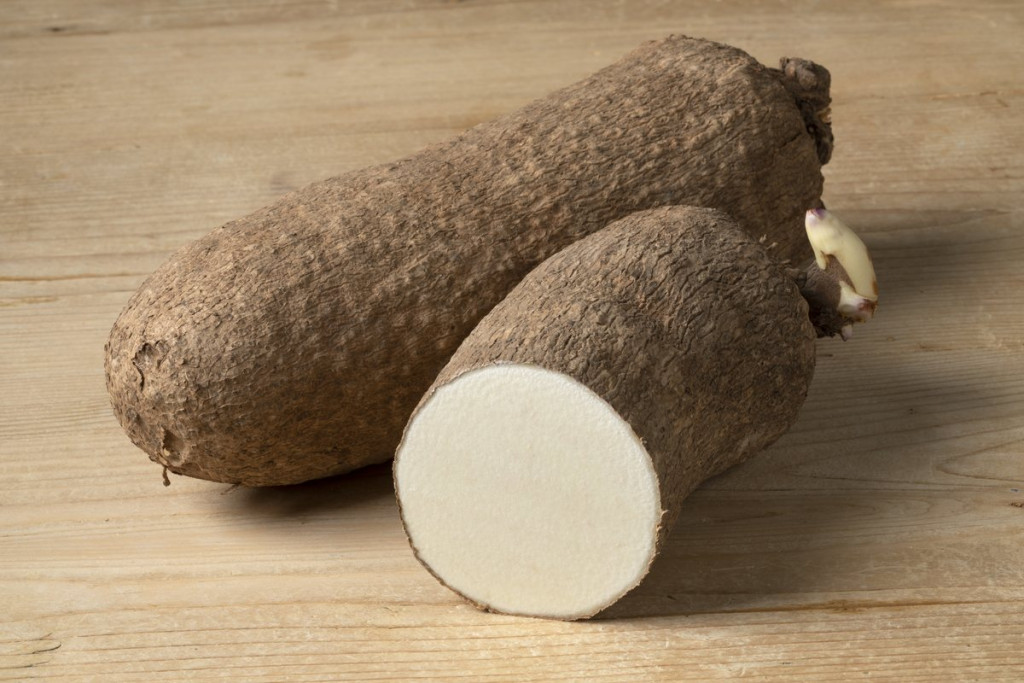
A single yam tuber can grow to over a meter in length and weigh more than 50 kilograms.
Yams are among the oldest cultivated plants in the tropics. They were independently bred from wild species in West Africa, Southeast Asia, and the Americas. Today, around two-thirds of the world's harvest comes from Nigeria. In West Africa, many communities celebrate the New Yam Festival after the harvest—only then may the new crop be eaten. There, yams are not only food but also a gift and a symbol of prosperity.
The most important species are the white yam (Dioscorea rotundata) from West Africa, the water or winged lyam (D. alata) from Southeast Asia - its purple form is known as Ube from Filipino desserts - and the Chinese yam (D. polystachya), in Japan Nagaimo. It is frost-hardy and even grows in German gardens. The orange sweet potato (Ipomoea batatas) belongs to the morning glory family; the fact that it is called "Yam" in North America is an old trade name.
To useWhat yams do for you
100 g of raw yam tuber provides approximately 118 kcal, about 28 g of carbohydrates, and a good 4 g of fat. Dietary fiber and approximately 17 mg Vitamin C. The high level of detail is striking. potassium content Yams contain approximately 800 mg of vitamin B6 – more than bananas or potatoes. They also contain vitamin B6, manganese, and copper. Yams are low in protein and fat; they are a classic example of a lighter vegetable. Starchy vegetables.
Some of the starch in yams is resistant, and the tuber contains mucilage. Small studies have shown that yams cause blood sugar to rise slightly more slowly than other starchy side dishes; however, this is not conclusive enough to recommend them. Purple varieties like ube also contain... Anthocyanins, the same pigments as blueberries.
The plant-based substance is heavily advertised. Diosgenin From wild yam species. Since the 1940s, it has served as a starting material for the laboratory production of progesterone and other hormones. However, this conversion does not occur in the human body. In a placebo-controlled study, a "wild yam" cream used over three months did not alter menopausal symptoms or hormone levels. Yams are a good food – but they are not a natural hormone supplement.
IngredientsThis is what's in the yam
Yams consist mainly of water and starch, as well as dietary fiber, mucilage, the storage protein dioscorin, potassium, manganese, copper, phosphorus, magnesium, vitamin C and B6. Many varieties contain steroidal saponins such as dioscin, from which diosgenin is produced; purple yams provide anthocyanins, yellow-fleshed ones carotenoids.
Raw tubers contain needle-shaped calcium oxalate crystals that irritate and cause itching of the skin and mucous membranes. Some wild varieties, such as the air potato, contain these crystals. D. bulbifera or D. hispida, also contain toxic bitter substances and alkaloids such as dioscorine (English: ). dioscorine, (not to be confused with the similarly named egg white). Commercially available yams are safe after cooking.
Enhanced combinationsWhat makes yams stronger
Yams are a mild starchy vegetable - they need seasoning, protein and some fat.
It supplements the low protein content of the tuber.
West African classic with yam fufu.
It adds spice to the bland porridge.
Folate, iron, and color added.
For curry and ube desserts.
More resistant starch.
What contradicts itselfIt's best to avoid these combinations.
Irritates the mouth and throat; some species are poisonous.
Oxalate crystals cause itchy hands.
Different plant, different nutrients.
Diosgenin is not converted in the body.
Poisonous species are difficult to distinguish.
Very high in potassium.
In the kitchenWhere he belongs
- Pounded YamWest African porridge for soups.
- Yam friesBoiled, then baked in the oven.
- AsaroNigerian yam stew with tomatoes.
- Ube HalayaPhilippine purple yam cream.
- Yam pureeWith butter and nutmeg.
- Yam CurryWith coconut milk and spinach.
- Soup garnishIn Caribbean stews.
- Yam chipsThinly sliced and baked.
- TororoCooked Nagaimo as a Japanese side dish.
- Oven-roasted vegetablesWith pumpkin and onions.
As a home remedyPounded yam as a mild side dish
Yam porridge
- Peel 500g of yams wearing gloves and cut into equally sized cubes.
- Wash the cubes thoroughly and cook in lightly salted water for 20 minutes until soft.
- Drain the water and pound the yams vigorously until a smooth, firm mash is formed.
- Stir in some warm water or plant-based milk until smooth and serve warm.
As a filling, easily digestible side dish on days when the stomach needs a rest, and as a potassium-rich alternative to mashed potatoes. It has no medicinal properties.
A portion of 150 to 200 g as a side dish. If you have kidney disease or are on a low-potassium diet, consult your doctor or a nutritionist beforehand.
Ayurveda & TCMWhat the old systems say
Ayurveda
In Ayurveda, some Dioscorea species are described as tubers (Kanda), such as Varahikand. They are considered sweet, heavy, and nourishing, said to provide strength and pacify Vata. For Kapha, they should be used sparingly and with warming spices.
Traditional Chinese Medicine
In Traditional Chinese Medicine (TCM), the Chinese yam (Shan Yao) is a well-known remedy: sweet and neutral, it is said to strengthen the spleen, lungs, and kidneys. It is used dried in formulas and fresh in soups and congee – always cooked.
Warning noticesWhen you should be careful
Please note
- Raw: Always cook yams; raw they irritate the mouth and throat, and some varieties are poisonous.
- Skin irritation: Wear gloves when peeling - oxalate crystals can cause itching and redness.
- Kidneys: Yams are very high in potassium; in cases of kidney failure or a low-potassium diet, only consume after consultation.
- Kidney stones: If you are prone to oxalate stones, do not eat large quantities of food every day.
- Hormone creams: „Wild Yam“ products are not a substitute for hormone therapy - consult a doctor about any symptoms.
- Wild collection: Do not eat wild-growing Dioscorea species - some are highly poisonous.
This page provides information and does not replace medical advice. If symptoms persist, please consult a doctor.
Related to the topicRead on and cook along!
Shop links lead to our product pages; it is indicated there if a partner is involved.
SourcesWhat is this based on?
- Padhan B, Panda D. Potential of neglected and underutilized yams (Dioscorea spp.) for improving nutritional security and health benefits. Frontiers in Pharmacology 2020; 11:496.
- Komesaroff PA et al. Effects of wild yam extract on menopausal symptoms, lipids and sex hormones in healthy menopausal women. Climacteric 2001; 4(2): 144–150.
- Library of Congress: What is the difference between sweet potatoes and yams? Everyday Mysteries.
- USDA FoodData Central: Yam, raw.


