
Peanut (Arachis hypogaea)
OriginThe bean that buries itself
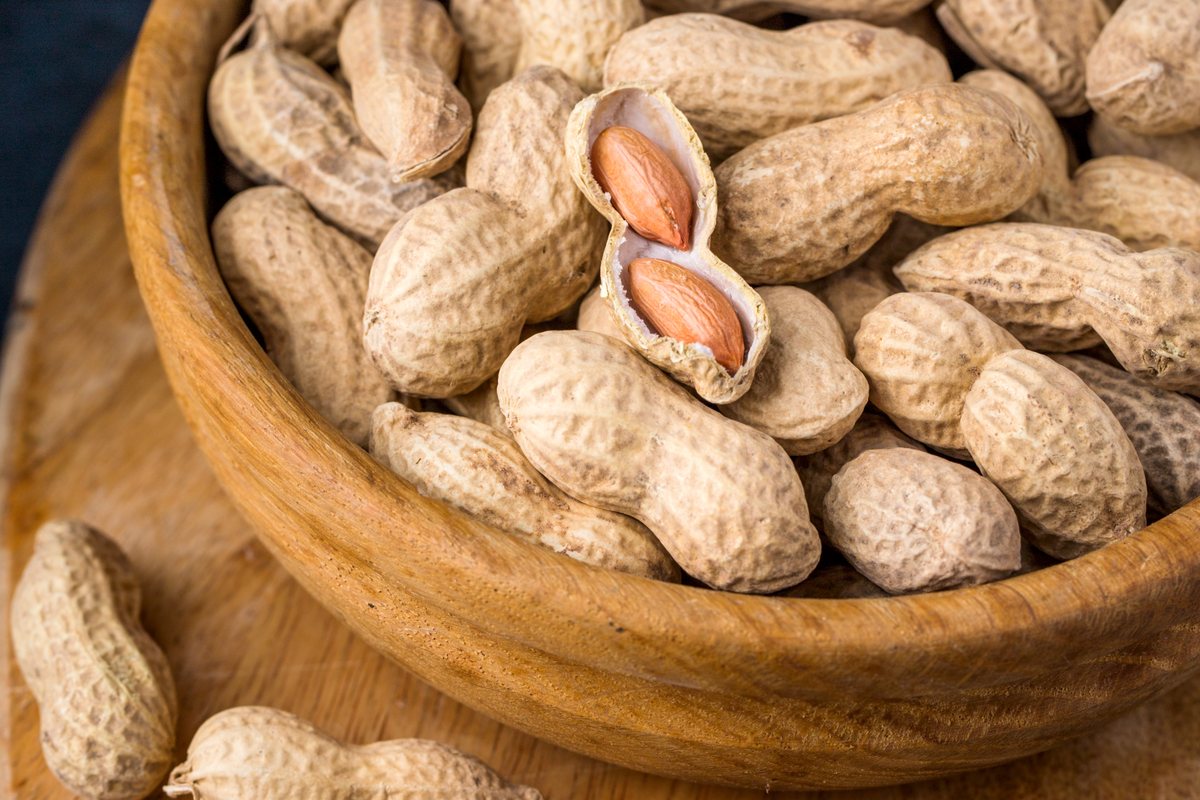
Hypogea is Greek and means "under the earth".
After fertilization, the peanut flower stalk grows downwards, burrows into the soil, and forms the pod, which usually contains two seeds. Wild ancestors originated in the Andean foothills; in Peru, archaeologists found peanuts that are several thousand years old. The Portuguese and Spanish spread the plant to Africa and Asia.
Today, China, India, Nigeria, and the USA are the largest producers. In West Africa, peanuts are a staple food, for example in peanut soup called maafe. As a legume, they fix nitrogen from the air with the help of rhizobia bacteria, thus improving the soil – one reason why they are cultivated in rotation with grains in many countries.
To useWhat peanuts can do for you
100g of peanuts provide approximately 26g protein, Approximately 50 g of fat – predominantly monounsaturated and polyunsaturated – and about 8 g of fiber. In addition, there are around 12 mg of niacin, approximately 240 µg Folate, approximately 8 mg Vitamin E as well as magnesium and potassium. A handful of 30 g covers about a quarter of the daily requirement for niacin and folate.
Large observational studies have shown that regular consumption of nuts and peanuts is associated with fewer cardiovascular diseases; peanuts perform similarly to tree nuts in this regard. Protein, fat, and fiber are very satiating, which is why studies have shown that peanuts, despite their high calorie content, generally do not lead to weight gain when they replace other snacks.
The downside: Salted, oil-fried, or sugar-coated peanuts, and many peanut butter varieties containing sugar and hydrogenated fat, offer little benefit. The most sensible options are natural or dry-roasted kernels and peanut butter made from 100% peanuts.
IngredientsThis is what's in peanuts
Peanuts contain fat (oleic acid, linoleic acid), protein with plenty of arginine, fiber, niacin, folate, vitamin E, vitamin B1, magnesium, potassium, phosphorus, zinc, copper, phytosterols and polyphenols such as resveratrol and p-coumaric acid, especially in the red seed coat.
The allergy is caused by certain storage proteins, most notably Ara h 2. These proteins are heat-stable – roasting makes peanuts more allergenic rather than less so.
Enhanced combinationsWhat makes peanuts stronger
Peanuts go well with both sweet and spicy dishes - and are an ideal complement to grains.
The proteins complement each other.
A snack that keeps you full for a long time.
Like in satay sauce.
West African peanut soup.
Makes peanut sauces fresh.
A spoonful of purée instead of sugar.
What contradicts itselfIt's best to avoid these combinations.
Aflatoxins - throw them away, don't sort them out.
No traces either.
Danger of suffocation.
Choose a puree from 100 % peanuts.
Preferably left in its natural state.
Dry and cool, otherwise mold will form.
In the kitchenWhere they belong
- Peanut soupWest African style with sweet potato and tomato.
- Satay sauceWith vegetable skewers or tofu.
- peanut butterOn wholemeal bread with banana.
- Peanut noodlesAsian style with vegetables.
- Gado-GadoIndonesian salad with peanut sauce.
- PorridgeWith a spoonful of peanut butter.
- Stir-fried vegetablesWith roasted peanuts.
- Energy ballsWith rolled oats and dates.
- dressingPeanut butter, lime, soy sauce.
- Cooked peanutsSaltwater street snack in Asia.
As a home remedyApple with peanut butter as a filling meal
Apple and peanut snack
- Wash an apple, remove the core and cut into wedges.
- Place 1 heaped tablespoon of peanut butter (100g peanuts, no sugar) into a small bowl.
- Sprinkle with a pinch of cinnamon, if desired.
- Dip the apple slices and eat them slowly.
As a snack to combat afternoon cravings: Protein, fat, and fiber keep you feeling full longer than sweets or white bread. A nutritional tip, not a treatment.
One snack a day, about 15 to 20 g of peanut butter. Only for people without a peanut allergy.
Ayurveda & TCMWhat the old systems say
Ayurveda
In Ayurveda, the peanut is considered (Mungphali) described as sweet, heavy, oily and heating - nourishing for Vata, for Pitta and Kapha only in small quantities, best roasted.
Traditional Chinese Medicine
In Traditional Chinese Medicine (TCM), the peanut is called... Huasheng. It is considered sweet and neutral, is said to strengthen the middle and moisten the lungs; the red seed coat was traditionally used for bleeding disorders.
Warning noticesWhen you should be careful
Please note
- Allergy: Peanuts are among the most common triggers of severe allergic reactions, including anaphylactic shock. Allergy sufferers avoid even traces of peanuts and carry an emergency kit with an adrenaline auto-injector.
- Infants: Studies like LEAP show that early introduction of nuts to at-risk children can prevent allergies. However, in infants with severe eczema or known allergies, nuts should only be introduced after consulting a doctor and always as a smooth puree, never as whole nuts.
- Aflatoxins: Do not eat moldy, discolored, shriveled or bitter-tasting peanuts and throw away the entire package - aflatoxins are carcinogenic and heat-stable.
- Toddlers: No whole peanuts for children under 4 years old - choking hazard.
- Energy: Approximately 600 kcal per 100 g; a handful is a sensible portion.
This page provides information and does not replace medical advice. If symptoms persist, please consult a doctor.
Related to the topicRead on and cook along!
Shop links lead to our product pages; it is indicated there if a partner is involved.
SourcesWhat is this based on?
- USDA FoodData Central: Peanuts, all types, raw.
- Du Toit G et al. Randomized trial of peanut consumption in infants at risk for peanut allergy. New England Journal of Medicine 2015; 372(9): 803–813.
- Aune D et al. Nut consumption and risk of cardiovascular disease, total cancer, all-cause and cause-specific mortality: a systematic review and dose-response meta-analysis of prospective studies. BMC Medicine 2016; 14: 207.
- EFSA Panel on Contaminants in the Food Chain (CONTAM). Risk assessment of aflatoxins in food. EFSA Journal 2020; 18(3): 6040.
- Federal Institute for Risk Assessment (BfR): Consumer information on mold toxins (mycotoxins) in food.
- Kopp MV et al. S3 guideline on allergy prevention. Allergology 2022; 45(3): 153–194.


