
Soybean (Glycine max)
OriginThe bean from northern China
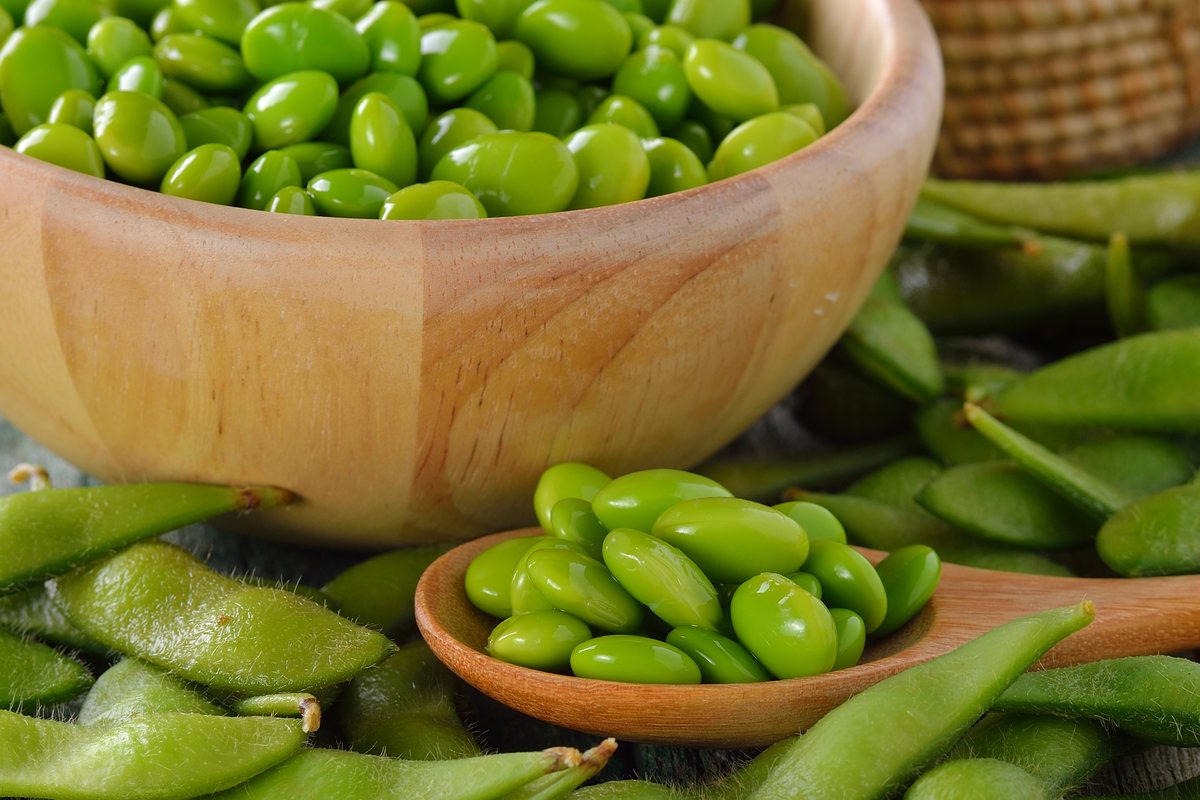
Most of the world's soy harvest doesn't end up on our plates, but in animal feed.
Soybeans were domesticated from wild soybeans several thousand years ago in northeastern China, where they were considered one of the five sacred grains. Tofu, miso, soy sauce, and tempeh—fermented products that made the bean more digestible—spread via Korea and Japan.
Soybeans only arrived in Europe in the 18th century as a botanical curiosity. Today, the majority of the harvest comes from the USA, Brazil, and Argentina and is primarily used as animal feed. For food products, it's worth checking the label: Soybeans from European, non-GMO cultivation – for example, from southern Germany, Austria, or France – are readily available.
To useWhat the soybean can do for you
Dried soybeans contain approximately 36 g protein Per 100g, edamame contains about 11g. Soy protein is complete: it provides all essential amino acids in a ratio similar to animal protein. It also contains fiber, iron, magnesium, folate, potassium, and unsaturated fats with some omega-3 fatty acids.
A meta-analysis of 46 studies showed that soy protein is the LDL cholesterol It lowers slightly but reliably – by about 3 to 4 %. Those who replace meat with soy also benefit from the lower proportion of saturated fats.
Soy contains Isoflavones such as genistein and daidzein, which have weak estrogen-like effects. In food quantities, they are considered safe according to current knowledge; observational studies from Asia even link lifelong soy consumption with a lower incidence of breast cancer. For isolated isoflavone preparations, however, the EFSA has formulated more cautious limits.
IngredientsThis is what's in the soybean
Soybeans contain protein (glycinin, beta-conglycinin), fat with a lot of linoleic acid and some alpha-linolenic acid, fiber, isoflavones (genistein, daidzein, glycitein), lecithin, saponins, phytosterols as well as iron, magnesium, potassium, calcium, folate and vitamin K.
In their raw state, they contain trypsin inhibitors and lectins that interfere with protein digestion—both of which are destroyed by cooking. Fermentation (tempeh, miso, natto) further improves digestibility.
Enhanced combinationsWhat makes soy stronger
Soy is a source of protein and flavor - the art lies in seasoning and preparation.
It complements the protein content to make a complete meal.
Improves iron absorption.
Easier to digest.
Tofu needs marinade.
Edamame with sesame seeds and salt.
Provides additional calcium.
What contradicts itselfIt's best to avoid these combinations.
Trypsin inhibitors and lectins - always boil.
Keep a distance of a few hours.
Food items yes, concentrates only after consultation.
Not suitable for babies.
Soy milk can trigger cross-reactions.
Very salty.
In the kitchenWhere she belongs
- EdamameCooked in salted water.
- Tofu stir-fryWith vegetables and ginger.
- TempehMarinated and fried.
- Miso soupWith tofu and seaweed.
- Soybean stewWith tomato and herbs.
- Edamame hummusWith lemon and sesame.
- Mapo TofuSpicy Sichuan style.
- bowlEdamame with rice and vegetables.
- Scrambled tofuWith turmeric for breakfast.
- Soy drinkIn porridge, enriched with calcium.
As a home remedyEdamame as a protein snack
Edamame with sesame
- Add 300g of edamame in the pod (also frozen) to boiling salted water.
- Boil for 5 minutes, drain.
- Mix with a teaspoon of sesame oil, coarse salt and a little chili or garlic.
- Squeeze the beans from the pod directly into your mouth - do not eat the pod.
A protein-rich, filling snack instead of chips. One serving provides approximately 15 to 20 g of protein, fiber, and folate.
A bowl as a snack. Eat freshly cooked.
Ayurveda & TCMWhat the old systems say
Ayurveda
Soy is hardly described in classical Ayurveda. Today it is considered heavy, cooling, and Vata-increasing – well-cooked and seasoned with ginger, cumin, or asafoetida, it becomes more digestible.
Traditional Chinese Medicine
In Traditional Chinese Medicine (TCM), the black soybean (Hey Dou) a food remedy: sweet, neutral, strengthens the kidneys and blood. Fermented soybeans (Dan Dou Chiare used at the onset of colds.
Warning noticesWhen you should be careful
Please note
- Raw: Never eat raw - always cook thoroughly.
- Allergy: Soy is one of the 14 allergens that must be labelled; cross-reaction in birch pollen allergy.
- Thyroid: Take L-thyroxine at a distance from soy products.
- Isoflavone preparations: only after consulting a doctor, especially after breast cancer.
- Infants: Soy drink is not a substitute for breast milk or infant formula.
This page provides information and does not replace medical advice. If symptoms persist, please consult a doctor.
Related to the topicRead on and cook along!
Shop links lead to our product pages; it is indicated there if a partner is involved.
SourcesWhat is this based on?
- Blanco Mejia S et al. A meta-analysis of 46 studies identified by the FDA demonstrates that soy protein decreases circulating LDL and total cholesterol concentrations in adults. Journal of Nutrition 2019; 149(6): 968–981.
- Messina M. Soy and health update: evaluation of the clinical and epidemiologic literature. Nutrients 2016; 8(12): 754.
- EFSA Panel on Food Additives and Nutrient Sources: Risk assessment for peri- and post-menopausal women taking food supplements containing isolated isoflavones. EFSA Journal 2015; 13(10): 4246.
- German Nutrition Society: Vegan diet - nutrient supply and health risks.
- USDA FoodData Central: Soybeans, mature seeds, raw and Edamame, frozen, prepared.


